
Tragedy · 2020s
The Two Tokyo Bouts That Changed Japan’s Boxing Distance
On August 2, 2025, Shigetoshi Kotari and Hiromasa Urakawa suffered severe brain injuries in separate bouts at Korakuen Hall in Tokyo. Kotari’s title fight ended in a draw, Urakawa’s ended in defeat, and the Japan Boxing Commission later shortened OPBF title bouts from 12 rounds to 10.
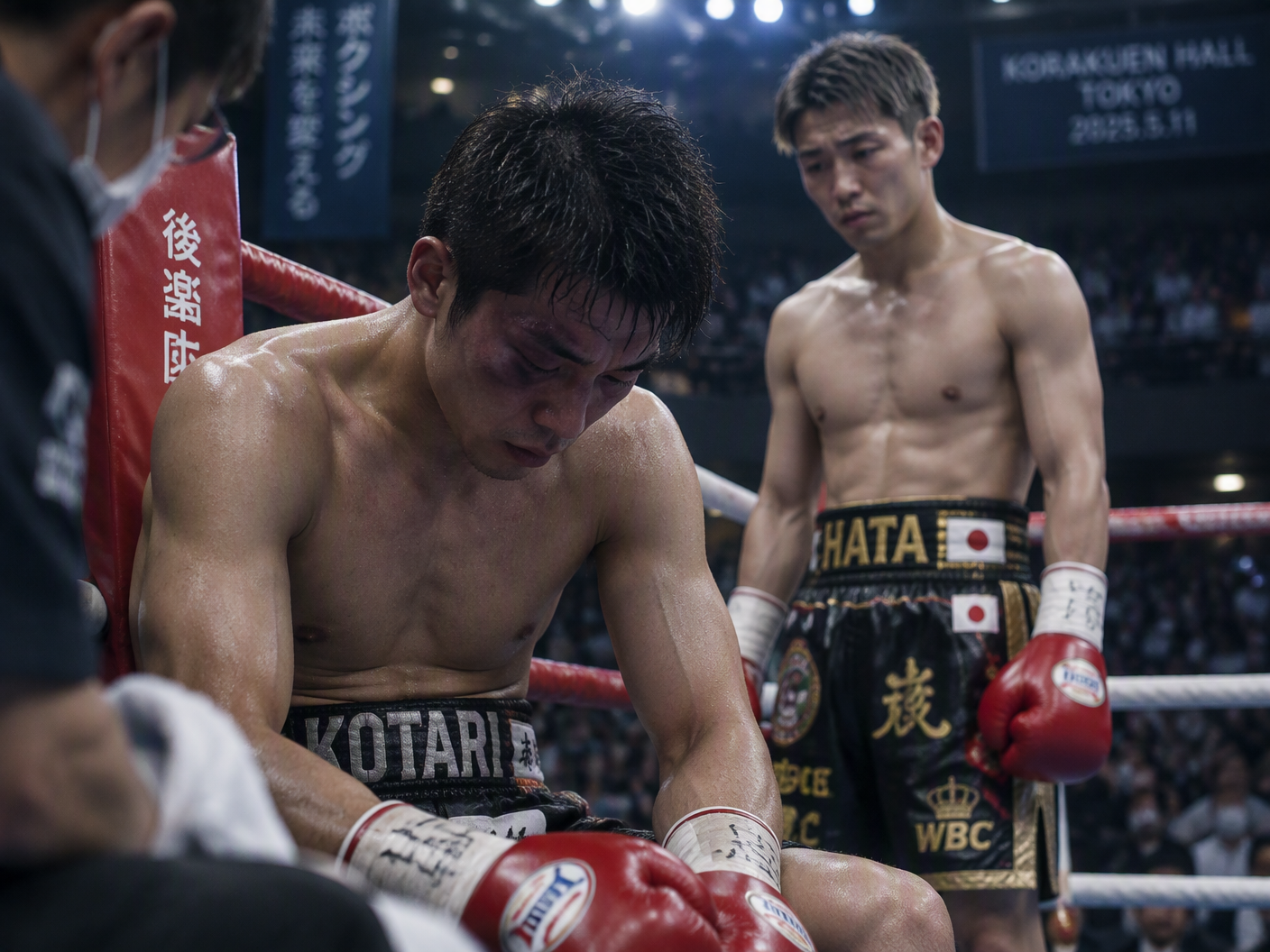
On August 2, 2025, at Korakuen Hall in Tokyo, Shigetoshi Kotari fought through a 12-round contest for Yamato Hata’s Oriental and Pacific Boxing Federation super featherweight title. The fight ended in a split draw. The result belonged to the ordinary language of boxing: neither challenger nor champion had secured the judges’ agreement. What followed belonged to another order of events. After the bout, Kotari lost consciousness and was taken for emergency medical treatment.
Doctors diagnosed Kotari with a subdural hematoma, described also as a brain bleed, and performed emergency brain surgery. The fight had ended with a result that left the title contest unresolved, but the medical crisis had no such ambiguity. At 28, Kotari was no longer dealing with the immediate demands of a bout or the formal judgment of the officials. He was in a hospital, undergoing an operation for an injury sustained during the contest.
The same Tokyo card contained a second contest whose consequences unfolded along a similar path. Hiromasa Urakawa fought Yoji Saito in a six-round bout and lost. Urakawa later required brain surgery. The two fights differed in length, title status, and result, yet both moved beyond the ring through hospitalization and neurosurgical treatment. The shared setting became important not because the contests produced the same sporting outcome, but because two boxers left the event with serious brain injuries.
For the participants, the evening had been organized around separate professional obligations. Hata was defending an OPBF title over twelve scheduled rounds. Kotari was challenging him. Saito and Urakawa were contesting six rounds without a title at stake. The distinction mattered to the institutions that governed the bouts: one contest carried a championship distance, while the other did not. The injuries that followed placed those different formats inside the same medical chronology.
Kotari’s condition deteriorated after the bout rather than ending his life at ringside. The sequence ran from competition to loss of consciousness, then to hospital treatment, diagnosis, and surgery. Six days later, on August 8, his death was announced by the World Boxing Council and the World Boxing Organization. The interval gave the event a second phase: the public result of the fight had already been recorded, while the consequences of the injury were still advancing in the hospital.
Urakawa’s course continued beyond the same night as well. He had lost to Saito in the six-round contest and then required brain surgery. On August 9, the World Boxing Organization announced Urakawa’s death. He was 28. The announcements placed the two fatalities one day apart, six days after the Tokyo card for Kotari and seven days after it for Urakawa. A single event had produced two separate medical emergencies and, within a week, two deaths.
The sporting records remained fixed beneath the medical aftermath. Kotari’s contest with Hata was a draw; no later treatment changed that result. Urakawa’s contest with Saito was a loss. Neither death converted one result into another, and neither bout was transformed into a different kind of contest by the later announcements. The sequence instead exposed the distance between a completed scorecard and the condition of the boxer who had just completed the rounds.
The Japan Boxing Commission responded after the event by changing the length of OPBF title bouts. Twelve rounds became ten. The adjustment applied to the championship format that Kotari had entered against Hata. It did not erase the completed draw, alter Hata’s title status within that contest, or supply a medical explanation for every consequence of the night. It was an administrative decision about how long an OPBF title fight should last.
That change also showed how boxing institutions convert an event into a rule. The commission did not revise the length of Urakawa’s six-round bout, because it had not been an OPBF title contest. The formal change addressed the twelve-round championship distance, the structure in which Kotari had fought. Two deaths followed separate bouts, but the rule that endured was narrower: title fights under the OPBF banner would now be scheduled for ten rounds rather than twelve.
The deaths were announced by international boxing organizations, while the rule change came from the national commission responsible for the relevant competition. Their roles were different. The World Boxing Council and World Boxing Organization communicated Kotari’s death; the World Boxing Organization did the same for Urakawa. The Japan Boxing Commission altered the conditions under which OPBF title bouts would be held. Between those announcements and that revision, the event moved from a pair of local contests into an administrative question about ring safety.
The lasting public record therefore contains several linked but distinct facts: a twelve-round title fight, a split draw, a six-round defeat, two hospitalizations, two brain surgeries, and two deaths. It also contains a shorter championship distance adopted afterward. The rule preserved the names of the contests while changing the number of rounds that future boxers would be asked to endure. At Korakuen Hall, the scorecards ended on August 2. The institutional response continued in the ten-round title bouts that followed.
Investigative Dossier & Evidence
Read the companion investigation notes, verified source claims, and primary documents.
Read the Companion Notes & Evidence Record →