
Scandals & Feuds · 2010s
The Shah Hasan Khel Volleyball Bombing and the Unresolved Target
A suicide bomber struck near a volleyball gathering in Shah Hasan Khel on New Year’s Day 2010, killing and injuring civilians as casualty figures rose in the first reports. Police suspected a militant retaliation against tribal resistance, but no responsible organization or definitive motive was established.
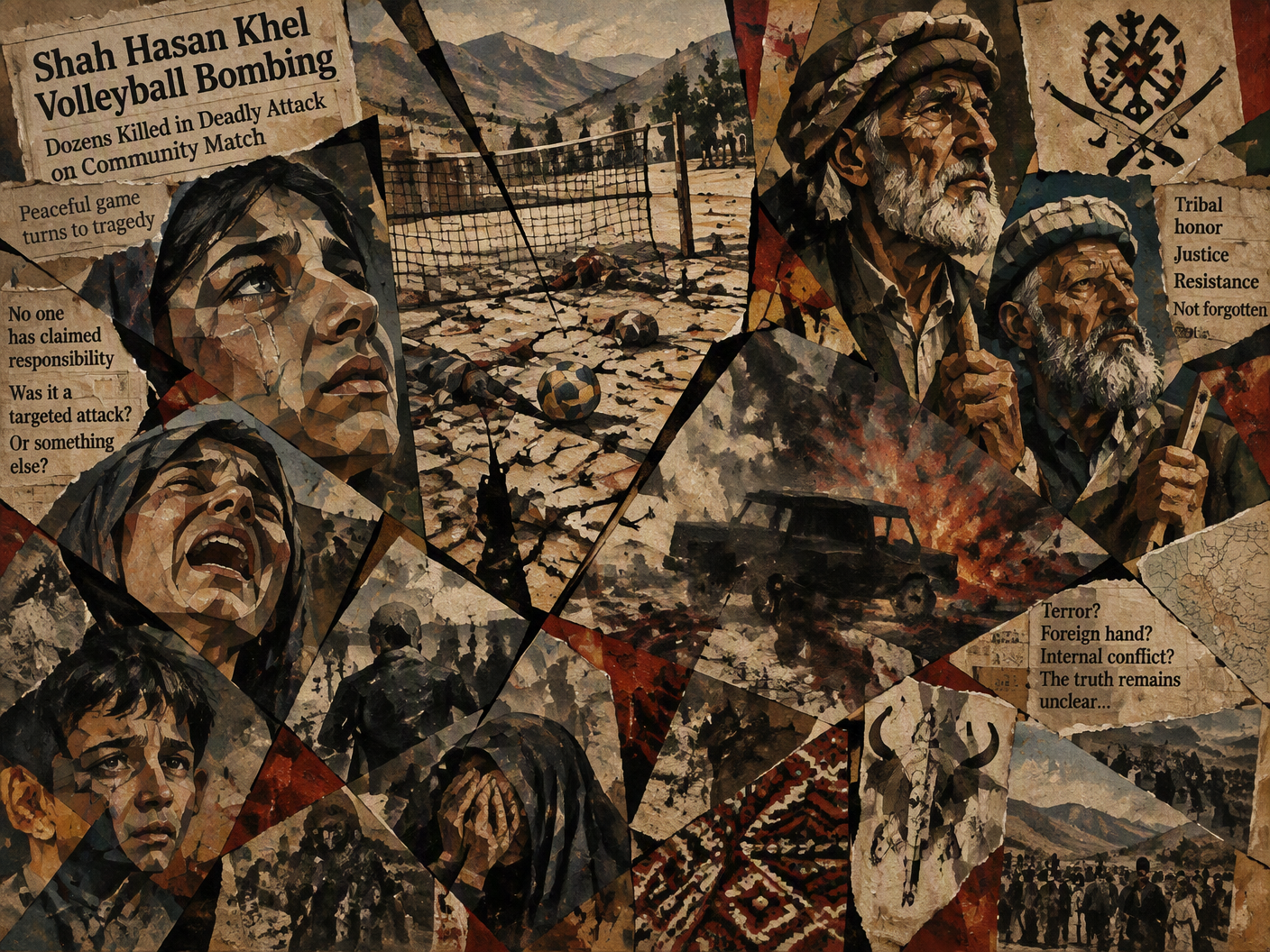
The vehicle reached Shah Hasan Khel on 1 January 2010 and exploded near an outdoor volleyball gathering. The blast struck a civilian crowd in Lakki Marwat District, in Pakistan’s Khyber-Pakhtunkhwa province, and turned a local match into a mass-casualty attack. The bomber died at the scene. So did dozens of spectators. Local police initially placed the death toll at 88, while the number of injured continued to rise as the first casualty lists were assembled.
The location carried a second meaning for investigators. The volleyball court stood near a gathering of tribesmen involved in an anti-Taliban militia, and police believed the attacker had intended to reach that meeting with a vehicle carrying 250 kilograms of explosives. The blast occurred at the nearby court instead. That distinction shaped the early account of the attack: an armed political conflict had reached a public sporting space, but the evidence did not fix whether the court, the tribal gathering, or both formed the intended target.
District police chief Ayub Khan supplied the first official theory of motive. He said the bomber had driven toward a field where people were watching the match and that the attack may have been retaliation for local efforts to expel militants. His language preserved the uncertainty. Retaliation was a possibility under examination, not an established command order or confession. No identified bomber, responsible organization, or final attribution entered the public account preserved from the immediate aftermath.
The casualty figures changed within hours because the attack produced a moving disaster scene rather than a fixed count. One early police figure recorded at least 88 dead. The next-day account placed the toll at no fewer than 96, with the explosion described as occurring at the outdoor volleyball court. Another contemporaneous count recorded at least 95 deaths and more than 100 injuries. The figures varied, but each described the same central fact: the bomber had struck a large civilian gathering.
The sport mattered because it defined the crowd’s presence, not because the match itself formed part of the political dispute. Villagers had gathered around a volleyball game when the vehicle detonated. The court became the point at which the suspected attack plan and the civilian population intersected. In the first reporting, the phrases shifted between a volleyball match, a volleyball gathering, and a nearby court. The geography remained consistent: the explosion occurred beside the people who had come to watch play.
The suspected tribal meeting gave police a possible explanation for the choice of place. Local elders and militia organizers had opposed Taliban influence, and the attack followed efforts to remove militants from the area. But a plausible target theory could not identify the hand that ordered the bombing. The public record retained the police belief that the explosives were meant for the tribesmen’s meeting while leaving the bomber’s command structure and precise objective unresolved.
After the explosion, Raham Dil Khan, a member of the tribal council, said the committee would stand against every type of terrorism and continue its work. The statement converted the attack from a local catastrophe into a declaration of political defiance. Tribal elders said they would continue opposing the Taliban. Their response did not prove who had attacked them, but it showed how the bombing was understood by the people positioned closest to the suspected militant conflict.
The immediate institutional response came from outside Lakki Marwat as well. Canadian Foreign Affairs Minister Lawrence Cannon condemned the bombing and expressed condolences to the families of those killed and injured. A spokesperson for Britain’s Foreign and Commonwealth Office also condemned the attack and said the United Kingdom would continue working with Pakistan against violent extremism. These statements assigned the bombing a clear political character, while stopping short of identifying a perpetrator.
The first two days therefore produced two separate records. One was firm: a suicide bomber had detonated an explosive-laden vehicle near a volleyball gathering, causing extensive deaths and injuries in Shah Hasan Khel. The other remained provisional: police suspected the attack was directed at anti-Taliban tribal actors and may have been retaliation for their attempts to expel militants. The difference between those records mattered. The deaths were established; the explanation was not.
The surviving account never supplied a definitive attribution. It did not name the bomber’s organization, establish a final motive, or conclusively show that the anti-Taliban militia meeting rather than the volleyball court was the intended target. What it preserved was the consequence of that uncertainty: civilians gathered around a court were killed in numbers reported from 88 to 96 or more, and more than 100 people were injured in one contemporaneous count. Shah Hasan Khel entered the record through the blast, while responsibility remained unsettled.
Investigative Dossier & Evidence
Read the companion investigation notes, verified source claims, and primary documents.
Read the Companion Notes & Evidence Record →