
Doping & Drugs ·
Old Samples, New Tests and a Compromise Over THG
After players challenged retrospective testing, the NFL and NFL Players Association settled three THG appeals with fines, career-long testing and a new agreement covering newly identified steroids.
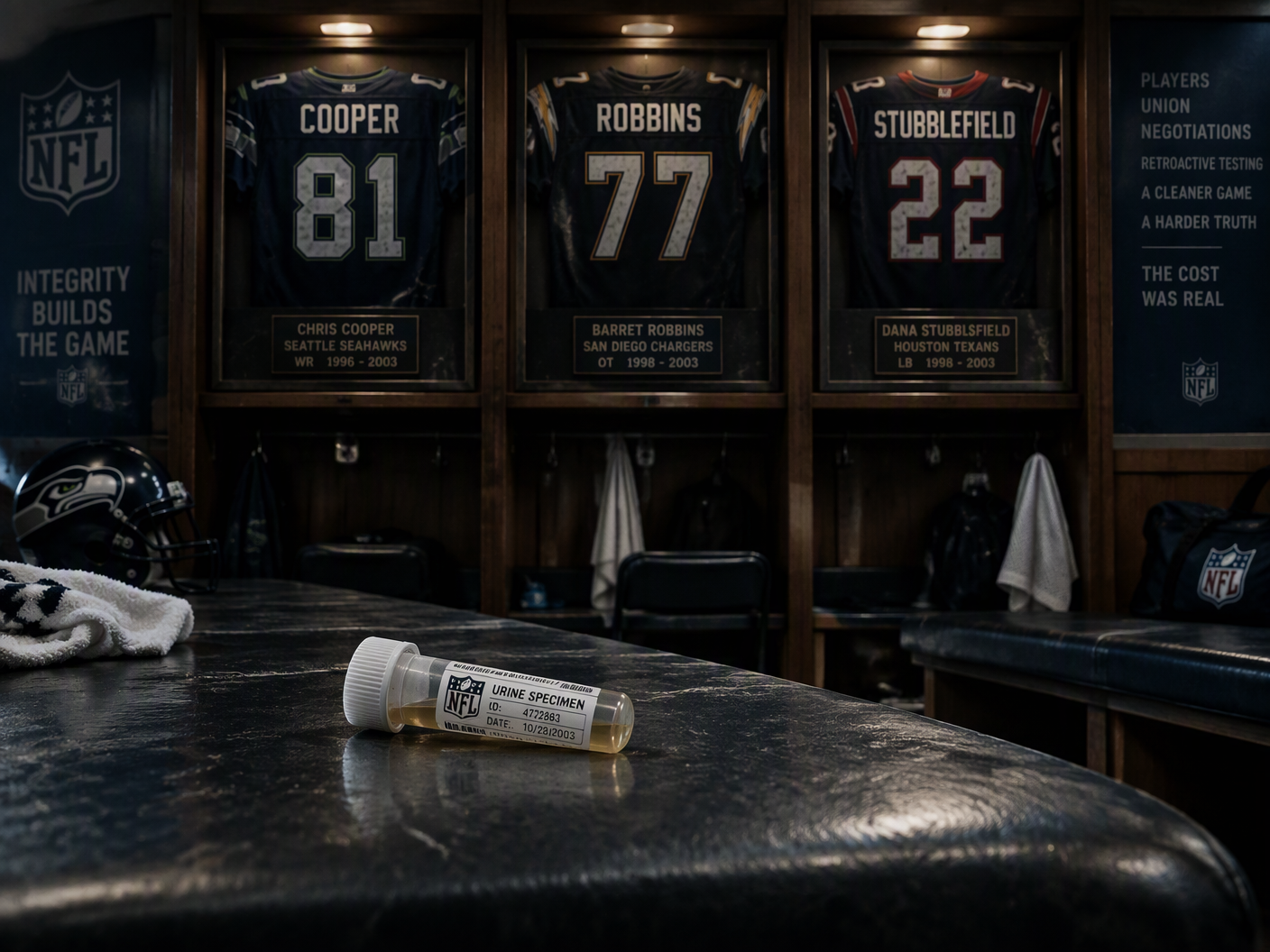
The urine samples had already passed an initial screening. When the NFL tested them again for the newly identified steroid THG, four came back positive. The players and their union challenged whether the league could revisit old samples—and on July 14, 2004, the two sides settled three appeals, replacing four-game suspensions with fines and testing for the rest of the players’ NFL careers.
Chris Cooper and Barret Robbins of the Oakland Raiders and free agent Dana Stubblefield were each fined three game checks. None had a history of violating the league’s steroids policy, according to the NFL and NFL Players Association. Robbins’ fine amounted to $234,375; Cooper’s was $187,500. Stubblefield’s would depend on his salary if he signed with a team. All three were placed on “reasonable-cause testing,” with any further violation carrying a minimum eight-game suspension. A fourth player’s appeal remained pending; the NFL and union did not identify him in their announcement.
The dispute grew out of a change in what testing could detect. Uniform testing for THG, or tetrahydrogestrinone, began on October 6, 2003. The NFL then tested approximately 1,700 available samples collected before that date, when no reliable THG test had been developed. Those retests produced the four positives. The league also said that more than 4,000 samples tested since October 6 had produced no positives for THG.
The players and the union challenged the NFL’s authority to retest specimens previously found negative. A first steroid violation normally brought a four-game suspension, but the union appealed those penalties over the precedent the retesting would set. “We felt from the start that there was nothing in our agreed policy to allow for going back to test old samples long after they were found to be negative,” NFLPA executive director Gene Upshaw said. “We strongly support a ‘zero tolerance’ policy on steroids, but there also must be clear and fair procedures that everybody knows and understands.”
The settlement followed several months of discussion and came before a scheduled disciplinary hearing. NFL executive Harold Henderson called it “a unique set of facts not addressed by the parties when the policy was written.” The agreement also clarified how the league would handle newly detectable steroids. “Going forward, we have a clear understanding that all available samples will be tested for any newly identified ‘designer’ steroid as soon as a test is developed,” Henderson said.