
Doping & Drugs ·
The Grand-Jury Answer Behind Bonds’s Reversed Conviction
Barry Bonds was convicted of obstruction while jurors deadlocked on three false-statement charges. The appellate ruling turned on his testimony—not whether he used performance-enhancing drugs.
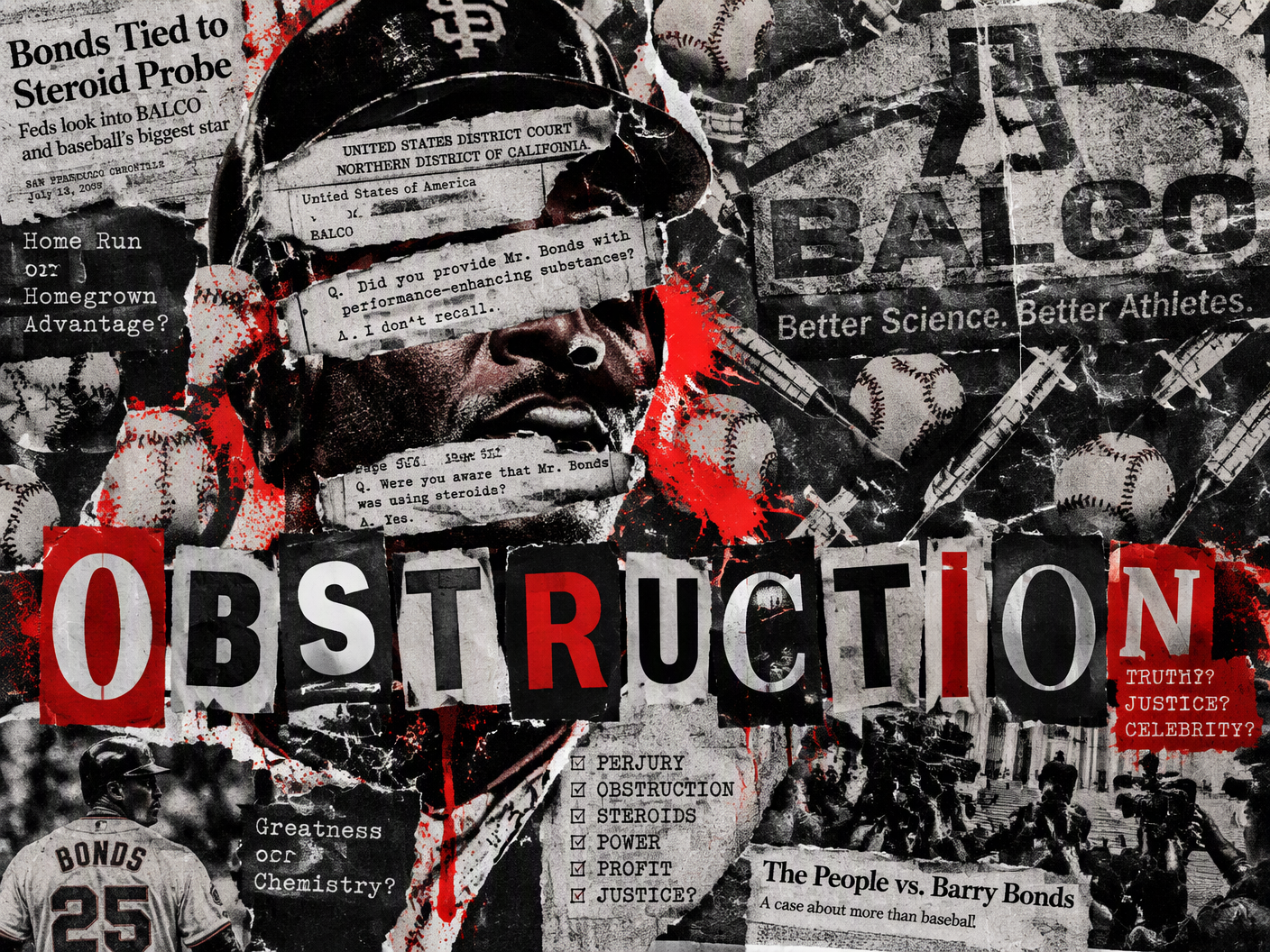
The answer that led to Barry Bonds’s obstruction-of-justice conviction was not a direct denial about steroids. Asked before a grand jury in 2003 whether his trainer, Greg Anderson, had ever given him anything that required a syringe, Bonds talked instead about friendship and growing up with a famous father. In April 2015, a federal appeals court reversed the conviction, finding insufficient evidence that the meandering response was material to the investigation. The ruling concerned witness testimony—not whether Bonds had used performance-enhancing drugs.
The testimony came during the investigation of the Bay Area Laboratory Co-Operative, known as BALCO. On November 15, 2007, a federal grand jury in San Francisco indicted Bonds on four perjury counts and one obstruction count. Prosecutors alleged that he had knowingly made false statements under oath about anabolic steroids and other performance-enhancing substances and had obstructed the investigation. Those were allegations, not findings; the Justice Department’s announcement expressly preserved his presumption of innocence.
By the time the trial jury returned its decision on April 13, 2011, it was considering three false-statement counts and one obstruction count. Jurors could not agree on the charges concerning Bonds’s denials that he knowingly took steroids or human growth hormone, and that anyone other than his doctors had injected him. U.S. District Judge Susan Illston declared a mistrial on those three counts. The jury convicted him only of obstruction. The unresolved charges were not acquittals, but neither were they findings that his denials were false. Prosecutors dismissed them in August 2011.
Bonds sat without visible emotion as the verdict was read. His lawyers immediately asked that the conviction be thrown out. Outside the courthouse, he flashed a victory sign to a few fans, but when one asked whether he would celebrate that night, he replied, “There’s nothing to celebrate.” He had finished his major-league career with a record 762 home runs; the trial concerned what he had said under oath.
The obstruction conviction rested on his response to the syringe question. “That’s what keeps our friendship,” Bonds had said, before describing himself as a “celebrity child” and adding, “I just don’t get into other people’s business because of my father’s situation, you see.” For that conviction, Illston sentenced him in 2011 to 30 days of home confinement, two years of probation, 250 hours of youth-related community service and a $4,000 fine.
A three-judge appeals panel upheld the conviction in 2013. But on April 22, 2015, an 11-judge panel of the Ninth Circuit reversed it, 10–1, and barred a retrial on the obstruction charge under the prohibition on double jeopardy. The judges who voted to reverse issued four separate opinions. Judge Alex Kozinski wrote that real witness examinations “invariably are littered with non-responsive and irrelevant answers.”
Jessica Wolfram, one of the trial jurors, recalled confusion over the fact that Bonds later answered the question. His appellate lawyer, Dennis Riordan, described the stakes in more pointed terms: “We had a panel opinion that said if you’re asked a question on page 78 and you digress before you answer it directly on page 81, you’re a federal felon.”