
Tragedy · 1930
The Peto and the Unprotected Horses of the Tercio de Varas
Modern Spanish bullfighting places the mounted picador on a horse covered by padded protection known as the peto. Before 1930, that protection was absent, and horses bore the full physical risk of the lance-and-bull encounter.
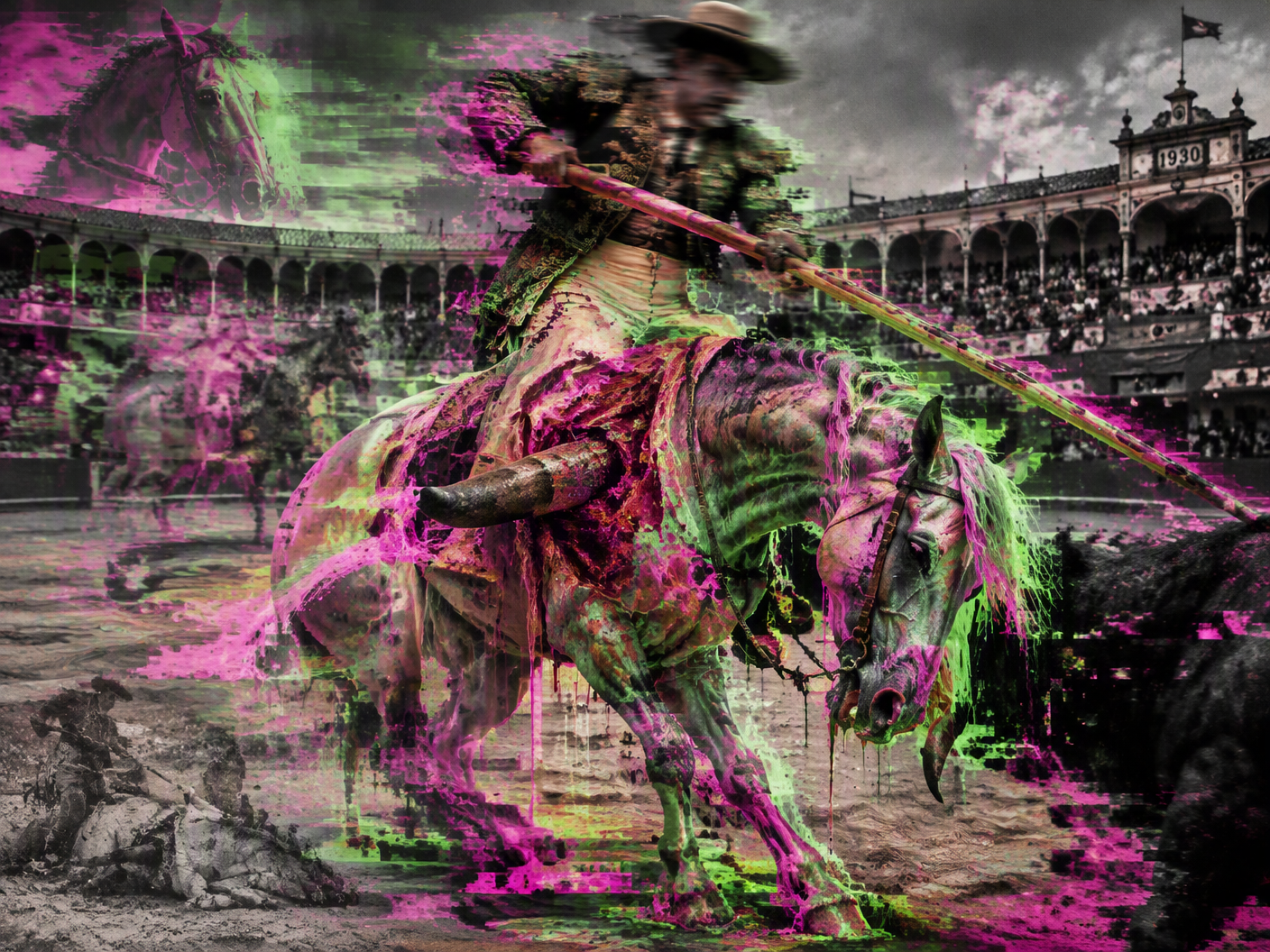
Before 1930, a picador entered the Spanish bullring on a horse without protective covering. The rider carried a lance; the horse carried nothing between its body and the bull. During the tercio de varas, the mounted man approached the animal and drove the lance behind the bull’s morrillo, the muscular rise at the back of its neck. The horse was part of the maneuver, part of the danger, and, in the earlier form of the practice, an unprotected participant in a contest built around controlled violence.
The modern ring presents a different arrangement. The picador still rides into the tercio de varas, but the horse wears a thick padded covering called the peto. It is not ornamental equipment. The covering marks a change in what the bullring permits the animal to absorb and what the institution expects to prevent. The rider remains exposed to the bull, and the bull remains the object of the lance, but the horse no longer enters the encounter without a layer of protection.
That change is easier to understand through the earlier danger than through the modern costume of the ring. Before protection was instituted, bulls often disemboweled the horses during the tercio de varas. The phrase belongs to the physical history of the practice, not to its later symbolism. A horse could be placed in the bull’s path, required to carry the mounted lancer into position, and left exposed when the animal turned its horns toward the nearest target.
The older balance of loss was described in terms that placed the horses ahead of the bulls. Before protective equipment became part of the practice, the number of horses killed during a fiesta generally exceeded the number of bulls killed. The comparison was not a ledger preserved here with a total for every ring or season. It was a broad description of how the tercio de varas distributed injury and death: the animal carrying the man could pay the greater price before the bull itself reached the end of the corrida.
The picador’s role helps explain why the horse occupied this position. Mounted above the ring floor, the rider used the horse to approach and hold the bull while placing the lance behind the neck. The horse’s movement brought the human participant close enough to perform the act, while its body stood between rider and horn. In the unprotected period, that arrangement transferred much of the immediate risk onto an animal unable to choose its distance or withdraw from the engagement.
The surviving historical account fixes the contrast more securely than it fixes the reform. It states that horses had no protection before 1930 and identifies the peto as the covering used in the modern Spanish practice. It does not name the first bullring, decree, municipal order, or governing body that instituted the change. The result is a clear before-and-after condition without a precise institutional appointment: an older ring without padding, and a later ring in which padding had become standard.
That uncertainty does not erase the significance of the transition. Bullfighting developed through rules, roles, equipment, and accepted limits, and each alteration changed the physical meaning of the performance. The peto did not remove the lance, the bull, or the mounted encounter. It altered the horse’s place within them. Protection became part of the recognized form of the corrida, even though the exact moment of adoption remains outside the surviving account assembled for this history.
The reform also belongs to a longer argument about what bullfighting asks living bodies to endure. Legal and academic discussions of the practice have treated it in relation to animal cruelty, regulation, and changing public standards. Those debates did not turn the ring into a safe place. They placed its injuries within a field of rules and judgments, where the equipment worn by a horse could become evidence of an altered boundary rather than a minor technical detail.
The danger did not end when the horse received protection. On 17 June 2017, in Aire-sur-l’Adour in south-western France, the Spanish matador Ivan Fandino was killed during a bullfight. He stumbled after tripping on his cape, and the bull pierced his torso. His death occurred in a different era and involved a different participant from the unprotected horses of the earlier Spanish rings, but it showed that the corrida retained a capacity for fatal injury even after its practices had been modified.
Ernest Hemingway gave the danger a lasting cultural formulation when he described bullfighting as the only art in which the artist is in danger of death. The sentence concerned the matador, the human figure at the center of the public performance. The earlier horses occupied another position: they were not the artists Hemingway named, yet they were placed inside the same field of force. The peto changed their protection without changing the fundamental fact that the ring depended on animals being brought into contact with danger.
What endured was therefore not a single confirmed reform date but a visible institutional distinction. The modern picador rides under the protection of the peto; the pre-1930 picador did not. Before that covering, horses were often disemboweled and generally died in greater numbers during a fiesta than the bulls eventually killed. The exact order, venue, and authority behind the change remain unidentified here. The padded horse, however, became part of the regulated image of the Spanish bullfight, preserving the boundary between the older practice and the ring that followed.
Investigative Dossier & Evidence
Read the companion investigation notes, verified source claims, and primary documents.
Read the Companion Notes & Evidence Record →