
Violence & Brawls · 1980s
Charles Martin’s Body Slam and the NFL Suspension That Followed
On November 23, 1986, Green Bay defensive end Charles Martin wore a towel displaying Chicago players’ numbers. After a Packers interception, he grabbed Bears quarterback Jim McMahon from behind and body-slammed him. Martin was ejected and later suspended for two games, while McMahon’s shoulder injury ended his season.
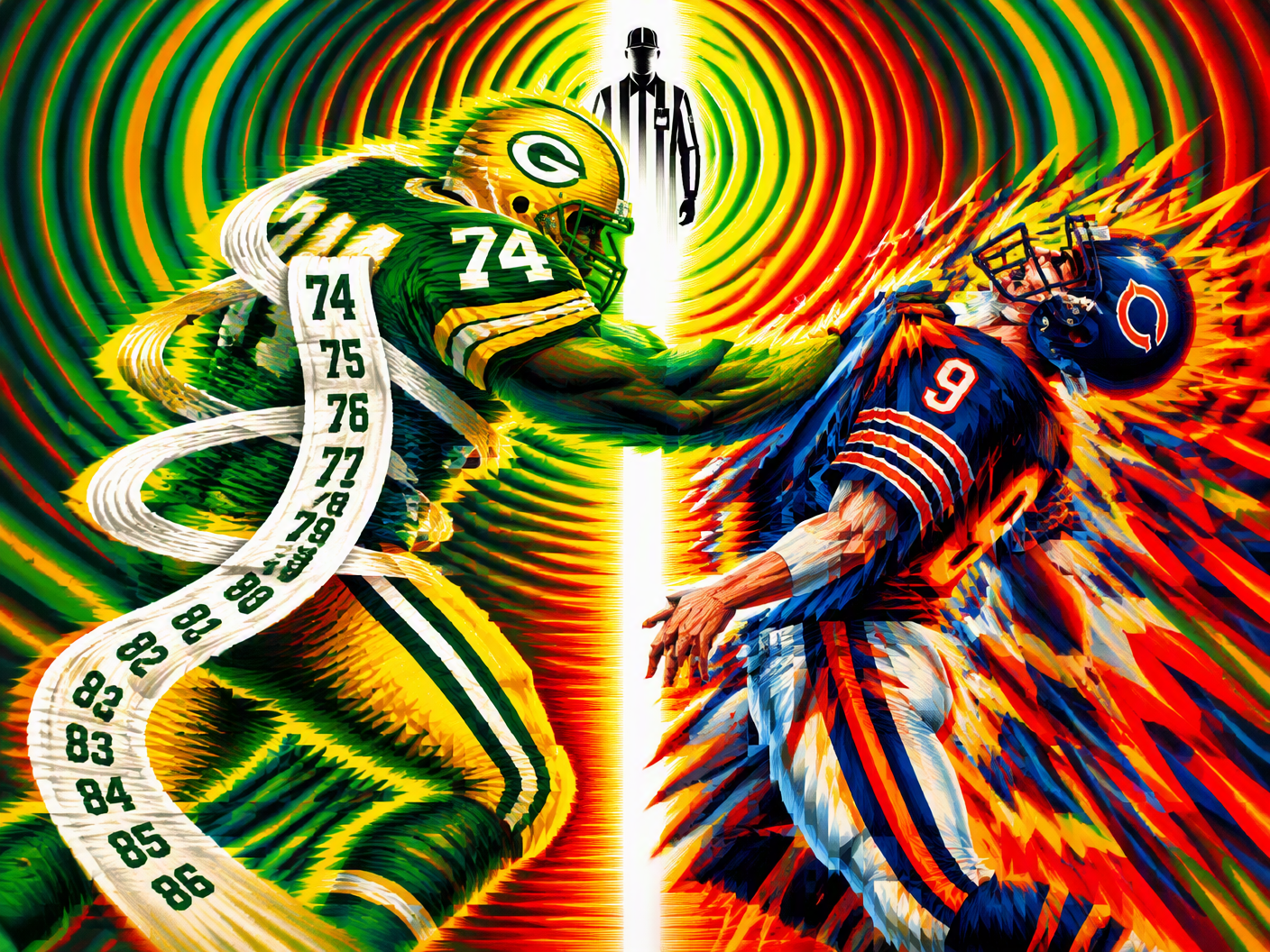
On November 23, 1986, at Soldier Field in Chicago, a Packers interception turned a routine change of possession into the defining disciplinary episode of Charles Martin’s career. Green Bay safety Mark Lee had intercepted the pass. Jim McMahon, Chicago’s quarterback, was no longer carrying the ball when Martin seized him from behind and drove him to the turf in a body slam. Referee Jerry Markbreit removed Martin from the game. The NFL followed with a two-game suspension, imposing a cost that extended beyond the afternoon and into the league’s understanding of violence away from the ball.
The incident had a prelude visible before the teams began playing. During warmups, Martin wore a white towel marked with the numbers of five Chicago offensive players. The object was simple, portable, and legible from the sideline: a piece of football equipment turned into a list of opponents. It later became attached to the story as evidence of Martin’s hostility toward the Bears. But the towel itself established only what it displayed and where Martin wore it. It did not, by itself, explain what he intended to do once the game began.
The game supplied the next fact in a different form. Lee’s interception changed possession; McMahon was involved in the play; Martin then grabbed him from behind and body-slammed him onto the field. The action was separate from the interception and separate from the ordinary effort to tackle a runner carrying the ball. That sequence gave the afternoon its fixed order: the pass, the turnover, Martin’s pursuit of McMahon, and the tackle that continued after the football had gone elsewhere.
Markbreit’s response came at once. The referee ejected Martin, ending his participation in the game rather than leaving the punishment to a later review. Ejection carried an immediate practical meaning in the NFL of the period: Martin had to leave the field while his teammates continued without him. The officials’ decision also preserved the play as an act requiring more than an ordinary penalty. On November 23, the game’s authority passed briefly from the players to the referee, and Martin’s afternoon ended there.
McMahon did not return to the 1986 season after the tackle. The shoulder injury suffered in the play caused further damage, and he missed the remainder of the year. That consequence gave the incident a measure beyond the ejection or the fine that might have followed a hard collision. A quarterback had been removed from Chicago’s season, not by a sack during an attempt to stop a pass, but by a hit after the decisive exchange of possession had already taken place.
The league’s answer arrived after the game in the form of a two-game suspension for Martin. The punishment did not erase McMahon’s lost season, and it did not convert the afternoon into a courtroom proceeding. It was an administrative decision made within professional football’s own rules and authority. Yet the length mattered. Martin was not merely sent away from Soldier Field; he was barred from taking part in the next two games, carrying the consequences of the Chicago play into the schedule that followed.
In later accounts, the white towel acquired a sharper name: a “hit list.” That phrase helped compress the afternoon into a story about preparation and intent. The visible facts were narrower and firmer. Martin had displayed the numbers of five Bears offensive players, then committed an ejectable act against McMahon after Lee’s interception. The towel could be remembered as a provocation, a threat, or a piece of personal theater. It could not alone establish a written plan to injure each player whose number appeared on it.
That distinction shaped the incident’s afterlife. The body slam could be seen, described, punished, and connected to McMahon’s lost season. Martin’s private purpose remained a different question. Football often preserved such moments through shorthand—the towel, the interception, the quarterback on the ground, the referee’s ejection—until the shorthand became larger than the sequence that produced it. The enduring core was less elaborate: Martin acted after the ball had changed hands, Markbreit expelled him, and the league suspended him for two games.
Nearly two decades later, Martin died in Houston. The 2005 Chicago Tribune obituary gave his age as 46, while other published biographical accounts listed a different figure. In the years before his death, he had undergone regular dialysis treatments for about a decade. The medical burden belonged to a later chapter, separate from the Soldier Field play and separate from the league’s discipline. Martin was buried at Woodstock Cemetery outside Canton, Georgia. The circumstances of his death were reported, but the precise medical cause was not fixed by an official death certificate within the public account preserved for the episode.
The record that endured was therefore made of several different kinds of consequence. The pregame towel remained an image of confrontation; the interception established the moment before the violence; the body slam ended Martin’s participation; the suspension carried the league’s judgment beyond the stadium; and McMahon’s damaged shoulder ended his season. By 2005, Martin’s death had placed the football episode inside a much longer biography, but it did not alter the sequence of November 23, 1986. The lasting fact was the league’s decision to treat the act as something requiring removal, suspension, and institutional memory.
Investigative Dossier & Evidence
Read the companion investigation notes, verified source claims, and primary documents.
Read the Companion Notes & Evidence Record →