
Scandals & Feuds ·
The Test That Ended Maradona’s 1994 World Cup
Argentina removed its captain after a positive test for banned substances. Maradona denied taking drugs, and FIFA suspended him pending a later ruling.
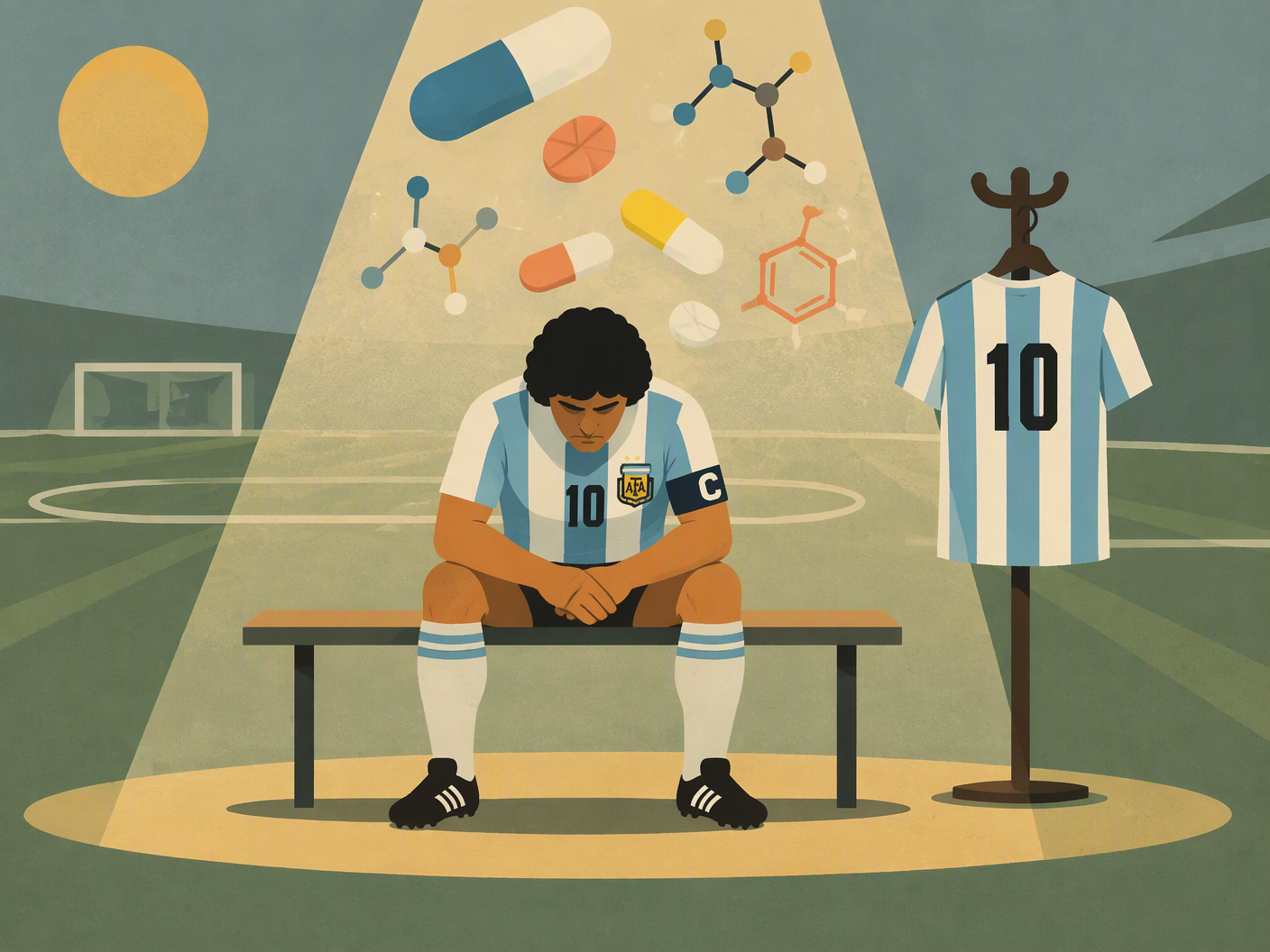
Argentina removed Diego Maradona from its World Cup squad on June 30, 1994, after a urine test taken following its match against Nigeria was positive for banned substances related to ephedrine. The 33-year-old captain had played in Argentina’s opening two games. His fourth World Cup was over, and FIFA suspended him from all football activity pending a ruling after the tournament.
Maradona had been one of two Argentine players selected for testing after the Nigeria game. A second sample from the same urine test was also expected to be positive, and more detailed testing at the University of California at Los Angeles found traces of five banned substances.
The Argentine football federation convened an emergency meeting as the team prepared to face Bulgaria in its final group match. Its chairman, Julio Grondona, said it had “made the decision to expel Diego Armando Maradona from the team.” FIFA World Cup officials accepted the decision. The Independent reported that the federation acted out of concern about possible sanctions against the team. Argentine officials said Maradona’s personal trainer and dietician had given him the substances without the officials’ knowledge.
Maradona denied taking drugs. “I didn’t take drugs and above all I did not let down those who love me,” he said.
FIFA’s medical expert, Dr. Michel d’Hooghe, said the findings could not be explained by a single cold-remedy pill. “We did not find one pill containing the five products so we suppose it must be a cocktail,” he said. He described the substances as acting on the central nervous system to increase concentration and physical ability.
FIFA general secretary Sepp Blatter said Maradona would “remain suspended from all football activity” until a ruling after the finals. Maradona had already served a 15-month FIFA suspension after testing positive for cocaine while playing for Napoli in 1991, but Blatter declined to discuss the eventual penalty in the new case. With Maradona removed from Argentina’s squad, he said there was “no urgency for Fifa to deal with the matter now.”
On July 1, while the rest of the team headed to California for its match against Romania at the Rose Bowl, Maradona stayed in New England with his wife and two children. At an apartment hotel in Merrimack, New Hampshire, they spent the afternoon swimming and sunning.
Maradona borrowed a basketball from a local 14-year-old, Matt Broughton, and dribbled it. Broughton recognized him but kept quiet. “I wasn’t sure if I should say anything, so I decided not to,” he said. “He was pretty good (dribbling). I was surprised.”