
Violence & Brawls · 1980s
The 20/20 Slap: Dr. D Schultz and John Stossel’s 1984 Wrestling Confrontation
During a 1984 ABC 20/20 segment, John Stossel called professional wrestling fake and David “Dr. D” Schultz struck him, knocking him down twice. Stossel later described persistent ear pain, while Schultz attributed the attack to Vince McMahon and faced professional and legal consequences.
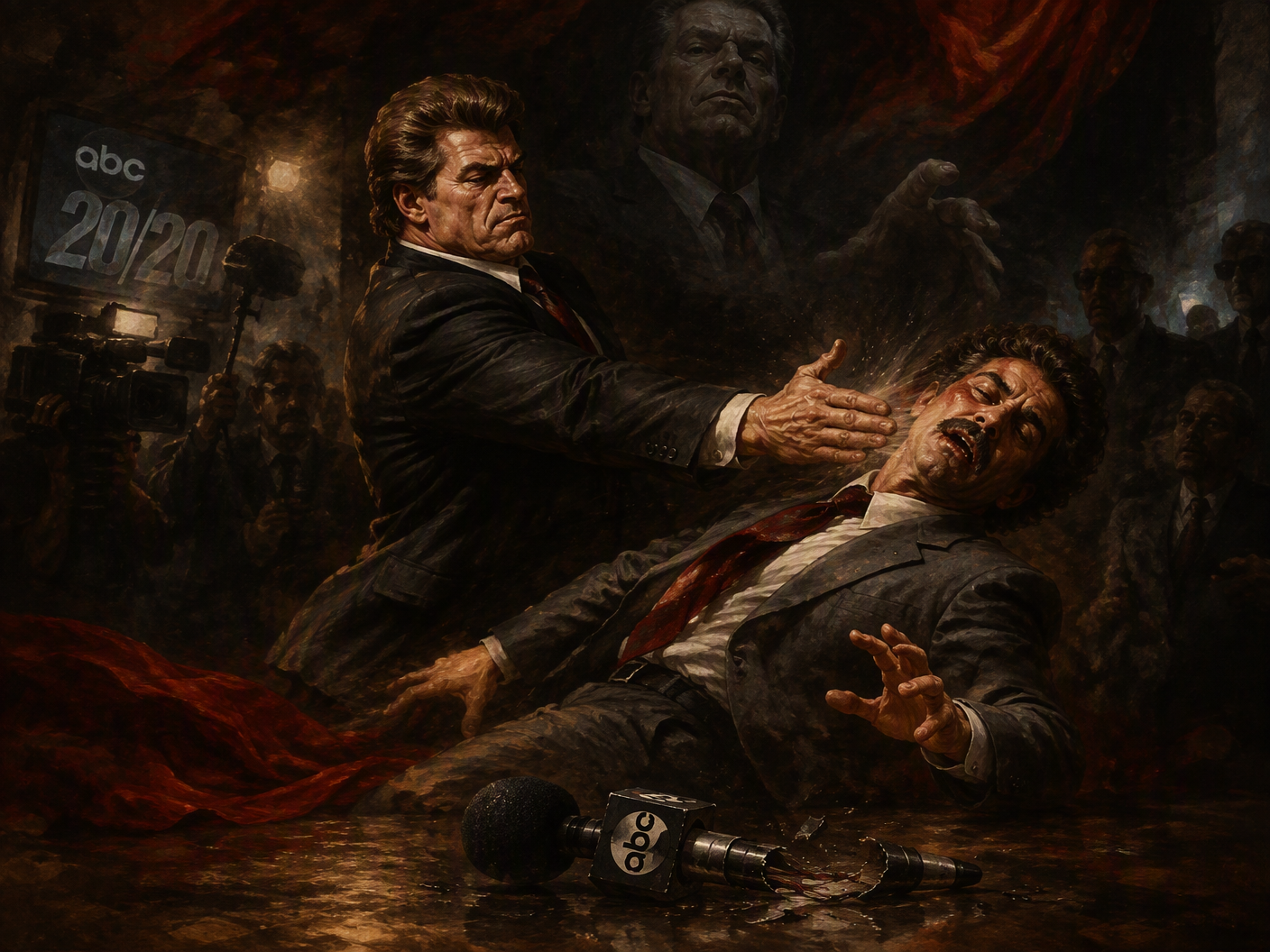
In 1984, while ABC filmed a 20/20 segment about professional wrestling, John Stossel told David “Dr. D” Schultz that wrestling was fake. Schultz answered with his hand. He slapped Stossel and knocked him to the ground twice. The exchange converted a television question into an actual assault before the segment’s subject could be contained by the conventions it was examining. Stossel was a reporter testing wrestling’s public claim to authenticity. Schultz was the wrestler standing inside that claim. The physical answer became the defining fact of the interview.
The remark was simple, but it carried a direct challenge to the business Schultz represented. Professional wrestling depended on the audience accepting a controlled performance as a contest, while reporters and viewers debated where performance ended and reality began. Stossel put that dispute into a sentence. Schultz turned it into contact. The setting remained a television segment, but the interaction no longer followed the ordinary limits of an interview. A question about wrestling’s authenticity produced an event whose authenticity was impossible to manage afterward.
Schultz slapped Stossel and sent him down. Then Stossel went down again. The distinction mattered inside wrestling, where a planned blow and a real assault belonged to different categories of conduct. The incident was not treated as another move in a match. It became a “shoot,” the industry term used for a genuine confrontation outside the expected performance. The word supplied a label, not an excuse. A wrestler had used physical force against a reporter during the filming of a television report.
Stossel later said the effects continued for eight weeks. He described pain and buzzing in his ears after the slap, extending the incident beyond the few seconds captured by the segment. Those symptoms became part of the confrontation’s human consequence: the television exchange ended quickly, but the reporter said his body continued to register it. The account did not turn the assault into a wrestling angle or a temporary interruption. It made the physical cost part of the story that followed.
The confrontation also exposed a practical imbalance between the people in the frame. Stossel brought the authority of a national news program and the language of investigation. Schultz brought the immediate physical power of a professional wrestler. When Stossel called wrestling fake, he challenged an institution’s public presentation. When Schultz struck him, the response transferred the cost of that challenge onto the individual asking the question. The segment had been built to examine wrestling. Schultz supplied its most consequential answer without using words.
Years later, Schultz gave the attack a second explanation. He said he had struck Stossel because Vince McMahon wanted him to. McMahon was the owner and executive whose authority stood above Schultz within the wrestling organization. Schultz’s statement placed the slap inside a chain of command rather than presenting it as a solitary burst of temper. It also assigned motive to an executive who was not the person seen making contact. The later explanation widened the incident from an individual assault into an allegation about institutional direction.
That explanation changed the question surrounding the segment. The issue was no longer only why Schultz reacted to a reporter’s words. It became whether an executive’s desire to protect wrestling’s image could reach a wrestler as an instruction to use force. Schultz said that it could. His statement attached McMahon’s name to the decision, but it did not alter the visible sequence: Stossel spoke, Schultz slapped him, and the reporter hit the ground twice. The physical act remained direct even as its proposed motive moved upward.
The assault led to lawsuits. That consequence gave the segment a legal afterlife beyond the broadcast and beyond wrestling’s internal vocabulary. A television confrontation had produced an injury claim, a dispute over responsibility, and a financial risk for the people connected to the program. The public story retained the slap because it was easy to see. The lawsuits carried the less visible question of what obligations followed when a performer crossed from simulated violence into actual force during a news production.
Schultz was later fired after the incident. The employment consequence marked a boundary the segment itself had already crossed: whatever value a wrestler’s aggression held inside a performance, striking a reporter created a liability that could not be absorbed as part of the act. The dismissal did not erase the footage or Stossel’s account of the weeks that followed. It established a professional cost for the assault while leaving the public with the image that had caused the cost in the first place.
Schultz’s later life supplied another detail to the portrait. He said he had tracked down about 1,700 fugitives as a bounty hunter. The claim linked the wrestler’s public identity to a second occupation built around pursuit, apprehension, and physical authority. It also reinforced the unusual shape of the Stossel episode: the man who had answered a television challenge with force later described himself as someone who pursued people outside the law’s reach. The bounty-hunter account belonged to Schultz’s own explanation of who he was after wrestling.
The 20/20 confrontation endured because its parts refused to stay in their assigned places. A reporter’s question became a bodily encounter. A wrestler’s performance identity became the means of a real assault. A later statement by Schultz placed Vince McMahon behind the decision, while lawsuits and Schultz’s firing gave the episode consequences outside the studio. Stossel said pain and buzzing remained eight weeks later. The camera recorded the strike; the later explanation supplied its alleged command structure. Neither changed the central act that began with two words: wrestling was fake.
Investigative Dossier & Evidence
Read the companion investigation notes, verified source claims, and primary documents.
Read the Companion Notes & Evidence Record →