
Tragedy · 1990s
Felix Bwalya’s Final Title Fight and Zambia’s Dissolved Boxing Board
Felix Bwalya left a disputed Commonwealth title fight as the 107-105 winner, then entered a hospital with severe head symptoms and died nine days after the bout. Zambia suspended boxing officials, opened an independent inquiry, and later dissolved the board responsible for overseeing the contest.
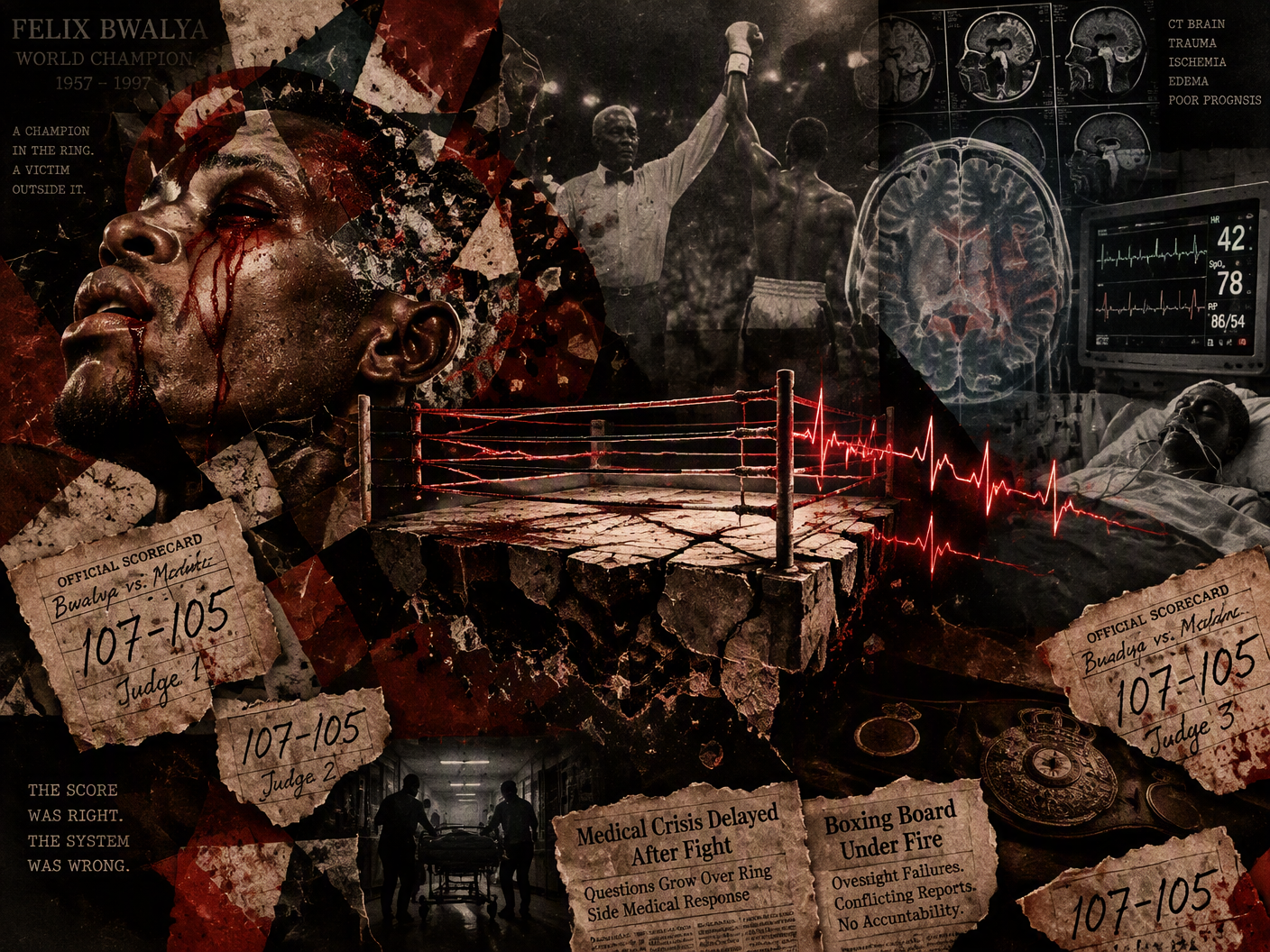
On December 14, 1997, Felix Bwalya completed twelve rounds against Paul Burke at the Mulungushi International Conference Centre in Lusaka. The Commonwealth super lightweight championship was decided by two points: Bwalya, 107; Burke, 105. That verdict placed the title with the Zambian fighter and brought an immediate protest from the British boxer’s camp. Yet the consequential turn came after the score had been announced. Bwalya developed a severe headache, was taken to the University Teaching Hospital, and passed from a completed championship contest into a medical emergency.
The dispute first belonged to boxing’s established procedures. Burke’s camp challenged the decision. Hugo Mulenga, who had refereed the bout, defended his handling of it, and Hilary Matyola, chairman of the Zambia Professional Boxing Board of Control, also supported the referee. The result remained a Bwalya victory. Within days, however, the argument over scoring had been overtaken by the champion’s condition. The officials who had exercised authority inside and around the ring would soon face questions not merely about a verdict, but about the supervision of a contest followed by grave neurological decline.
By December 16 or 17, Bwalya was at the University Teaching Hospital in Lusaka after complaining of the severe headache. He later entered a coma. The interval was central to what followed: the fighter had completed the scheduled rounds, received the decision, and left the competitive portion of the evening behind before the full extent of his injuries became apparent. There had been no ringside ending that forced everyone present to confront the outcome at once. The crisis developed afterward, beyond the scorecards and the formal conclusion of the bout.
Bwalya did not recover from the coma. At 16:00 on December 23, nine days after the fight, he died at the University Teaching Hospital. He had entered the Mulungushi centre as the Commonwealth champion defending his title and had emerged from the contest with the official victory still attached to his name. By the following week, the central documents were no longer limited to the referee’s score or Burke’s protest. They included a hospital course ending in death and a postmortem examination of the injuries sustained by a twenty-seven-year-old professional boxer.
The autopsy listed cardio-respiratory failure, cerebral concussion, severe blunt head injuries, and right-side broncho-pneumonia among the causes and contributing findings. The entries traced several stages of physical collapse: trauma to the head, neurological injury, respiratory failure, and pneumonia affecting the right lung. They also shifted the official aftermath toward the conditions under which the fight had been conducted and supervised. The score remained 107-105, but it now sat beside a medical accounting of what had happened to the man whose raised hand had settled the championship decision.
Burke’s protest did not produce an official reassignment of the title. The controversy instead divided into separate questions. One concerned the two-point decision and the conduct of the referee. Another concerned Bwalya’s injuries, the delayed medical crisis, and the responsibilities of the authorities overseeing professional boxing in Zambia. Mulenga continued to defend his performance, as did Matyola. Their defenses addressed the contest as they had managed it on December 14. Bwalya’s death compelled the government to consider the larger administrative structure that had licensed, staffed, and regulated the event.
Soon after the death, Sports Minister William Harrington announced suspensions. Matyola, two other members of the Zambia Professional Boxing Board of Control, and referee Hugo Mulenga were removed from their duties while the government examined the case. Harrington also formed an independent committee to investigate Bwalya’s death. The response reached beyond the customary disagreement between opposing corners. State authority had entered a matter previously governed through the boxing board, its officials, and the rules of a Commonwealth championship contest. The question was now whether those arrangements had adequately protected the fighter placed under their supervision.
In the ensuing weeks, the Zambia Professional Boxing Board of Control was dissolved for its role in Bwalya’s death. Dissolution carried a different institutional consequence from suspending a referee or removing several administrators: the body itself lost its authority to continue operating in the form that had overseen the bout. Bwalya’s case therefore altered more than the tenure of the men involved on fight night. It ended the board’s existing arrangement for governing professional boxing in Zambia, leaving the state to rebuild oversight after a champion’s fatal deterioration exposed the costs carried by the fighter.
The sequence resisted the clean ending implied by a championship decision. In the ring, Bwalya had fulfilled the sport’s immediate demand: twelve rounds completed and a points victory secured. Outside it, his body entered a crisis that the sporting verdict could neither measure nor reverse. The injury was borne by the boxer; the administrative consequences arrived later, distributed among a referee, board members, an inquiry committee, and finally the board itself. That division between immediate physical risk and delayed institutional response became the most durable meaning of the Lusaka contest.
On April 26, 2016, nearly nineteen years after Bwalya’s final fight, Nevada boxing officials announced a requirement built around the same problem of neurological harm that may emerge across time rather than at the final bell. Bob Bennett, executive director of the Nevada Athletic Commission, joined Cleveland Clinic brain-health researcher Charles Bernick in announcing that every fighter licensed in Nevada would undergo regular brain-health testing. The policy treated neurological monitoring as a continuing condition of licensure, placing repeated medical assessment within the commission’s ordinary responsibilities rather than leaving it to a single prefight examination.
The Nevada rule belonged to another jurisdiction and another generation of regulation, but it marked the direction combat-sports oversight had taken: toward monitoring the brain before injury became an obvious emergency. Bwalya’s documented afterlife remained fixed in the official acts produced around his death. One record awarded him the Commonwealth title by 107-105. Another listed concussion and severe blunt head injuries. The government then suspended the officials and dissolved the board. The points decision survived, but so did the administrative judgment that the institution responsible for the contest could not continue unchanged.
Investigative Dossier & Evidence
Read the companion investigation notes, verified source claims, and primary documents.
Read the Companion Notes & Evidence Record →