
Scandals & Feuds · 2020s
Peter Foley’s Sexual Misconduct Complaints, Termination, and SafeSport Suspension
Peter Foley served as head coach of the U.S. snowboard team from 1994 until U.S. Ski & Snowboard placed him on leave and terminated him in 2022. Complaints from former athletes and an employee were followed by a ten-year suspension from the U.S. Center for SafeSport.
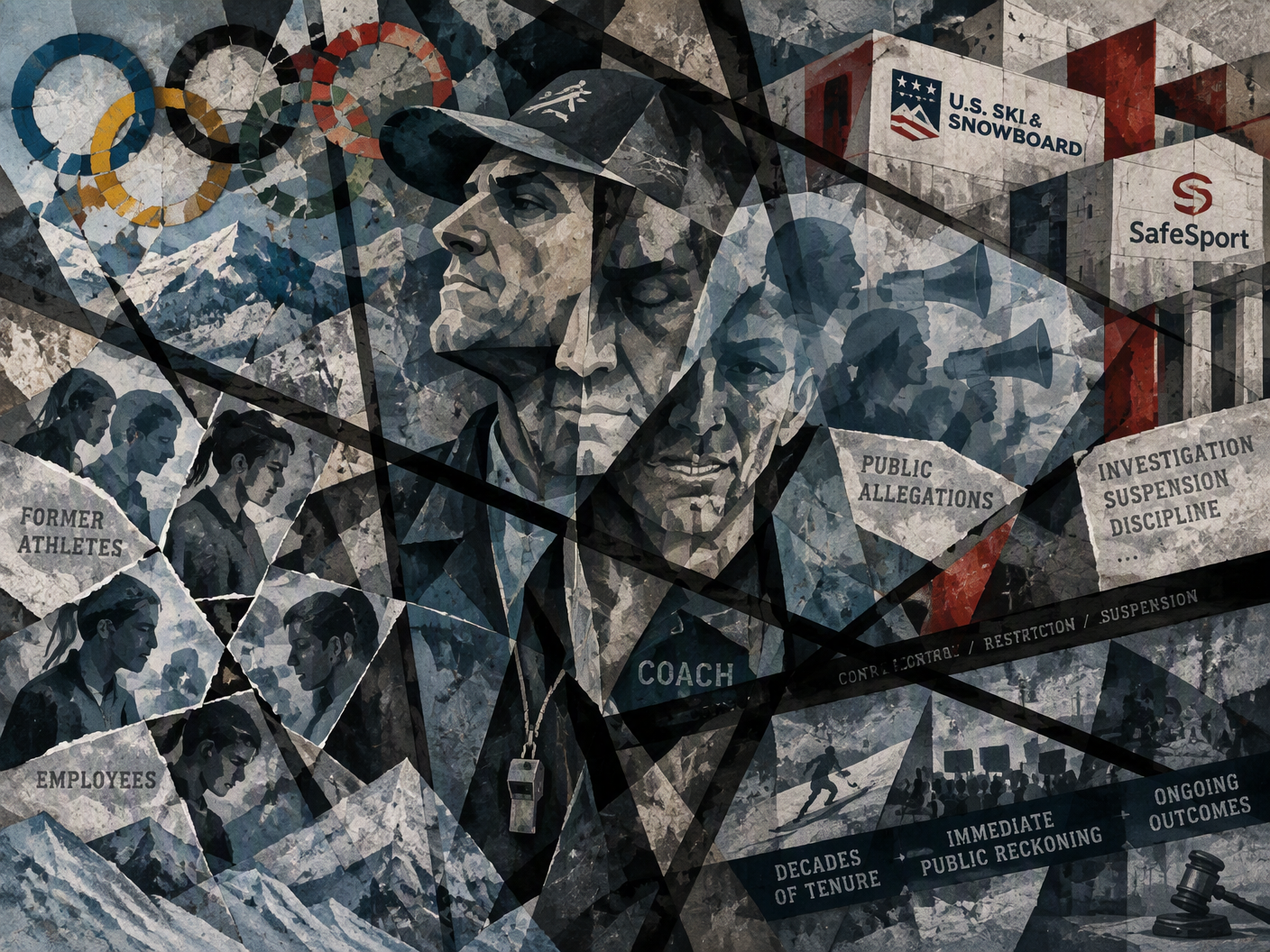
In February 2022, during the Beijing Winter Olympics, Callan Chythlook-Sifsof posted public allegations of sexual misconduct involving Peter Foley. The post brought a decades-long coaching relationship into immediate institutional view. U.S. Ski & Snowboard responded with an athlete-safety plan that restricted Foley’s access to female athletes and to areas of the athlete village. On February 21, the organization placed him on leave. The sequence moved from a public allegation to restricted access and then to a formal interruption of Foley’s employment.
Foley had begun serving as head coach of the U.S. Snowboard team in 1994. For nearly three decades, that position made him a continuing authority within the national program, through changing teams, Olympic cycles, and generations of athletes. U.S. Ski & Snowboard, the governing body responsible for the program, employed him until the events of 2022. His long tenure formed the institutional background against which the later complaints were handled: the allegations concerned not a brief association but a coach who had occupied the same senior role since the team’s earlier Olympic era.
One allegation reached back to 2008. Lindsey Sine Nikola, a former U.S. Ski & Snowboard employee, alleged that Foley coerced her into taking nude photographs and sexually assaulted her. The allegation belonged to an earlier period of Foley’s employment, long before the Beijing Olympics and before SafeSport imposed any discipline. Its inclusion among the later complaints widened the time span under examination and connected the 2022 crisis to conduct alleged by someone who had worked inside the organization rather than competed for it.
Chythlook-Sifsof was a former U.S. Snowboard team member and a 2010 Olympian when she made her allegations public in Beijing. Her post placed Foley’s name into the Olympic setting at the moment when the national program was managing athletes, coaches, credentials, and access in a concentrated international environment. U.S. Ski & Snowboard did not leave Foley’s role unchanged while the matter moved forward. The safety plan limited his contact with female athletes and kept him away from athlete-village areas, converting the organization’s concern into specific restrictions.
The next formal step came on February 21, when U.S. Ski & Snowboard placed Foley on leave. Leave removed him from active employment without yet completing the organization’s final employment decision. For athletes and staff, the practical boundary had already shifted: the coach who had led the snowboard team since 1994 no longer operated with his former access. The organization’s response therefore unfolded in stages—public allegations, a safety plan, restricted contact, and leave—before the disciplinary body responsible for Olympic sport reached its own conclusion.
During March 2022, three former athletes and one former U.S. Ski & Snowboard employee filed sexual misconduct complaints about Foley with the U.S. Center for SafeSport. The group included people who had occupied different positions around the program, but their complaints entered the same reporting and disciplinary channel. SafeSport was established to receive abuse complaints and impose sanctions within the Olympic and amateur-sport system. The filings transformed a public accusation at the Games into a set of formal complaints directed to the body with authority to discipline participants across that system.
On March 20, 2022, U.S. Ski & Snowboard terminated Foley’s employment. He was no longer employed by the organization, ending his formal connection to the national snowboard program after nearly twenty-eight years as its head coach. The termination followed the February safety plan and leave, while the SafeSport complaints were moving through a separate process. Those decisions belonged to different institutions: U.S. Ski & Snowboard acted as employer and national governing body; SafeSport held the authority to determine whether sport-related discipline would follow.
Foley denied that any allegations of sexual misconduct were true. The consequences already imposed in 2022 came through sports administration rather than a criminal prosecution: his employer restricted his access, placed him on leave, and terminated him. The complaints then remained within SafeSport’s disciplinary system, which operates separately from a criminal court. That distinction shaped the next stage. Employment could end before a disciplinary sanction was issued, and the organization’s action did not itself determine the legal status of every underlying allegation.
For more than a year after the termination, the SafeSport process continued. On August 8, 2023, the U.S. Center for SafeSport suspended Foley for ten years for sexual misconduct. The sanction supplied the final institutional action in the period covered here, extending well beyond the loss of his U.S. Ski & Snowboard position. It also placed the allegations within the formal discipline of organized Olympic sport, where a suspension can regulate a person’s participation even when the matter has not proceeded as a criminal case.
By then, the sequence had crossed three stages of authority. A former Olympian’s public allegations prompted immediate safety restrictions at the Beijing Games; U.S. Ski & Snowboard moved from leave to termination; and former athletes and an employee brought complaints to SafeSport. The ten-year suspension on August 8, 2023 became the enduring administrative outcome. Foley’s coaching tenure, begun in 1994, remained part of the program’s history, but his later status was defined by the employment decision and the sanction that followed it.
Investigative Dossier & Evidence
Read the companion investigation notes, verified source claims, and primary documents.
Read the Companion Notes & Evidence Record →