
Violence & Brawls · 1st century BC–4th century CE
The Patch on the Caestus
Roman boxing used leather wraps before later caestus forms were loaded with lead, metal studs, or stones. At Vindolanda, a repaired glove preserves what hard use did to the handgear.
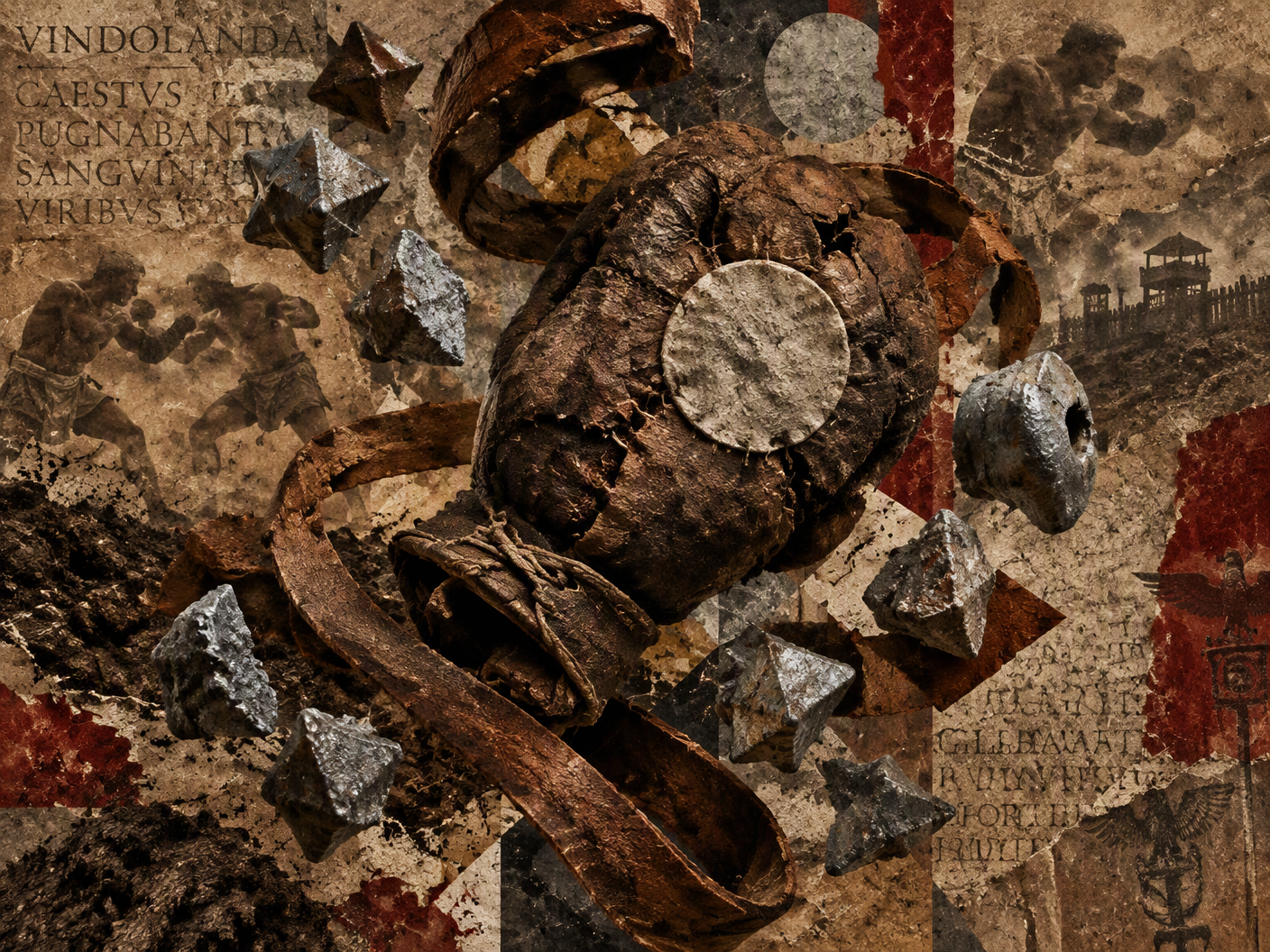
A circular patch covers a tear on the larger of two leather boxing gloves excavated at Vindolanda in Northumberland. The gloves came from a pre-Hadrianic cavalry barracks, where the military site kept this piece of sporting equipment in the ground. The patch is not decoration. It is a repair made to leather that had already failed.
Roman boxing handgear was made from leather bands or wraps. Virgil's Aeneid describes boxers preparing with thongs made from ox-hide, a literary record of the hand being bound before the contest. The wrap stayed close to the fist. The caestus did not stay simple.
The Smithsonian describes the caestus as a battle glove equivalent to brass knuckles. Its account says Greek and Roman gladiators made it by wrapping leather around lead, metal studs, or stones. Those later forms put hard material inside the handgear and changed what a punch carried into the contest.
Sci-News reports that boxing was a popular spectator sport in the Roman Empire and that Roman garrisons gambled on matches. The Smithsonian states that matches became so bloody that the caestus was banned in the first century AD. The ban came after the reinforced form had made the contest more dangerous, though the source does not specify the legal instrument or issuing authority.
The larger Vindolanda glove bears extreme wear along its contact edge. Its tear was covered by the circular patch. The glove remains as a small record of the handgear's working end: leather wrapped, used, damaged, and repaired.
Investigative Dossier & Evidence
Read the companion investigation notes, verified source claims, and primary documents.
Read the Companion Notes & Evidence Record →