
Scandals & Feuds ·
The Gambling Debts Mizuhara Paid With Money Stolen From Ohtani
The former interpreter admitted transferring nearly $17 million without the baseball player’s permission. He was sentenced to 57 months in federal prison.
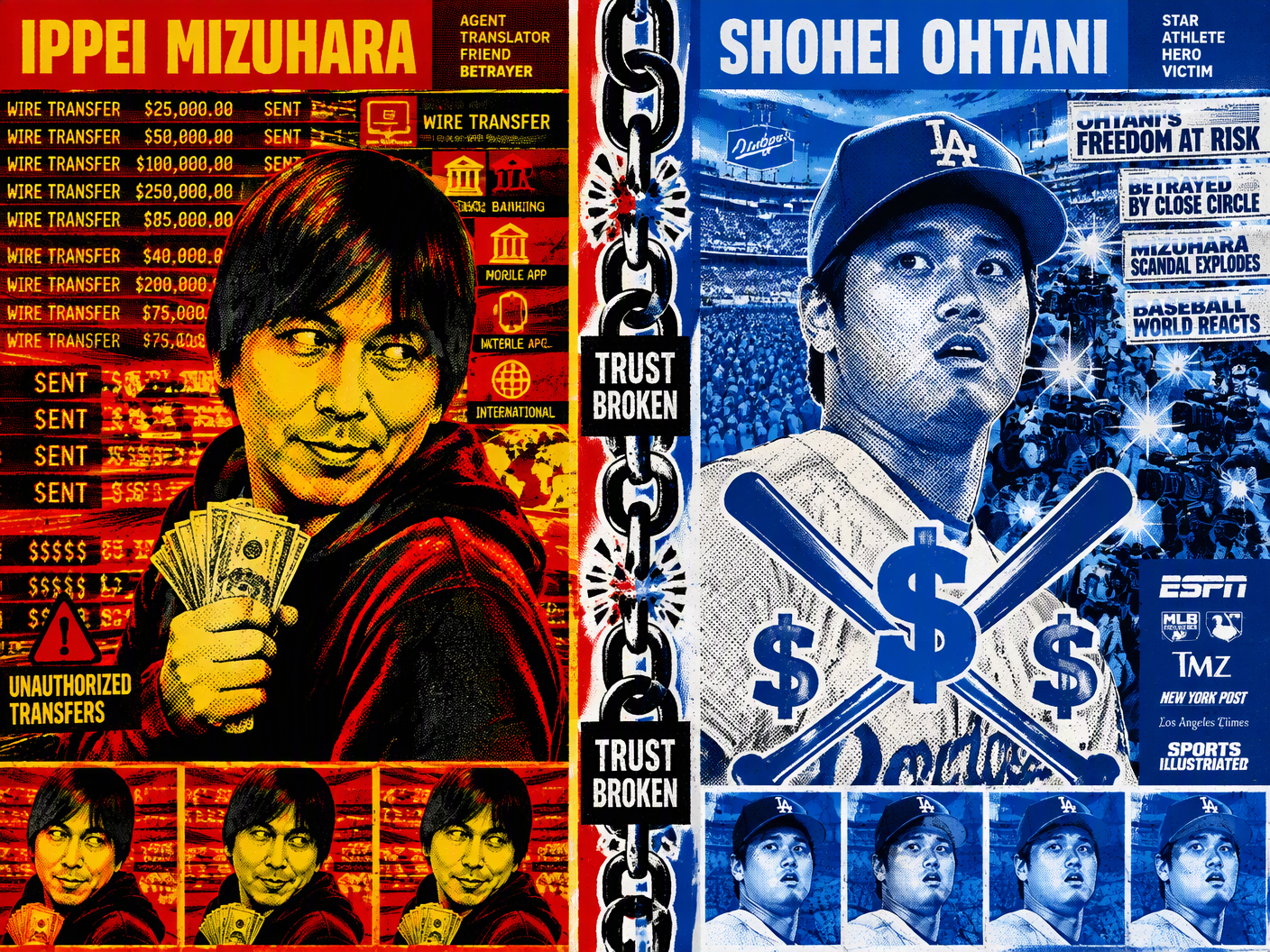
For more than two years, Ippei Mizuhara moved money out of Shohei Ohtani’s bank account to pay his own gambling debts. The former interpreter admitted transferring nearly $17 million without the baseball player’s permission, using more than 40 wires to send it to associates of an illegal bookmaker. On Feb. 6, 2025, a federal judge in Santa Ana, California, sentenced him to 57 months in prison.
The transfers ran from November 2021 to March 2024, according to Mizuhara’s plea agreement. He also admitted impersonating Ohtani in calls to the bank on two dozen occasions. The money went to associates of Mathew Bowyer, who separately pleaded guilty to federal charges for running an illegal gambling business that took unlawful sports bets from hundreds of customers, including Mizuhara, according to the Justice Department.
Mizuhara had worked as Ohtani’s interpreter with the Angels and then the Dodgers. The Dodgers fired him in March 2024 after the controversy surfaced. At a press briefing that month, Ohtani said in a prepared statement delivered through an interpreter, “I am very saddened and shocked that someone who I trusted has done this.” Prosecutors said Ohtani was a victim and had never bet on baseball.
Mizuhara pleaded guilty in June 2024 to bank fraud and subscribing to a false tax return. His prison terms for the two offenses were ordered to run concurrently. The judge also ordered three years of supervised release and more than $18 million in restitution, including nearly $17 million to Ohtani and more than $1 million to the Internal Revenue Service.
Before sentencing, Mizuhara asked Judge John Holcomb for a “merciful and not punitive” sentence. In a letter, he described financial pressures that he said had led him to start betting through Bowyer’s website in 2021. He said he did not realize the business was illegal until early 2024. “My gambling debt had grown so much that I could not find any way to pay it but to use Shohei’s money,” he wrote.
His attorney, Michael Freedman, sought an 18-month sentence, arguing that Mizuhara had a longstanding gambling addiction and had been under financial stress. Prosecutors disputed those explanations. They said they could find no proof of a longstanding addiction and rejected Mizuhara’s claim that debt had forced him to steal millions from Ohtani.
Holcomb also challenged the portrayal of Mizuhara as an underpaid worker. The judge noted that Ohtani had given him five-figure tips and a Porsche, covered travel expenses for him and his wife, and paid most of their rent. When Mizuhara took the first $40,000 from Ohtani to pay his first debt, the judge noted, he had more than $34,000 in his own account.
In court, Mizuhara apologized to Ohtani, the Dodgers, the judge and the government. “I am not trying to justify my actions,” he said. “I am prepared to receive my punishment.”