
Tragedy · 1990s
Jimmy García’s Brain Injury After the Ruelas Title Fight
On May 6, 1995, 23-year-old Colombian boxer Jimmy García fought Gabriel Ruelas for the WBC super featherweight title in Las Vegas. The bout ended in an 11th-round stoppage; García collapsed afterward, underwent surgery for a brain blood clot, never regained consciousness, and died thirteen days later.
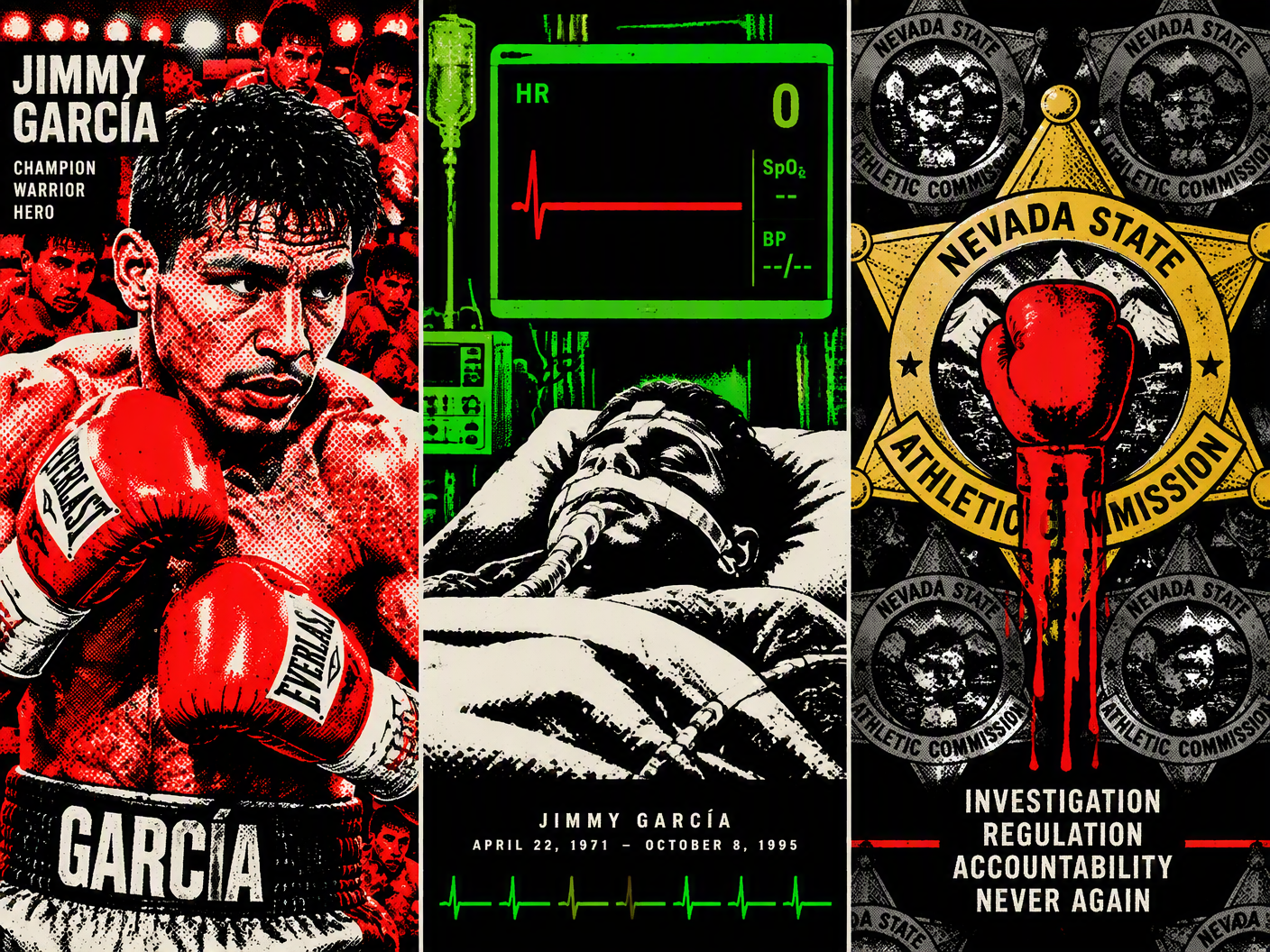
On May 6, 1995, at Caesars Palace in Las Vegas, Jimmy García’s title fight ended in the 11th round. García, a 23-year-old boxer from Colombia, had entered the ring against Gabriel Ruelas for the World Boxing Council super featherweight championship. The bout was stopped, and after it ended García collapsed in his corner. The decisive change came after the official contest was over: a championship night had become a medical emergency, and García’s condition would carry the event far beyond the ring.
The sequence was brief but irreversible. The referee and ringside physician belonged to the formal order of the fight, where a stoppage could close the contest. García’s collapse made the boundary between competition and treatment immediate. He was taken to University Hospital in Las Vegas, the same city in which he had fought, and doctors began treating a brain injury. The title at stake could be settled in rounds; the damage that followed would be measured in surgery, consciousness, and the support required to keep him alive.
At University Hospital, doctors operated to remove a blood clot from García’s brain. The operation addressed the physical condition that had followed the fight, but García did not wake afterward. He remained unconscious and was kept on life support. Hospital staff and García’s family occupied the days between May 6 and May 19 with a problem that had no sporting timetable: whether his body would recover enough for consciousness to return. It never did.
García’s age and origin gave the case a human scale that the title designation could obscure. He was 23 and Colombian, a professional boxer whose identity in the Las Vegas contest was defined, for one night, by the opponent across from him and the athlete in the corner after the stoppage. The sequence remained fixed: fight, collapse, hospital surgery, unconsciousness. The injury was not a separate episode removed from the bout; it was the event that followed it and determined everything that came afterward.
The hospital became the principal site of the story. The arena had supplied a date, a title, an opponent, and an ending to the contest. University Hospital supplied the next facts: a blood clot, brain surgery, unconsciousness, and life support. Bill Pellegrino, the hospital’s nursing supervisor, confirmed that García had died and said García never improved. His statement compressed the medical course into its essential measure. Between the collapse in his corner and the death thirteen days later, there was no return to consciousness.
On May 19, doctors disconnected life support in Las Vegas, and García died. He had reached the hospital after collapsing at Caesars Palace on May 6, undergone surgery for the blood clot, and remained unconscious through the intervening period. The dates gave the injury a second duration: not only the length of a fight stopped in its 11th round, but thirteen days of treatment before death. García’s family remained connected to the hospital course while medical staff carried out his care.
The death also moved from the hospital into the jurisdiction that had licensed the contest. Marc Ratner, executive director of the Nevada State Athletic Commission, said Nevada boxing officials would investigate García’s death and continue studying injuries related to boxing. That announcement recognized two connected facts: a boxer had sustained a fatal brain injury after a title bout, and the state commission had to examine what the sport’s officials and medical safeguards had done before and after the collapse. The announced inquiry became the immediate institutional response.
Ratner’s position mattered because the response came from the Nevada authority responsible for professional boxing in the state. The fight had been a WBC title bout, but its aftermath required attention to the local officials and medical personnel present at Caesars Palace and to the treatment delivered in Las Vegas. The sequence crossed institutional boundaries: a sanctioning body supplied the championship, ringside officials ended the contest, a hospital treated the injury, and the state commission announced an inquiry into the death.
For the people who had known García as a boxer, the central reversal occurred within minutes of the stoppage. The bout could be named by its round and title; García’s condition could be named only by what followed—the collapse, the blood clot, the operation, the persistent unconsciousness, and the life support. He never regained consciousness. The language of a contest could describe the first part of May 6, but it could not contain the thirteen-day hospital course that ended on May 19.
Afterward, the title designation remained attached to the bout, but Nevada’s response attached another question to it: how boxing officials should examine injuries that continued after a referee’s stoppage. Ratner’s announced investigation and continuing study of boxing-related injuries were the institutional response stated at the time. García’s name became attached to a fixed sequence—a title fight, a brain operation, thirteen days without consciousness, and death in Las Vegas—while the championship contest itself receded behind the medical consequence that followed it.
Investigative Dossier & Evidence
Read the companion investigation notes, verified source claims, and primary documents.
Read the Companion Notes & Evidence Record →