
Scandals & Feuds ·
The Wraps Found Before Margarito’s Loss to Mosley
Officials discovered plaster-like material before the bout. Margarito fought without the hard pads, but he and his trainer later lost their licenses; both denied that the boxer knew the wraps were illegal.
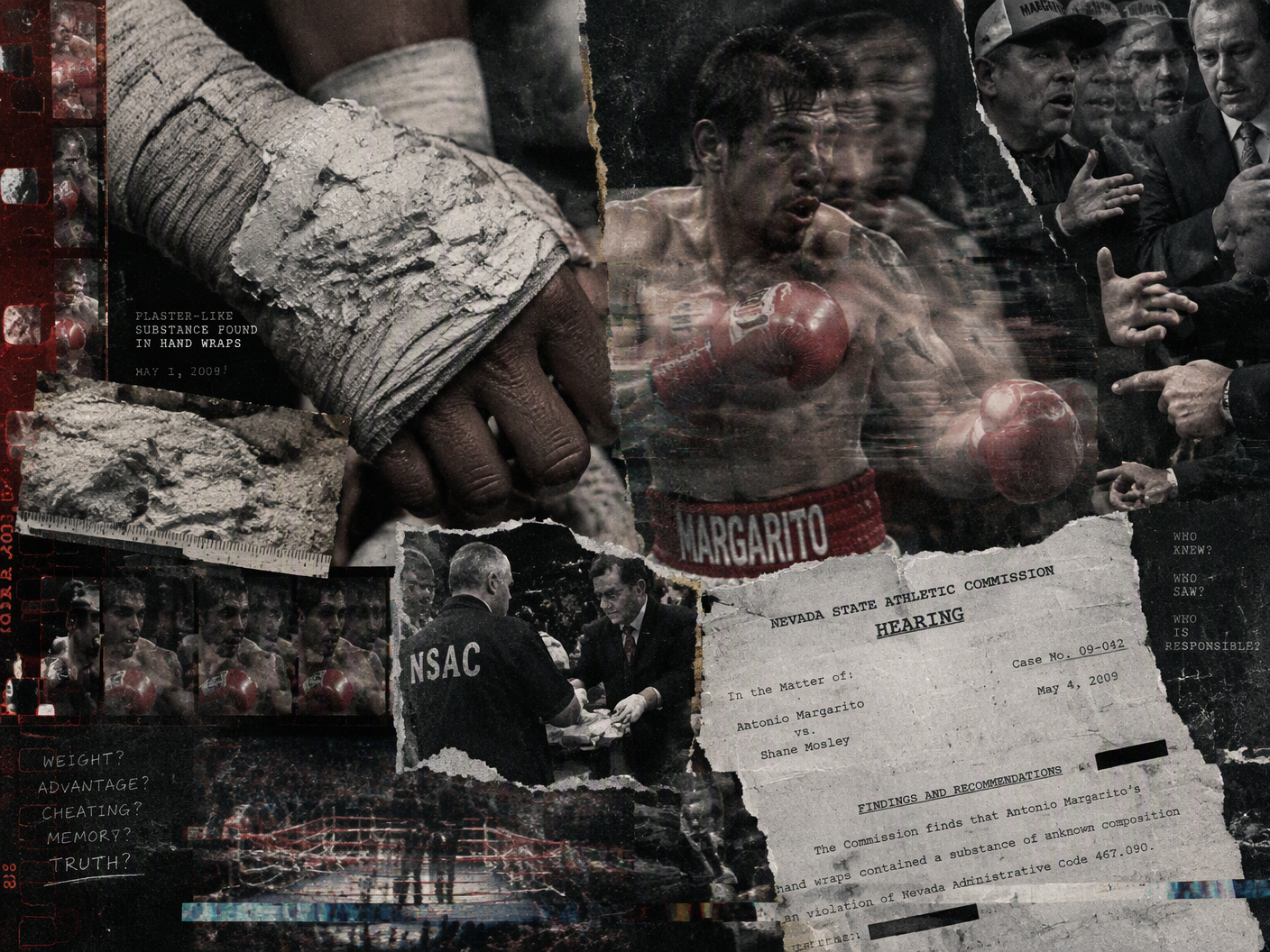
Minutes before Antonio Margarito was due to face Shane Mosley at Staples Center in Los Angeles on January 24, 2009, Mosley’s trainer, Naazim Richardson, ordered Margarito’s hands unwrapped. Officials found a plaster-like substance inside the usual tape around his fists. The discovery did not stop the fight, but it would bring Margarito and his trainer, Javier Capetillo, before California’s boxing regulators.
Margarito did not fight with the hard pads in his gloves. Mosley stopped him in the ninth round and took his World Boxing Association welterweight title. The loss came after Margarito had won the belt from Miguel Cotto the previous July.
At the commission hearing in Sacramento, inspector Mike Bray described the pads as “moist and dirty looking with a white substance smeared across the pad, like a cast plaster.” A hardened substance such as plaster can give a fighter heavier hands and add power to his punches. The pads were still being tested by the commission at the time of the ruling; the substance was described as plaster-like, not established as plaster.
Capetillo told the panel that he had reached for the wrong pads in his equipment bag and accidentally placed the wrong inserts in Margarito’s wraps. “I committed a big mistake,” he said. “I don’t want this young man [Margarito] to have problems. I’m here to cover any responsibility. I take full responsibility. I committed this innocent mistake.” Margarito, Capetillo and Top Rank promoter Bob Arum all insisted that Margarito had not known the wraps were illegal.
On February 10, 2009, the California State Athletic Commission voted 7–0 to revoke both men’s licenses for at least one year. The decision effectively barred Margarito from fighting in the United States, where other states generally honor such suspensions. Neither man could simply return when the year elapsed: both would have to apply to the California commission for reinstatement.
Arum, who attended the hearing, accepted Capetillo’s punishment but rejected Margarito’s. The trainer “deserved what he got,” he said. Taking the boxer’s license, however, was “an absolute outrage.” Arum argued that Margarito was being punished for something his trainer had allegedly done without his knowledge, and said he would challenge the ruling in court and appeal to the Association of Boxing Commissions.
The state treated both men’s conduct as a safety issue. “The conduct of both Mr. Margarito and Mr. Capetillo was unacceptable and threatened the health and safety of another licensee,” said Carrie Lopez, director of California’s Department of Consumer Affairs, which licenses fighters.