
Doping & Drugs ·
The Night Rabobank Removed Its Tour Leader
Michael Rasmussen’s dismissal over disputed whereabouts ended his race. A later inquiry found deliberate deception, but could not settle which board members knew he would not be in Mexico—or prove doping.
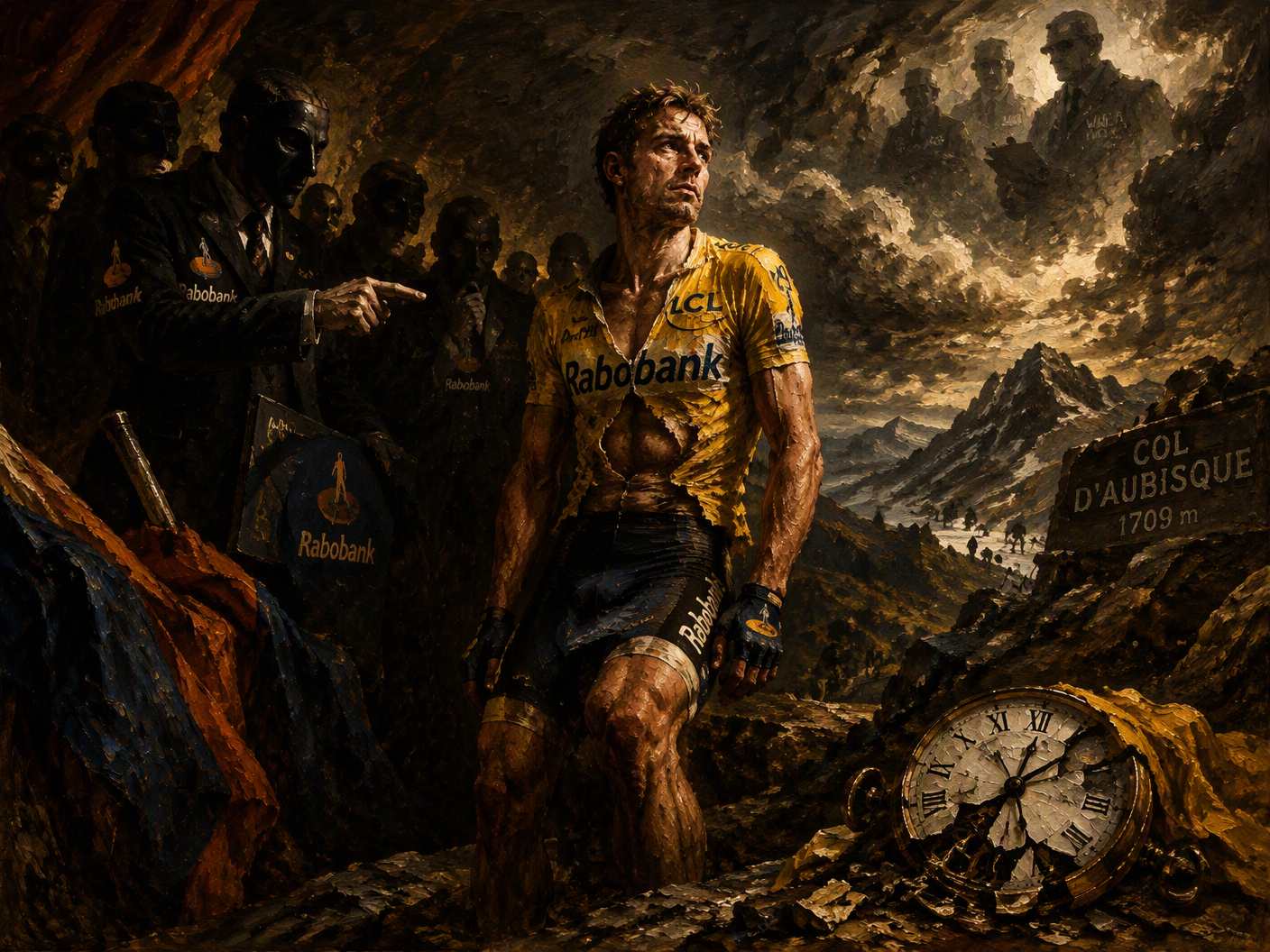
On July 25, 2007, Michael Rasmussen won the Tour de France’s final mountain stage on the Col d’Aubisque, extending his overall lead with four days of racing left. That evening, his own team ended his Tour. Rabobank dismissed the 33-year-old Dane, saying he had lied about his training whereabouts in June: he had told the team he was in Mexico, while the team concluded he had been in Italy.
“Michael Rasmussen has been sent home for violating the team’s internal rules,” a Rabobank spokesman said. Rasmussen, who had held the yellow jersey since July 15, denied the allegation in the Danish tabloid BT. “I am shattered,” he said. “I am on the verge of tears. I was not in Italy. Not at all.” He described the account as “the story of one man who believes he recognized me” and said there was no evidence.
The dispute followed disclosures that Rasmussen had missed out-of-competition doping tests. Riders were required to supply their whereabouts so testers could find them without warning. Rasmussen acknowledged making a mistake in missing four tests and said he supported efforts to make cycling drug-free. Rabobank manager Theo de Rooy had known about the missed tests and had fined him €10,000.
The timing drew a pointed response from International Cycling Union president Pat McQuaid. “My immediate reaction is why didn’t they do this at the end of June, when they had the same information?” he asked, while applauding the withdrawal. De Rooy said the team had received new information on the day of the dismissal. Tour director Christian Prudhomme welcomed Rasmussen’s removal but drew a distinction: “We cannot say that Rasmussen cheated.”
Alberto Contador inherited the race lead. His Discovery Channel team did not present the change as a victory. “It’s in no way a celebration on our end,” spokesman P.J. Rabice said. “It reflects badly on our sport.” Separate positive tests involving Alexandre Vinokourov and Cristian Moreni had already led to their teams leaving the race. Rabobank continued without Rasmussen. Its sponsorship chief, Helen Crielaard, said Rasmussen had not tested positive and described the decision as an enforcement of rules.
The dismissal did not settle who had known where Rasmussen was. He disputed his firing and claimed the team knew his whereabouts and had arranged travel to Italy and France. Rabobank commissioned an independent inquiry, whose report was released in November. Before its publication, Rasmussen admitted lying about his whereabouts, saying he had done so “for personal and marital reasons alone and in consideration of my family.”
The inquiry traced warning signs back to April. In an email about a planned June training trip to the Pyrenees, Rasmussen asked that the trip be kept quiet because he was supposed to be in Mexico. De Rooy replied that he must give the testing authorities correct information and that his employer would not cooperate in a cover-up. Rasmussen then told De Rooy he wanted to keep the training trip secret from the press.
The committee concluded that Rasmussen had deliberately supplied incorrect whereabouts information and should not have been allowed to start the Tour. But it could not resolve his claim that other board members knew he would not be in Mexico; those members denied it. Their accounts remained, the committee said, “conflicting word-against-word statements.” It also drew a limit around its findings: evading testing created a strong suspicion of doping, but did not prove that Rasmussen had used it.