
Scandals & Feuds · 1940s
Mickey Owen’s Mexican League Contract, Suspension, and $35,000 Court Judgment
In 1946, Mickey Owen left organized baseball for a Mexican League contract, returned to Mexico after a brief attempt to rejoin the Dodgers, and played a season for Veracruz. Commissioner Happy Chandler suspended him and denied his reinstatement; six years later, a federal court ordered Owen to pay Jorge Pasquel $35,000 for breaching the contract.
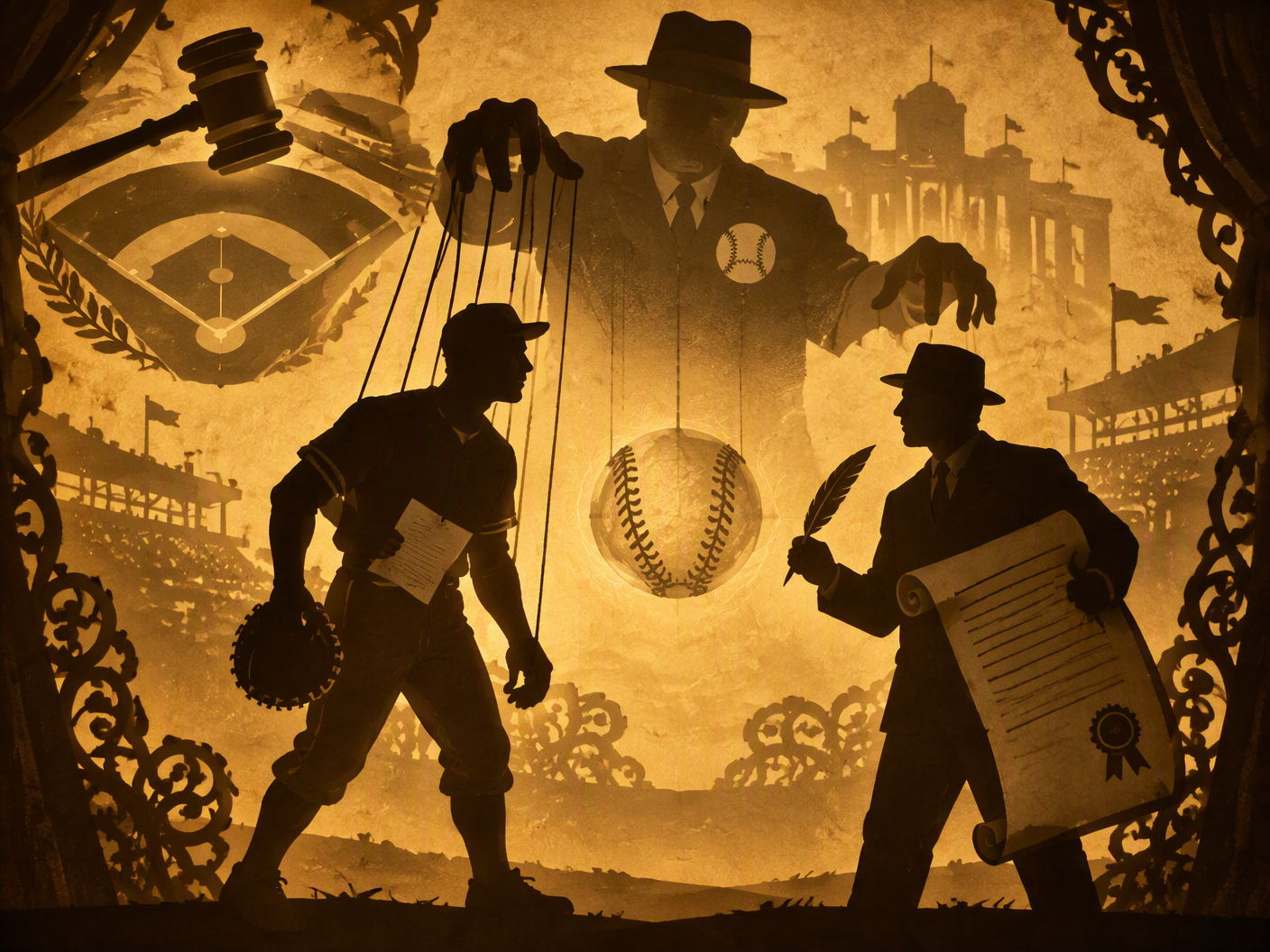
On April 1, 1946, Jorge Pasquel announced that Mickey Owen had signed a five-year agreement to become a player-manager in the Mexican League. The announcement placed a major-league catcher inside a rival baseball system only months after organized baseball resumed its postwar business. Owen’s contract was identified with Unión Laguna de Torreón, while his 1946 playing assignment was Veracruz. The distinction belonged to the contract and the club arrangement, not to rumor. Owen had accepted a competing employer, and Commissioner Happy Chandler was preparing to treat that decision as a direct challenge to organized baseball’s authority.
The move carried immediate institutional consequences. Chandler suspended players who had left organized baseball for Mexico, placing Owen among the defectors whose eligibility would be controlled from an office in the United States rather than by the Mexican clubs that had signed them. The suspension converted a labor decision into a question of status: Owen could play, but not on the terms recognized by Major League Baseball. Pasquel had offered a contract. Chandler answered with exclusion. Each man possessed a different kind of power, and Owen was caught between them.
Owen did not simply leave one league and settle permanently in the other. He made a brief attempt to abandon the Mexican contract and return to the Brooklyn Dodgers. That effort failed, and he went back to the Mexican League. The sequence matters because it turned his departure into an active contract dispute before any federal judge addressed it. Owen had tried to change employers again; Pasquel’s agreement remained the instrument used to hold him to the Mexican side of the arrangement.
In Veracruz, Owen played rather than merely occupying a disputed roster place. During the 1946 season he appeared in 51 games, batted .256, and drove in 25 runs. The numbers were ordinary enough to make the transaction concrete. This was not an announced expedition without athletic consequences. Owen’s body, name, and professional value had been transferred into a league willing to pay for established major-league experience, while his previous league answered by suspending the player it no longer controlled on the field.
His Mexican League tenure also included confrontations that later accounts placed within the racial tensions surrounding the club and the league. One involved Booker McDaniel, a Black All-Star pitcher whom Owen reportedly refused to catch in the 1946 All-Star context described in the sources. Another involved Claro Duany, a Black player, after a collision at home plate. The encounter became a fistfight. Those incidents became part of Owen’s Mexican League story, but the surviving public account does not adjudicate the private intent behind every exchange.
On August 5, Owen left Mexico and applied for reinstatement in Major League Baseball. The application made his position explicit: he wanted the league that had suspended him to restore his eligibility. Chandler refused. The commissioner’s decision closed the immediate route back to the Dodgers and preserved the punishment attached to the Mexican League jump. Owen’s departure from Mexico therefore produced no clean return to his former career. The contract dispute remained, and so did the league’s refusal to recognize him as available for reinstatement.
The refusal also exposed the unequal leverage built into the episode. Chandler could determine whether Owen was permitted to return to organized baseball. Pasquel could insist that the five-year agreement still bound him. Owen could leave Mexico, but he could not make either authority disappear by changing locations. The catcher’s employment decision had become a dispute over who could define the consequences of a broken professional relationship: the commissioner through suspension, or the club owner through contract law.
Pasquel chose the second route. He filed a breach-of-contract suit against Owen in federal court in Springfield, Missouri. The filing moved the conflict out of baseball administration and into civil litigation, where the central question was no longer whether Owen could play for the Dodgers. It was whether his departure from the Mexican arrangement created financial liability to the man who had signed him. A suspended player had become a defendant, and the five-year promise had become the basis for a claim for money.
In 1952, the federal court ruled against Owen and ordered him to pay Pasquel $35,000. The judgment gave the Mexican League contract a consequence that Chandler’s suspension could not: a monetary liability imposed by a court. Owen had already lost his requested reinstatement. Six years later, he also faced a payment order arising from the agreement he had tried to leave. The dispute had traveled from a baseball office to a courtroom, but its underlying leverage remained the same—the value of a player’s commitment could be claimed by the institution that had purchased it.
The episode left behind two separate findings with different reach. Organized baseball suspended Owen and Chandler denied his return. Federal court imposed a $35,000 judgment after Pasquel sued for breach of contract. Those outcomes establish the transaction and its consequences more firmly than they establish Owen’s private motives for leaving, or the full meaning of the racially charged confrontations in Mexico. What remains measurable is the path: a five-year contract, a return to Veracruz, a denied reinstatement, and a civil judgment that followed Owen beyond the baseball field.
Investigative Dossier & Evidence
Read the companion investigation notes, verified source claims, and primary documents.
Read the Companion Notes & Evidence Record →