
Tragedy · 2010s
Ollie Matson’s Dementia and the Post-Mortem CTE Finding
Ollie Matson spent his final years with dementia and died in Los Angeles on February 19, 2011, from complications that included respiratory failure. Nearly two years later, researchers identified his donated brain in a study that characterized it as showing stage 4 chronic traumatic encephalopathy.
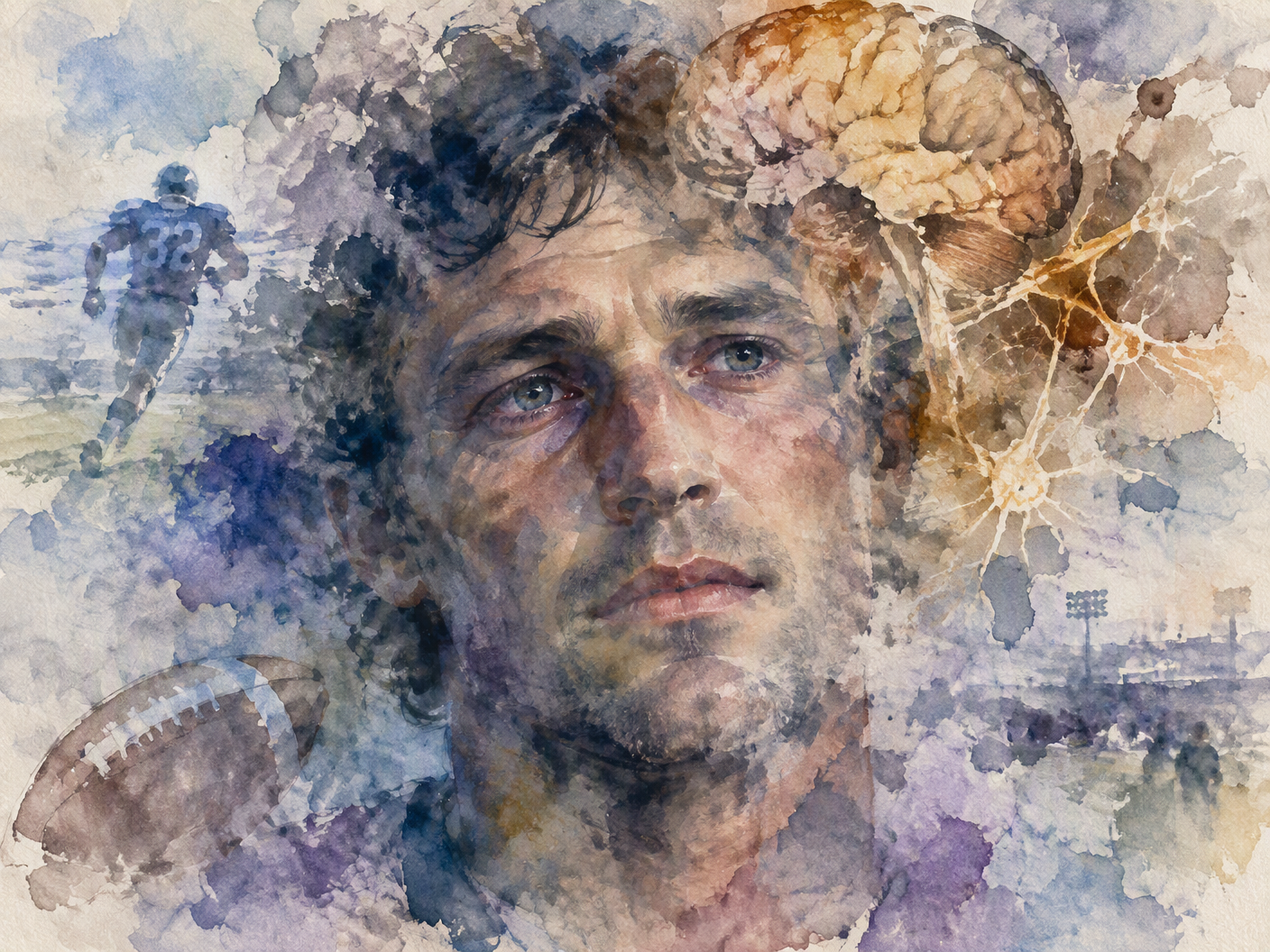
On February 19, 2011, Ollie Matson died in Los Angeles, California. The cause attached to his death was not a collision in a stadium or a failure on a track, but complications of dementia, including respiratory failure. By then, the athlete who had run for the United States at the 1952 Olympics and spent fourteen seasons in professional football had become part of a different chronology: one measured through the disappearance of memory, the narrowing of ordinary life, and the medical consequences that followed.
Matson’s public life had begun with speed. In Helsinki in 1952, he won a bronze medal in the 400 meters and a silver medal in the 4x400-meter relay. The same year, he entered the professional game that would define his working life. From 1952 through 1966, he played as a halfback and return specialist, positions that placed him close to contact and demanded acceleration after the first collision. Those achievements remained fixed in statistics and Olympic results while his later years moved in the opposite direction, toward dementia and dependence.
The public account of Matson’s final years is brief, but its sequence is clear. Dementia had become part of his life before his death. The condition was not presented as a temporary episode or an isolated diagnosis; it was the illness associated with the last stage of his biography. On the day he died, its complications included respiratory failure. The language joined cognition and bodily function in a single final event, showing how a condition that begins in the mind can eventually govern the most basic work of the body.
For more than a year after Matson’s death, the public story ended there. His death could be placed in Los Angeles, and dementia could be named as its central medical circumstance, but the later neurological finding had not yet entered the account. The next development came from a study of donated brains belonging to deceased athletes and military veterans. Its subjects were no longer available for interviews or clinical examination. Their brains had become the material through which researchers attempted to examine the consequences of repeated head impacts after life had ended.
On December 4, 2012, the study entered public view through reporting that described its findings. Researchers had examined the brains of eighty-five deceased subjects who had experienced multiple concussions during military service or organized sports. Chronic traumatic encephalopathy was found in sixty-eight of them. The numbers gave the study its scale, but they did not erase the individuality of the people inside it. Each brain represented a life that had continued beyond the field, the parade, or the uniform and had eventually been reduced to tissue available for examination.
Matson was one of the deceased athletes included in that examination. His name therefore moved from the death notices and career summaries into a post-mortem research cohort. The finding did not come from a test performed during his playing career, nor from a diagnosis made while he could describe his own symptoms. It came after February 19, 2011, when researchers examined his donated brain and interpreted what they found. The distinction was built into the timing: dementia had marked his later life; the CTE characterization came afterward.
The reported characterization was stage 4 chronic traumatic encephalopathy. In the study’s framework, that placed Matson’s brain within the highest stage named in the account. The designation gave a neurological term to a life whose final years had already been defined by dementia, but it did not turn the two words into interchangeable ones. Dementia was the condition associated with Matson’s decline and death. Stage 4 CTE was the post-mortem research finding attached to the examined brain.
The study’s broader result supplied context without providing a private clinical history for every subject. Sixty-eight of eighty-five brains showed CTE among people who had suffered multiple concussions in military service or organized sports. Matson’s inclusion connected him to that population, and the reported stage 4 finding placed his case within the study’s most advanced category. What the public received, however, was a reported research conclusion rather than a day-by-day account of his symptoms, a transcript of his medical care, or a clinical narrative from his final years.
That order of events altered the meaning of Matson’s career without changing its facts. The Olympic medals remained medals. The fourteen seasons of professional football remained a record of employment and achievement. Dementia remained the illness that shaped his later life and figured in the circumstances of his death. The brain examination added a second, posthumous account of injury, one that could be made only after the athlete was gone. It offered researchers a specimen and the public a diagnosis, but not a conversation with the man who had carried the consequences.
Matson’s death also fixed the limits of what could be said with confidence. He died in Los Angeles on February 19, 2011. Dementia complications, including respiratory failure, were reported as the cause. His brain was examined in the later study, and researchers characterized it as stage 4 CTE. Those facts form the durable public account. Claims extending beyond them—about the exact progression of his silence, or rankings that describe his case as among the most severe ever found—belong to a different layer of retelling and are not established by the verified account.
The afterlife of Matson’s career thus rests in two places at once. One is the familiar public archive of Olympic medals, professional seasons, touchdowns, and returns. The other is the post-mortem study in which his brain became evidence in a growing examination of repeated head impacts. Between those two archives lies the life that cannot be reconstructed in full: an athlete’s later years with dementia, ending in respiratory failure, followed by a diagnosis that arrived only after death. The final designation endured not as a replacement for his biography, but as its last documented medical chapter.
Investigative Dossier & Evidence
Read the companion investigation notes, verified source claims, and primary documents.
Read the Companion Notes & Evidence Record →