
Scandals & Feuds · 2000s
The 2002 WWE Charter Flight and the Misconduct Lawsuit Against Ric Flair
After WWF Insurrextion in London, the company’s chartered return flight became associated with reported physical altercations and allegations by two flight attendants against Ric Flair. The episode led to Flair’s reported reprimand, a 2004 civil lawsuit, and an out-of-court settlement involving WWE.
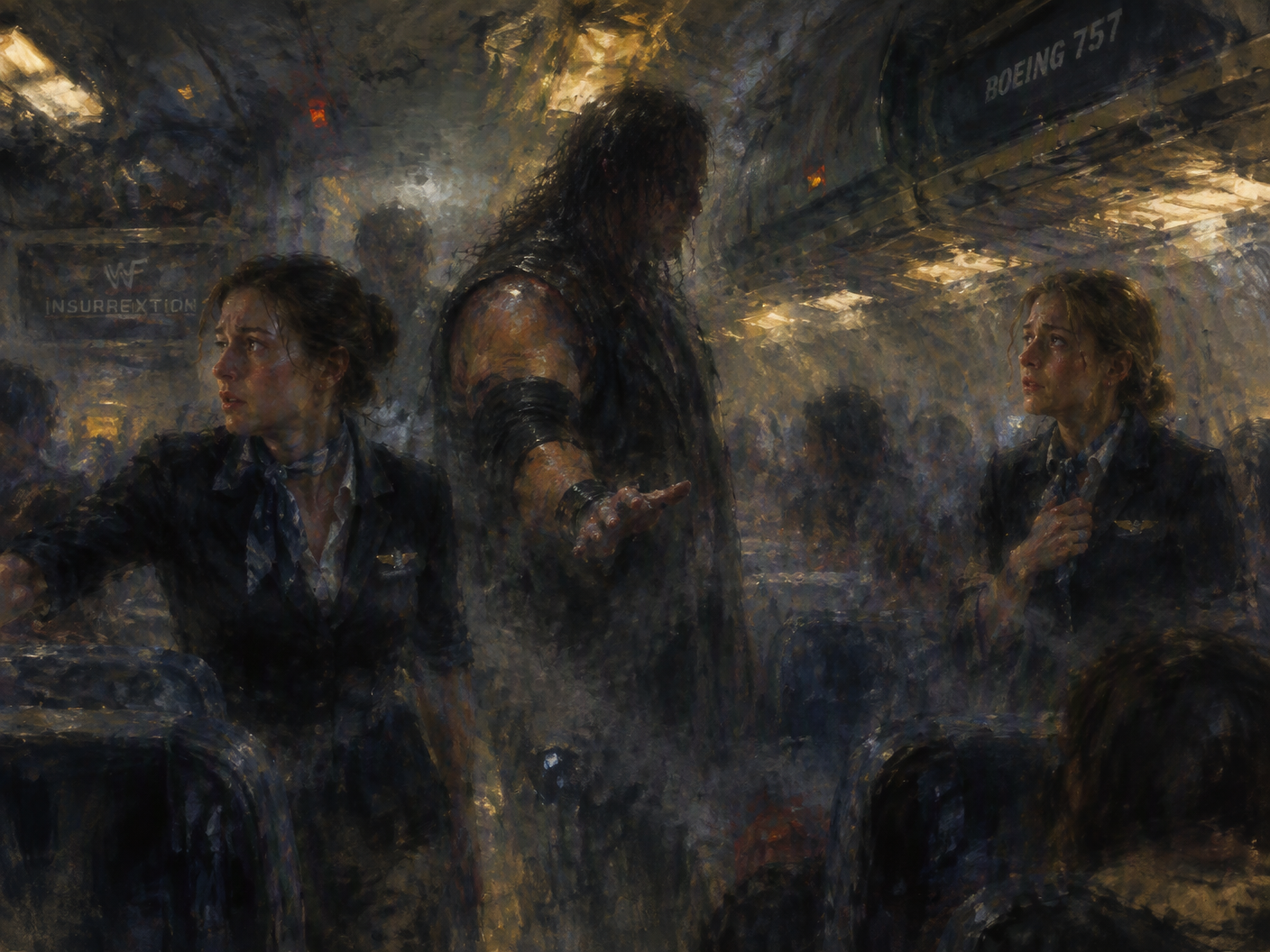
The flight left the United Kingdom on May 5, 2002, carrying WWF talent back to the United States after the company’s London event. It was a chartered Boeing 757. During the trip, reported physical altercations and allegations involving Ric Flair turned an ordinary return journey into an episode later known as the “plane ride from hell.” The name attached itself to the flight after the fact, but the sequence was concrete: a wrestling event at Wembley Arena, a company-controlled aircraft, two flight attendants who later became plaintiffs, and an internal response that preceded a civil lawsuit.
The journey began with Insurrextion, staged at Wembley Arena on May 4. The event placed the wrestlers in the company’s familiar public setting, where physical performance was the product and aggression was part of the format. The return flight removed that separation. The passengers were still traveling as a roster, but the aircraft was also a workplace for the crew responsible for their safety and service. What happened there would be treated not as part of a match, but as conduct involving civilian employees and an employer with control over the trip.
Taralyn Cappellano and Heidi Doyle, two female flight attendants assigned to the charter, later alleged that Flair exposed himself to them. Their claims described conduct directed at them individually, not a general atmosphere of disorder. The allegations placed a well-known wrestler on one side of a confined professional environment and two workers on the other, with the company’s personnel and travel arrangements connecting them. The alleged exposure became one element of a broader account of what occurred after the roster left London.
Cappellano and Doyle also alleged that Flair grabbed each of their hands and made them touch his genitals. That allegation supplied the most specific account of the encounter and gave the later dispute its central legal force. It described unwanted physical contact imposed through the authority and physical presence of a passenger over workers performing their assigned duties. Flair denied the accusations. The competing positions remained sharply defined: the women described forced contact, while Flair rejected the conduct attributed to him.
The reported misconduct did not stand alone. Other physical altercations were associated with the same return flight, giving the journey a wider reputation inside professional wrestling. The incidents involved different forms of conduct, but they shared one condition: a company charter carrying employees and talent across national borders, with no ordinary public setting to interrupt what happened aboard it. The flight became a single shorthand for several reported episodes, even as the allegations involving Flair followed their own path toward disciplinary and civil consequences.
WWE reprimanded Flair after the allegations emerged. The reprimand mattered because it represented the company’s first documented institutional consequence in the sequence. It was not a criminal judgment, and it did not resolve the competing accounts. It was an employment response by the promotion that had organized the trip and employed the wrestler. The company therefore acted before any civil courtroom could determine liability, using its own disciplinary authority while the women’s allegations remained disputed.
For Cappellano and Doyle, the dispute moved beyond the flight itself in 2004, when they filed a lawsuit arising from the incidents. The filing changed the status of the episode. It was no longer confined to the company’s internal handling or to the nickname attached to a notorious trip. Two named women placed claims against identifiable defendants into civil litigation, and Flair’s denial became part of a formal dispute with potential financial and legal consequences.
Civil litigation imposed a different structure on the allegations. The case required the parties to confront the conduct through claims, defenses, and the possibility of a judgment, rather than through a locker-room reputation or an internal reprimand. Cappellano and Doyle alleged the acts; Flair denied them. The lawsuit created a legal avenue for the women to seek relief without converting the allegations into a criminal prosecution. Its existence established the dispute as a matter between named parties, not an anonymous story repeated about a flight.
WWE ultimately settled the lawsuit out of court with Cappellano and Doyle. That decision ended the civil case without a trial verdict. The settlement resolved the company’s exposure to the litigation, but its private terms left the financial arrangement and any admission of liability undisclosed. The company had already reprimanded Flair, and it now chose a separate legal resolution involving the two women. Internal discipline and civil settlement were the measurable consequences that followed the flight.
Flair’s denial remained part of the episode after the lawsuit was filed and settled. The women’s allegations, the company’s reprimand, and the out-of-court resolution formed the public sequence: reported conduct aboard a chartered aircraft, an internal response, formal civil claims, and private settlement. No criminal adjudication supplied a final judgment on the accusations. The episode therefore survives in two forms at once—as a documented corporate travel incident that produced litigation, and as a disputed account of conduct that was never tested to a civil verdict.
The flight’s lasting significance rests on the authority concentrated inside that narrow setting. WWF/WWE controlled the charter, the roster traveled under the company’s arrangements, and the women who alleged misconduct were working aboard it. Flair possessed celebrity and physical status within the promotion; Cappellano and Doyle occupied the professional role required to serve the aircraft. When the allegations emerged, the company had to address conduct involving its talent and its employees. It reprimanded Flair, then settled the lawsuit. The aircraft returned to the United States, but the institutional consequences continued for two years.
Investigative Dossier & Evidence
Read the companion investigation notes, verified source claims, and primary documents.
Read the Companion Notes & Evidence Record →