
Doping & Drugs · 1980s–1990s
Rod Scurry, Dale Shiffman, and the Pittsburgh Cocaine Investigation
On August 19, 1985, former major-league pitcher Rod Scurry was publicly identified as a customer of Dale Shiffman, who pleaded guilty to 20 drug-trafficking charges. Seven years later, Scurry died in Nevada from a cocaine-related heart attack.
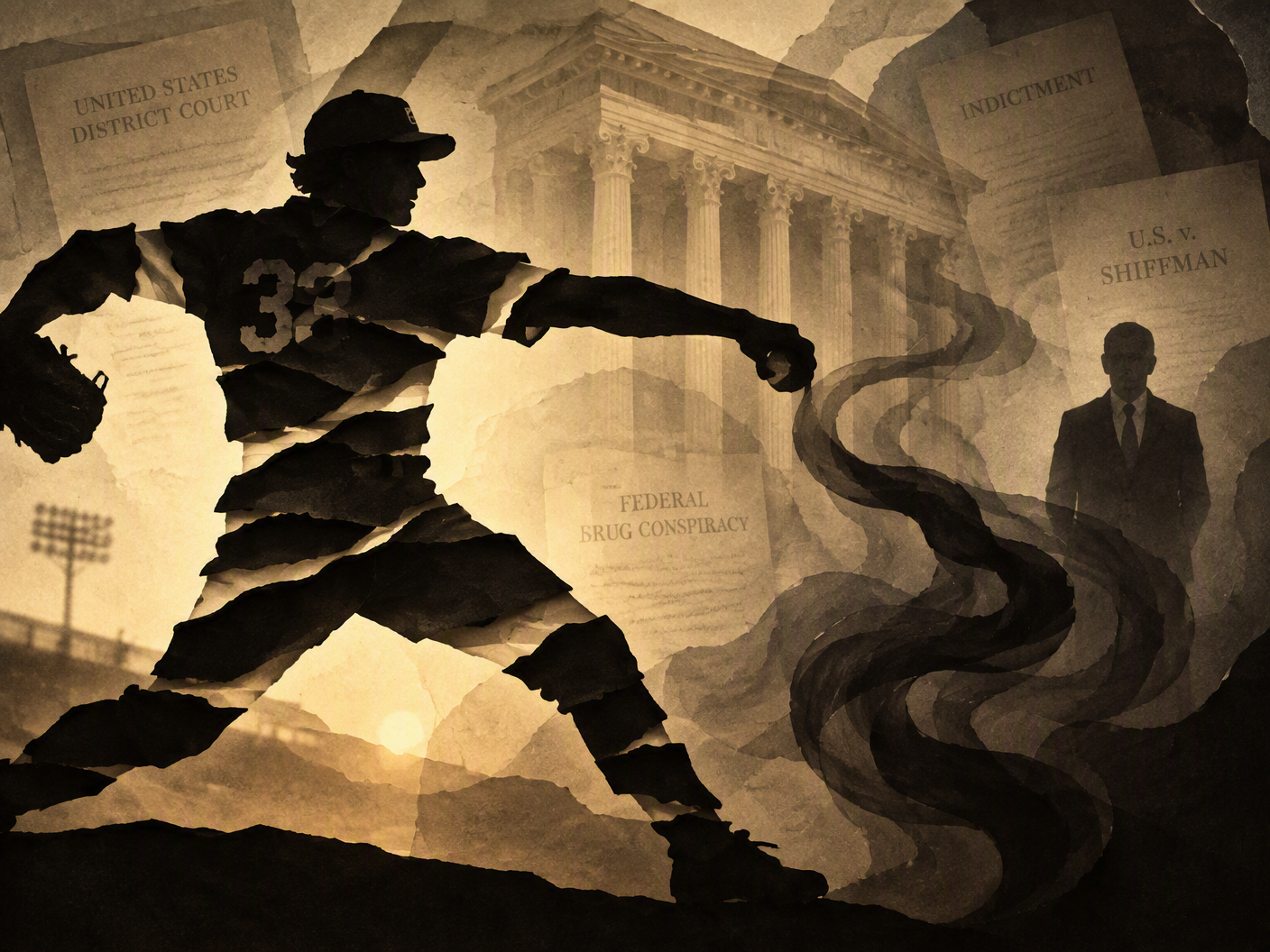
On August 19, 1985, Rod Scurry was named as a customer in a Pittsburgh cocaine investigation centered on Dale Shiffman, a man who pleaded guilty to selling the drug. The disclosure placed a major-league pitcher inside a federal trafficking case without charging him as the seller. Scurry had pitched for the Pittsburgh Pirates and later for the New York Yankees and Seattle Mariners. His public identity was built around innings, contracts, and clubhouses. The investigation attached another kind of professional vocabulary to his name: customer, witness, purchase.
Shiffman’s position in the case was more defined. He pleaded guilty to 20 drug-trafficking charges, giving prosecutors a criminal defendant whose conduct could be measured in counts and whose dealings could be traced through the people who bought from him. Scurry occupied a different legal position. He was identified as one of those customers, not as the subject of a conviction. That distinction did not remove him from the case. It established the route by which his name entered it: through the supplier he was said to have used.
The purchases dated to the 1982 and 1983 seasons, when Scurry was active in Pittsburgh baseball. Assistant U.S. Attorney James Ross said Scurry was prepared to testify that he had bought cocaine from Shiffman on at least 19 occasions. The number was not a single incident attached to an isolated night. It described repeated transactions over two seasons, with the pitcher positioned to explain them to federal prosecutors and, potentially, to a court.
That proposed testimony gave Scurry two roles at once. He was a person publicly linked to the drug investigation, and he was also a potential witness against the man who had supplied him. The arrangement carried an obvious asymmetry. Shiffman faced 20 trafficking charges and entered a guilty plea; Scurry’s name appeared in the same case as a buyer whose account could assist the prosecution. The legal consequences were therefore not shared evenly, even though both men were connected by the same transactions.
Before his death, Scurry admitted that he had purchased cocaine on at least 19 occasions during the 1982 and 1983 seasons. The admission matched the figure attached to Ross’s account of his expected testimony. It also fixed the drug use in a particular period rather than leaving it as a general allegation about an athlete’s private life. The purchases occurred during the years when Scurry’s public work required him to maintain a professional body, travel between games, and remain available to the clubs that employed him.
The Pittsburgh case did not produce a documented criminal conviction of Scurry. The public legal consequence belonged to Shiffman, who pleaded guilty to the 20 trafficking charges. Scurry’s connection remained that of a named customer and prospective witness, supported by the repeated-purchase account he later acknowledged. That difference matters because a drug purchase, a prosecutor’s statement, and a criminal judgment are separate events. They placed Scurry in the investigation, but they did not give him the same adjudicated status as Shiffman.
The case then receded from public view while the underlying conduct followed Scurry beyond Pittsburgh. On October 29, 1992, a neighbor called authorities in Washoe County, Nevada. Sheriff’s deputies went to Scurry’s home, found him outside, and encountered him in a violent state. They attempted to restrain him. The episode was not a courtroom proceeding and did not reopen the earlier federal investigation. It was a law-enforcement response to a later crisis involving the same former pitcher.
One week after that encounter, on November 5, 1992, Scurry died in Reno, Nevada. The official cause of death was a cocaine-related heart attack. The phrasing made the later medical event distinct from the Pittsburgh prosecution, but it also connected the two points in time through cocaine: first as the subject of repeated purchases during the 1982 and 1983 seasons, then as the recorded cause of a fatal cardiac event.
Scurry’s death gave the earlier investigation a fixed endpoint without resolving every question that surrounded it. The public account established that he had been linked to Shiffman, that prosecutors said he was prepared to describe at least 19 purchases, and that he later acknowledged those purchases. It also established Shiffman’s guilty plea and the official cause of Scurry’s death. Those facts describe a documented progression from participation, to potential cooperation, to a fatal medical consequence.
The identity of the pitcher is also part of the story’s boundaries. A modern minor-league register listing a Rod Scurry born in 1986 appears to concern a different person from the 1956-born major-league pitcher involved here. It cannot safely be used to enlarge the account with unrelated statistics or biographical details. The reliable narrative is narrower: Rod Scurry, the former Pittsburgh pitcher, was identified in 1985 as a customer of Dale Shiffman, admitted repeated cocaine purchases, and died seven years later from a cocaine-related heart attack.
Investigative Dossier & Evidence
Read the companion investigation notes, verified source claims, and primary documents.
Read the Companion Notes & Evidence Record →