
Tragedy ·
The Injuries Behind a Sumo Apprentice’s Death
Takashi Saito’s family questioned an initial listing of heart failure. His stablemaster was later sentenced to six years for ordering other wrestlers to beat him.
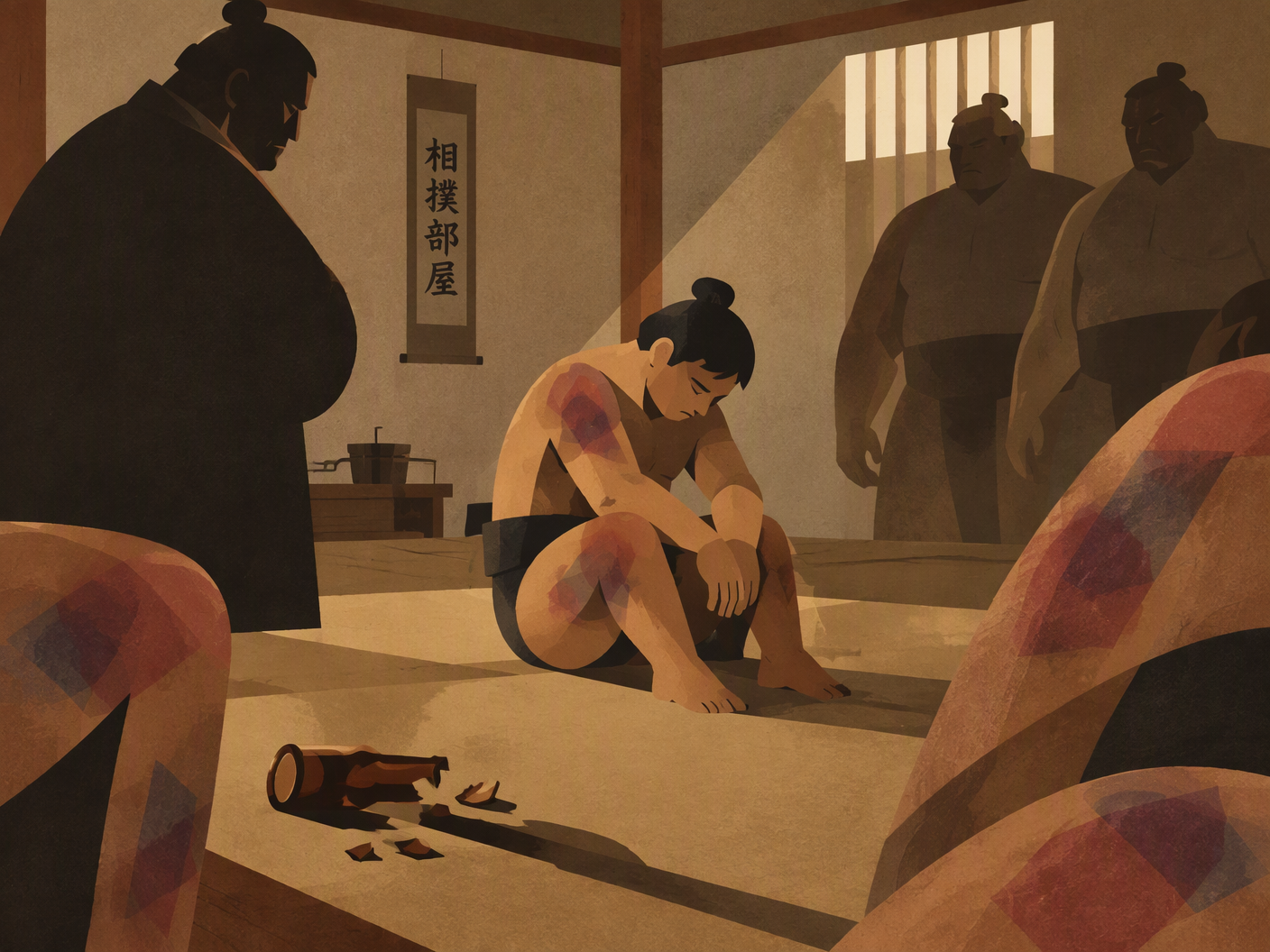
Takashi Saito’s death was initially listed as ischemic heart failure. The 17-year-old sumo apprentice had collapsed during training at Tokitsukaze stable in June 2007 and died in hospital. But when his family saw his body, they said it was covered in bruises, cuts and burns. They asked police to investigate. What had first appeared to be a medical emergency became a criminal case against his stablemaster and three senior wrestlers.
Saito wrestled under the name Tokitaizan. He had entered professional sumo that spring, joining a system in which young wrestlers eat, sleep and practise together in tightly knit stables. Apprentices are sometimes subjected to harsh treatment in the belief that it will toughen them up. His family believed he had been punished for trying to leave. After his death, his father recalled his appeal to be collected: “He said he’d be a good boy, I just need to come get him (from the stable).” He added: “I should have listened and trusted him.”
The stablemaster, Junichi Yamamoto, known as Tokitsukaze, initially denied that violence had occurred and described the training as normal. He later acknowledged striking Saito on the head with a beer bottle during dinner on June 25, while denying that he had struck him inappropriately. “This was an ordinary practice,” he told reporters shortly after Saito’s death. “How could you think I would do anything to hurt someone I consider my child?”
The medical findings did not support an account of heart failure alone. An autopsy at Niigata University concluded that Saito died of shock caused by multiple injuries. A separate examination by Nagoya University specialists found that shock caused by multiple external injuries contributed to his death. An inquest found that his bruises and injuries were not consistent with an ordinary training routine.
In October 2007, the Japan Sumo Association dismissed Yamamoto over Saito’s treatment. Its chairman, Kitanoumi, said the stablemaster had “caused a public scandal and grievously damaged the honour of the Sumo Association.” In February 2008, Aichi police arrested Yamamoto and three wrestlers. Police alleged that Yamamoto had instructed the wrestlers to beat Saito with sticks and a metal bat on June 25.
The three wrestlers were convicted of assault resulting in death in a separate trial in 2008. They received suspended prison sentences of up to three years; the judge said they had followed their coach’s instructions and the traditions of the sport. Saito’s father did not regard that as enough. “I’m not satisfied but I will follow the law,” he said. “But I would like the stablemaster to admit his crime and I want him to go to jail.”
In May 2009, the Nagoya District Court sentenced Yamamoto to six years in prison for his role in the fatal beating. Prosecutors said he had ordered the wrestlers to punish Saito for trying to run away. The court found that Yamamoto had instructed the three wrestlers to carry out the beating, though he did not directly take part in that attack. The judge said Yamamoto had “overwhelming authority” over his apprentices. Officials said he had filed an appeal against the sentence.