
Violence & Brawls ·
The Attacks After the Amsterdam Match
Maccabi supporters were chased and beaten after their club played Ajax. Earlier violence involving some fans formed part of the context—but, judges said, no justification.
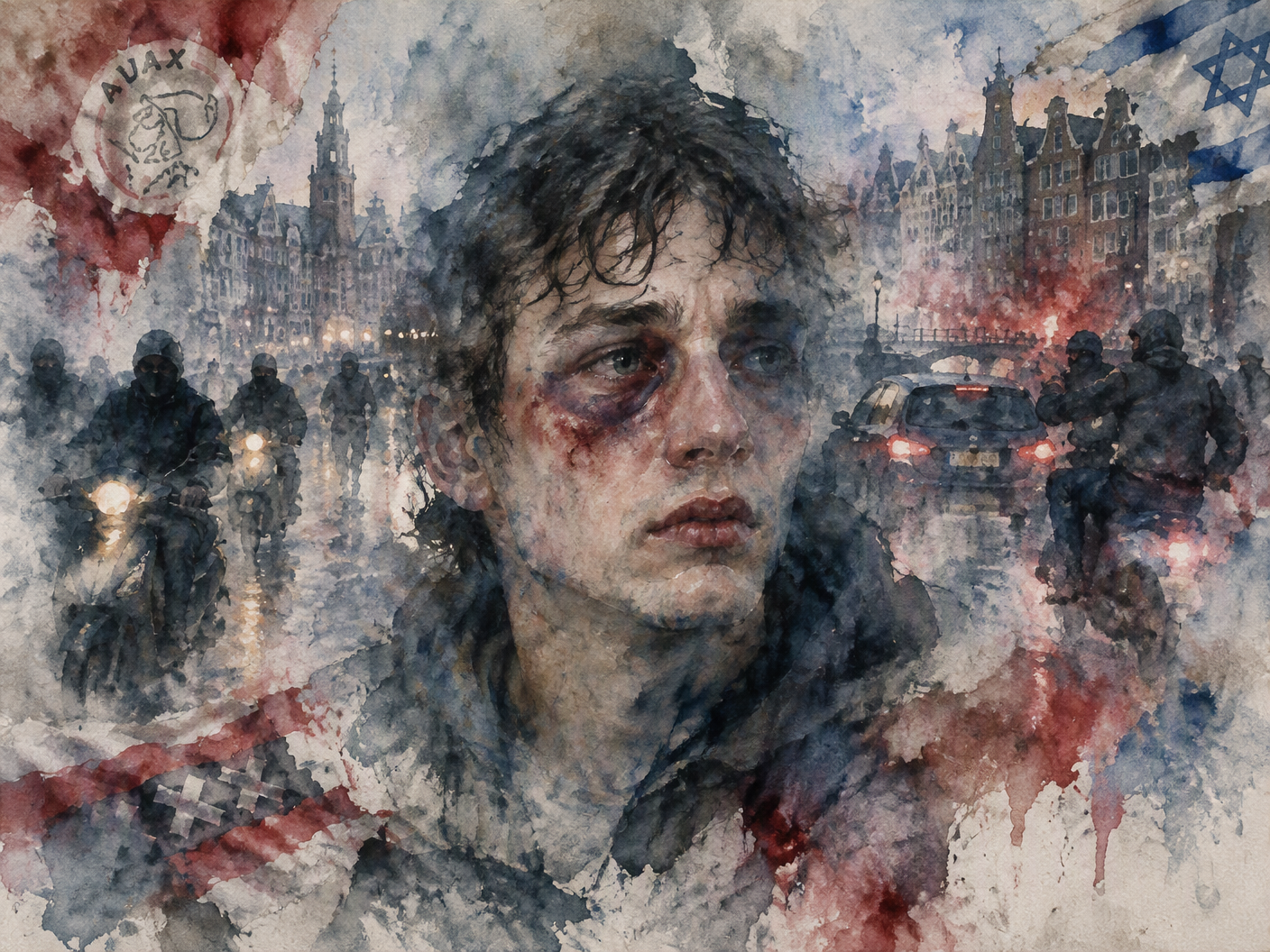
After Ajax beat Maccabi Tel Aviv 5–0 in Amsterdam on November 7, 2024, groups of men chased and assaulted Maccabi supporters across the city. The attacks continued into the early hours. In a later briefing to councillors, Mayor Femke Halsema described men moving on foot, by moped or by car, attacking supporters and disappearing before police could intervene.
Aaron, a 33-year-old Briton, told the BBC he saw men arrive on mopeds and beat an Israeli supporter who was returning to his hotel. They referred to the man’s religion and stomped on his head, Aaron said. When he helped the injured supporter, the attackers approached him and his companions. “Are you Jewish?” he recalled them asking. They answered that they were British, not Jewish. One man then punched him in the face. “I was bleeding and have a black eye,” Aaron said. “I’m OK but a bit shaken.”
The attacks followed earlier violence and racist conduct involving some Maccabi supporters. Police chief Peter Holla said supporters had damaged a taxi the day before the match. Videos showed some pulling Palestinian flags from buildings; on match day, men were filmed chanting anti-Palestinian slogans in Dam Square. Halsema had moved a planned pro-Palestinian demonstration away from the stadium to reduce the risk of confrontation. She later said she had considered cancelling the game after the trouble involving taxis, but there were “no legal grounds” to do so.
In her briefing, Halsema described a “poisonous cocktail of anti-Semitism, football hooliganism and anger over the war in Palestine and Israel and other parts of the Middle East.” Her account said Israelis had been chased and beaten by a small group using antisemitic language. It also noted footage of Maccabi supporters causing trouble; police eventually rounded them up and escorted them to their hotels. She warned that some videos circulating online were old and unrelated to the night’s violence.
People were injured, some requiring hospital treatment. Authorities recorded incidents in 14 parts of the city, while the exact number of attacks on Israelis was still being assessed. Police arrested 62 people that night, including 10 Israelis. Amsterdam imposed a three-day ban on demonstrations beginning November 8.
The first five men brought to trial were convicted in December on charges connected to the violence. Three were convicted for acts of violence and two for online statements and information-sharing that contributed to it. The court imposed sentences of up to six months in prison. In one case, footage showed a 32-year-old man kicking a victim in the head. The prosecutor said investigators believed his motive was anger over Israel’s war in Gaza rather than hatred of Jews.
In another case, the court found that a 26-year-old Utrecht man had deliberately supplied information in a WhatsApp group to help others commit violence against Jews, people of Jewish descent and Maccabi supporters. He defended his references to Jews as football terminology for Maccabi fans and said videos of supporters tearing down Palestinian flags had frustrated him. The court convicted him of contributing to violence and insulting Jews as a group, sentencing him to 10 weeks in prison.
The judges said they had considered the circumstances surrounding the match. But that context, the court said, offered “no justification for calling for and using physical violence against the Israeli supporters who were guests in Amsterdam for a football match. Nor does it justify the insults that were uttered.”