
Tragedy · 2010s
Ray Easterling’s Concussion Lawsuit and the Autopsy Finding of CTE
Ray Easterling spent eight seasons as an Atlanta Falcons safety before becoming the lead plaintiff in federal concussion litigation against the NFL. After his death in Richmond, a July 2012 autopsy found brain changes consistent with chronic traumatic encephalopathy, linking his posthumous medical examination to the head-impact questions already before the courts.
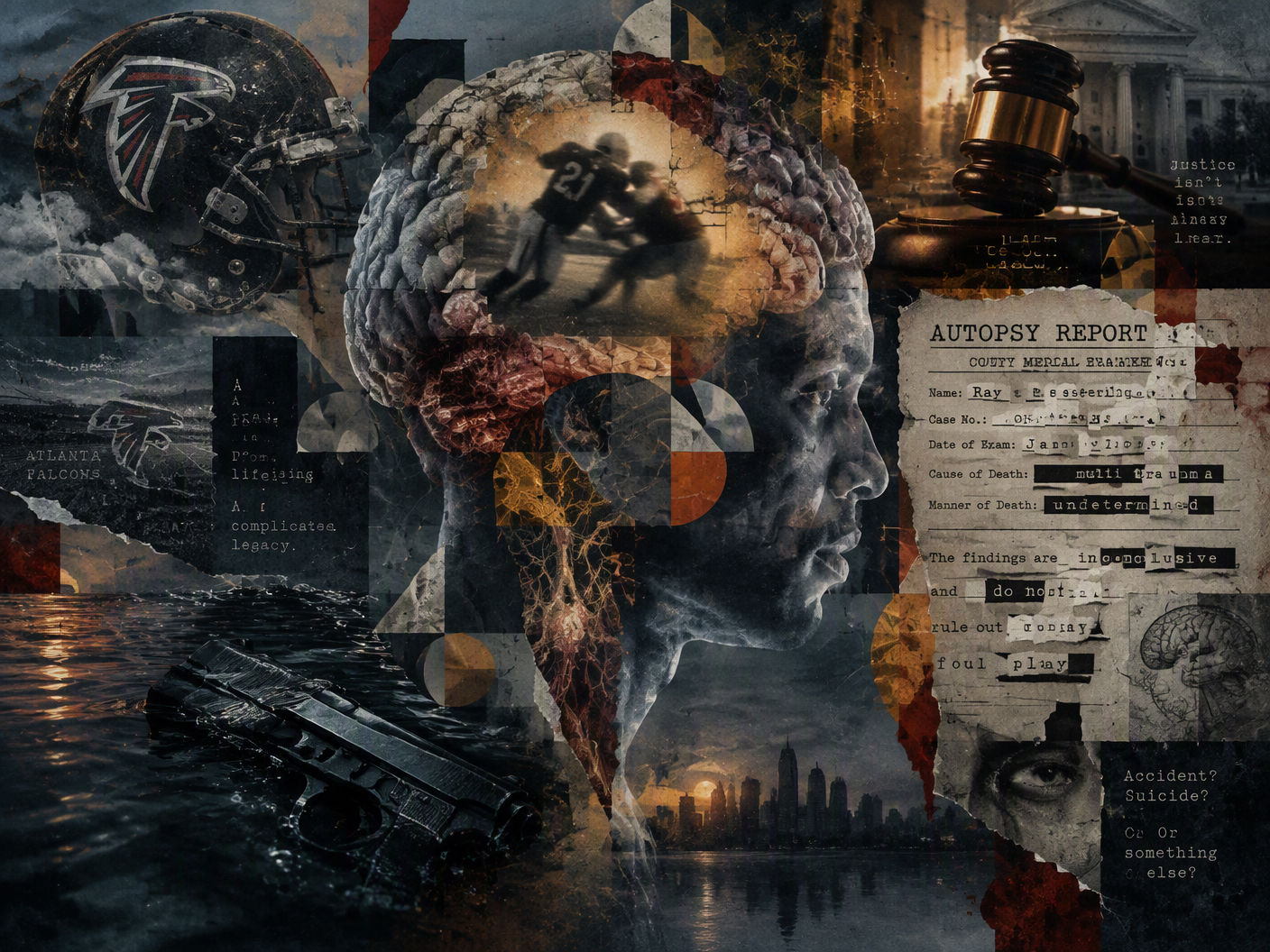
The July 27, 2012 autopsy report placed a medical finding after the legal dispute had already begun. In Ray Easterling’s brain, the medical examiner found signs consistent with chronic traumatic encephalopathy, a progressive degenerative disease associated with repeated head impacts. The language was precise. It identified a pattern, not a courtroom verdict. By then, Easterling had died in Richmond, Virginia, and his widow, Mary Ann Easterling, had provided the report to the Associated Press. The document gave public form to a question that had followed him from football into federal court.
Easterling entered the NFL in 1972 as a safety for the Atlanta Falcons. He remained with the team through 1979, completing eight seasons in a position built around contact, pursuit, and collisions that could arrive from outside a player’s field of vision. The surviving public account of his career is straightforward: he played professional football for the Falcons during that period. The significance came later, when questions about accumulated head impacts moved from the culture of the sport into civil litigation and then into the examination of his brain after death.
Decades after his final season, Easterling became the central name in a federal concussion lawsuit against the NFL. In 2011, he joined seven former players who filed the case in federal court in Philadelphia, with Easterling identified as the lead plaintiff. The filing converted a private history of injuries into a legal claim directed at the league itself. It also placed a former safety, rather than an active star, at the front of a dispute about what professional football did to players after their usefulness on the field had ended.
The lawsuit gave Easterling a formal role in a widening argument over concussion-related injuries. He was not simply a retired player discussing the past; he was a named plaintiff asking a federal court to examine the NFL’s responsibility. Mary Ann Easterling was also among the plaintiffs suing the league. Their participation connected the family’s private experience to a proceeding with institutional consequences, while keeping the central issue concrete: what repeated football impacts had done to the people who absorbed them, and what obligations followed for the organization that employed them.
The legal case did not reach its most consequential public development through a hearing. It continued against the background of Easterling’s death on April 19, 2012, in Richmond. Police said he was found with a handgun nearby. Richmond Police Captain Yvonne Crowder ruled the death a suicide. Those facts fixed the immediate official account of how he died, while the pending concussion case supplied the context in which his death was understood by his family and by the public.
Mary Ann Easterling then took possession of the document that would reshape the public discussion. She provided the autopsy report to the Associated Press. The report found signs in Ray Easterling’s brain consistent with CTE. That sequence mattered because the finding came from a posthumous medical examination rather than from a diagnosis made during his playing career. The brain was examined only after the lawsuit had named the NFL and after Easterling’s death had been officially classified as suicide.
CTE is associated with repeated concussions and other head impacts, and medical coverage described it as progressive and degenerative. In Easterling’s case, the autopsy language connected that disease process to physical changes found in his brain. It did not transform every question about his life, football career, or death into a single medical explanation. The finding nevertheless altered the sequence of the case: a former player who had entered court as a plaintiff was now also represented by a brain examination conducted after his death.
The order of events exposed the limits of the institutions involved. The NFL lawsuit could address legal claims against the league, but the autopsy addressed the condition of Easterling’s brain. Richmond police addressed the circumstances of his death, and Captain Crowder’s ruling supplied the official classification. Each authority answered a different question. None of those decisions, taken alone, settled the others. The suicide ruling did not determine the medical cause of the brain changes, and the autopsy finding did not itself determine the NFL’s legal liability.
That separation is essential to understanding what happened to Easterling’s case after July 27. His career is documented: Atlanta Falcons safety from 1972 through 1979. His litigation role is documented: lead plaintiff in a federal concussion suit filed in Philadelphia by seven former players. His death is documented: April 19, 2012, in Richmond, with police classifying it as suicide. His posthumous medical finding is documented as signs consistent with CTE. The sequence is powerful because each stage rests on a distinct institutional act.
The public significance of Easterling’s story therefore lies in the transfer from playing field to courtroom to autopsy table. A safety who spent eight seasons absorbing and delivering contact became the named face of a legal challenge involving concussion-related injuries. After his death, his widow released the medical report that identified changes consistent with a progressive degenerative disease. The NFL remained the defendant in the lawsuit; the medical examiner remained responsible for the posthumous finding; and the police ruling remained the official conclusion about the death.
By the end of July 2012, Ray Easterling’s life had been reduced in public documents to several fixed points: eight NFL seasons, a federal lawsuit, a death in Richmond, a handgun found nearby, a suicide ruling, and an autopsy report describing brain signs consistent with CTE. The wording of that report carried its own boundary. It documented a medical finding associated with repeated head impacts; it did not by itself decide the broader case against the NFL. What remained was not a clean conclusion, but an official death ruling and a posthumous brain finding placed side by side.
Investigative Dossier & Evidence
Read the companion investigation notes, verified source claims, and primary documents.
Read the Companion Notes & Evidence Record →