
Violence & Brawls · 1934
The Broken Foot and the 3–2 War at Highbury
England defeated Italy 3–2 at Highbury on November 14, 1934, in a friendly match marked by broken bones, aggressive play, and a national argument over whether football had become too important to be left to footballers.
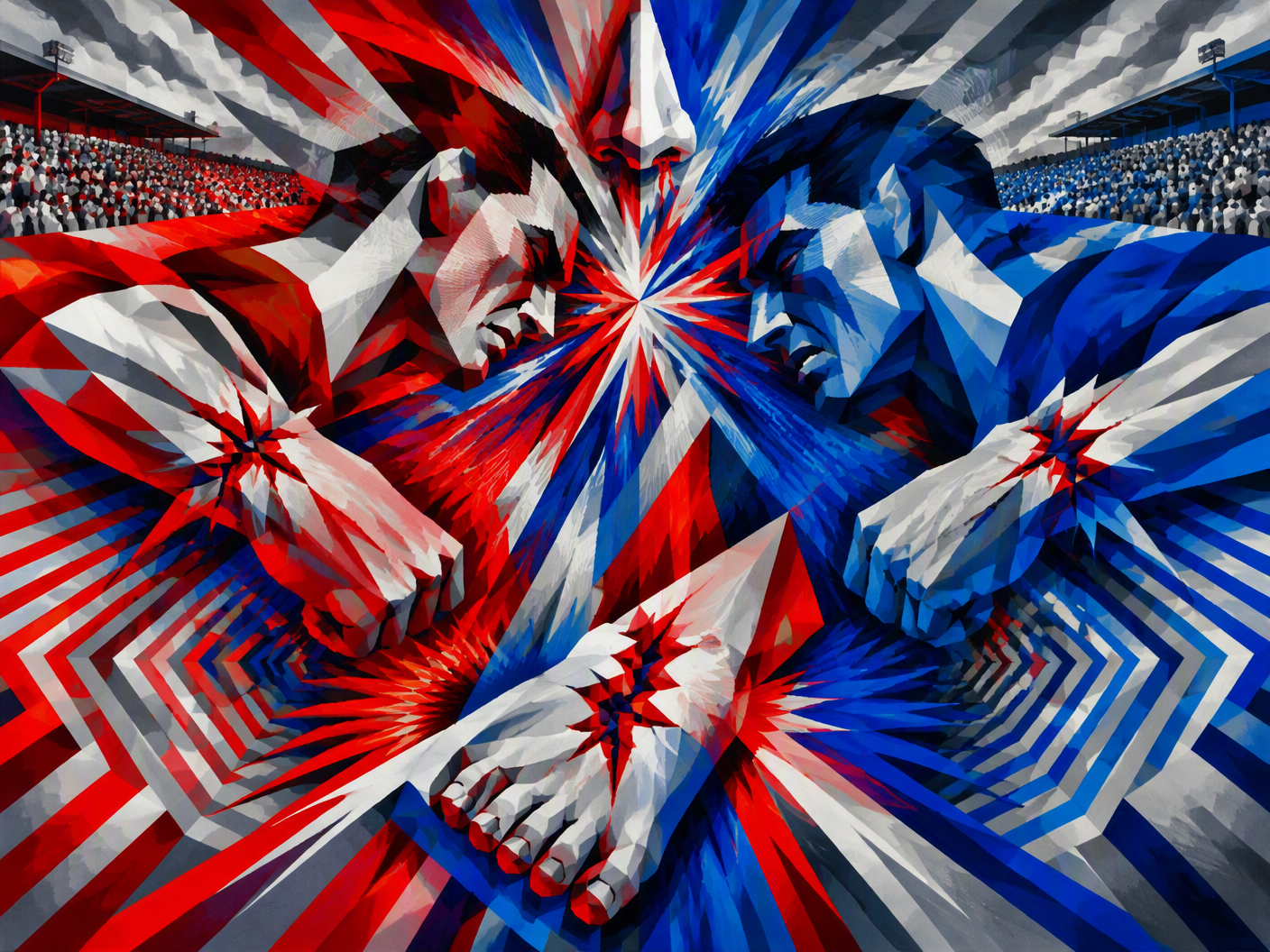
The Football Association liked to call international football a civilizing exchange, a phrase that survived until England and Italy met at Highbury on November 14, 1934. By the end of the afternoon, Luis Monti had a broken foot, Eddie Hapgood had a broken nose, Eric Brook had a fractured arm, and England had won 3–2. The match was officially a friendly, which gave the word a strained, almost comic dignity. It was friendly in the manner of a diplomatic conference conducted with furniture thrown across the room.
More than 56,000 spectators filled Arsenal’s ground, bringing with them the usual equipment of national ceremony: wool coats, hats, shouted opinions, and the solemn confidence that sport could provide a respectable outlet for primitive impulses. Prince Arthur of Connaught was among the notable attendees. Around him, the crowd watched two football cultures collide beneath the gray London sky, while the polished language of international fellowship attempted to remain upright under the much less polished evidence of boots, bodies, and blood.
Italy’s Luis Monti was one of the match’s central figures, though not for long in the conventional athletic sense. He suffered a broken foot early in the game, leaving Italy with ten men. There was no modern bench of replacements waiting to preserve the evening’s commercial value, no carefully managed workload, and no medical timeout to tidy the spectacle. Monti’s injury altered the contest immediately. Italy continued without him, a national team reduced by one body while the match’s organizers retained all the grand vocabulary of sporting pageantry.
England did not emerge intact. Eddie Hapgood, the captain, broke his nose and continued to lead the side. Eric Brook sustained a fractured arm, adding another damaged limb to an afternoon already collecting them with bureaucratic efficiency. Multiple England players were injured as the game became increasingly aggressive. The injuries were not incidental punctuation around the football; they became part of its grammar. Every tackle carried the implication that the boundary between competitive force and assault had been left somewhere outside the turnstiles.
The match acquired its particular reputation through the violence of its play. England and Italy challenged one another with a physicality that made the referee’s authority look like a paper umbrella in a storm. Players collided, fell, and returned to the contest when their bodies permitted it. Hapgood’s broken nose did not remove him from command. Brook’s fractured arm did not make the afternoon less consequential. The spectacle demanded endurance, and endurance was supplied, often by men whose medical prospects had clearly not been consulted.
Italy’s response was not the obedient collapse expected from a team reduced to ten. Despite Monti’s early departure, Italy scored twice in the second half. The goals gave the visitors a form of resilience that made the match more difficult to classify. They were injured, outnumbered, and still capable of turning the afternoon into a contest rather than a punishment. England ultimately held on to win 3–2, but the scoreline preserved the awkward fact that Italy had answered physical disadvantage with football rather than merely absorbing it.
In Britain, the argument afterward was not limited to tactics or national pride. The perception of Italy’s style as “dirty” provoked outrage in the British press. The word did useful work: it converted a complicated and violent match into a moral filing system, with English football placed in the clean drawer and Italian football in the one marked misconduct. Newspapers did not need to invent the injuries. They had already been provided with a broken foot, a broken nose, a fractured arm, and a convenient villainy that fit neatly around them.
The outrage reached beyond the press box. The ferocity of the match prompted consideration of England withdrawing from international fixtures, an extraordinary prospect for a football culture accustomed to treating national contests as solemn obligations wrapped in striped scarves. The issue was not merely whether England had won. It was whether victory remained worth the physical price demanded by the fixture. A friendly match had produced the sort of diplomatic crisis normally associated with borders, ambassadors, and men who owned several alarming varieties of hat.
Calls followed for stricter regulations governing international friendlies. The proposal carried the familiar institutional promise: adjust the rules, preserve the spectacle, and allow everyone in authority to appear surprised that bodies had been damaged by organized collisions. The match had exposed a gap between the ceremonial language of friendly football and the incentives operating inside it. National prestige encouraged aggression; crowds rewarded commitment; newspapers supplied indignation afterward. Regulation arrived in discussion, where reform is safest, cheapest, and least likely to interfere with the next ticket sale.
Highbury’s 3–2 result therefore carried two stories at once. The first was the official one: England defeated Italy before a vast crowd, and the scoreboard gave the home side its clean conclusion. The second was written across the injured bodies of Monti, Hapgood, Brook, and the other players who absorbed the match’s demands. Italy’s two second-half goals complicated the triumph; the injuries complicated the word friendly. The football ended that afternoon. The argument over what the game was allowed to cost had only begun.
Investigative Dossier & Evidence
Read the companion investigation notes, verified source claims, and primary documents.
Read the Companion Notes & Evidence Record →