
Scandals & Feuds · 2020s
How the NWSL’s Abuse Crisis Exposed a League Built Without Safeguards
Player complaints in 2021 forced the NWSL to halt play, remove a prominent coach, and confront failures in its reporting system. The Sally Yates investigation later found systemic emotional abuse and sexual misconduct across multiple teams, tracing the problem to a wider culture in women’s soccer.
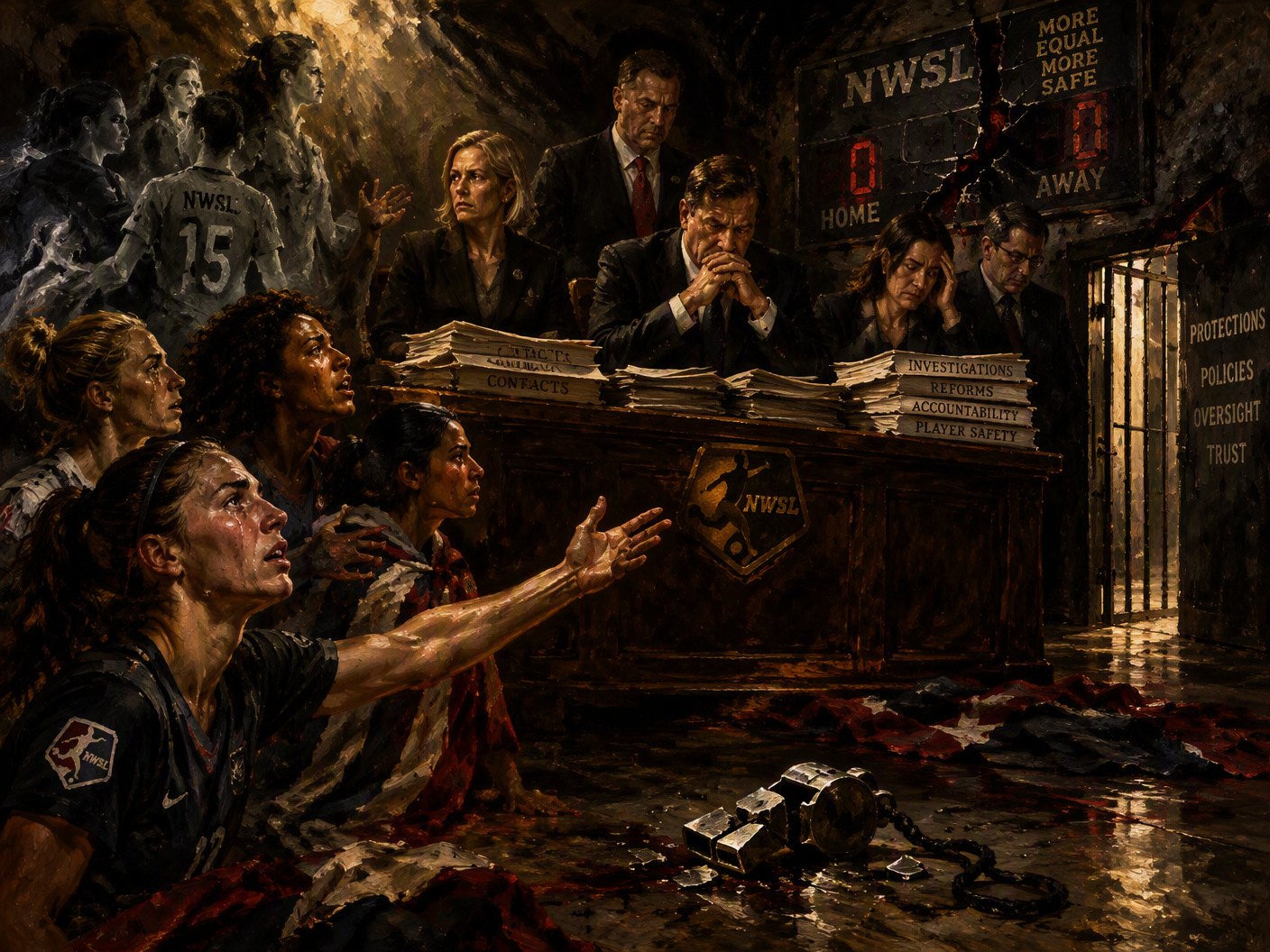
In 2021, the NWSL’s misconduct crisis became impossible to contain inside club offices. Players stopped play, allegations against a prominent coach became public, and the league halted matches for a weekend while the NWSL, U.S. Soccer, and FIFA opened investigations. The immediate events centered on Paul Riley, but the institutional question was larger: why had players needed a public rupture before the league treated their complaints as a governing emergency?
The first formal safeguard arrived months earlier. In April 2021, the NWSL created its first anti-harassment policy after players demanded safer reporting channels and protection against retaliation. The policy addressed a basic structural problem. Coaches controlled playing time, evaluations, contracts, and access to future employment, while players often depended on short careers and unstable income. A reporting system that sent complaints back through that hierarchy could not offer much protection to the person making the complaint.
On September 30, former players Sinead Farrelly and Mana Shim publicly accused Riley, their former coach, of sexual coercion and emotional abuse. The Athletic reported Riley’s denial of those allegations. The North Carolina Courage fired him after the accusations became public. The sequence converted a long-running dispute over one coach’s conduct into a direct test of whether the league would treat player testimony as a workplace-safety issue or as a threat to the competition’s commercial stability.
The next weekend, the league postponed its scheduled games. The stoppage was not a ceremonial pause; it interrupted the product the NWSL sold to broadcasters, sponsors, and supporters. Players had already halted play during a match to protest alleged abuse. The league’s response followed that pressure. Investigations were announced, but the decision also exposed the weakness of the existing arrangement: the same clubs responsible for protecting players had often been the first institutions asked to assess complaints involving their own coaches.
Riley was not the only coach whose conduct entered the crisis. Reporting examined allegations involving Christy Holly at Racing Louisville, Rory Dames at the Chicago Red Stars, and Richie Burke at the Washington Spirit. The cases were not identical, and the public record does not turn them into one undifferentiated accusation. Their common feature was the concentration of authority: coaches operated in environments where selection, professional reputation, and continued employment could depend on remaining useful to the people who controlled the roster.
The crisis also showed how private agreements could shape an investigation. In its examination of Holly, the Yates report said Racing Louisville did not fully cooperate with investigators and cited nondisclosure and non-disparagement agreements. Those agreements did not decide the underlying allegations. They affected who could speak, what information could be shared, and how much of the club’s earlier handling would be available for scrutiny. A contract designed to contain reputational risk could also restrict the investigators’ access to the people who carried the relevant knowledge.
The consequences reached the league office. NWSL commissioner Lisa Baird resigned after the Riley allegations became public and after the league’s handling of the crisis came under scrutiny. Her departure did not resolve the system that had produced the complaints. It made the leadership question unavoidable: who receives an accusation, who has authority to investigate it, and who decides whether a coach remains in position while that process unfolds?
In October 2022, the U.S. Soccer–commissioned investigation led by Sally Yates widened the frame beyond individual coaches. The report found systemic emotional abuse and sexual misconduct across multiple NWSL teams. It concluded that the problem was rooted in a broader women’s soccer culture, not in one club or one isolated offender. The finding shifted responsibility toward employers, executives, and governing bodies that had allowed authority to operate without reliable checks.
That conclusion changed the meaning of the earlier events. The April policy was no longer merely a new administrative rule; it was a response to player demands in a league that had not supplied safe avenues for reporting. The halted matches were no longer only a protest against one coach; they were a public demonstration that players had lost confidence in ordinary internal channels. The Yates findings connected those failures to a culture in which emotional abuse and sexual misconduct could be treated as personnel problems rather than threats to player safety.
The league later moved from emergency response to formal discipline. Between December 2022 and January 2023, the NWSL and NWSL Players Association announced sanctions that included lifetime bans for Riley, Holly, Dames, and Burke, as well as a two-year ban for former Gotham FC general manager Alyse LaHue. Those penalties were administrative findings, not criminal convictions. They nevertheless placed the league’s judgment in writing after years when misconduct could end with a private departure and no public explanation.
The NWSL’s response could not restore lost seasons or remove the professional cost borne by players who spoke. It did establish that the crisis was not adequately explained by one coach’s conduct or one club’s decision. A league that had relied on internal control was forced to confront the consequences of weak reporting channels, uneven investigations, and agreements that limited access to information. The central failure was not that the system lacked language. It was that power had been allowed to decide when the language mattered.
Investigative Dossier & Evidence
Read the companion investigation notes, verified source claims, and primary documents.
Read the Companion Notes & Evidence Record →