
Scandals & Feuds · 1997
The Five Laterals and Mariet Ford’s Separate Criminal Reckoning
On November 20, 1982, California won the Big Game 25–20 after a five-lateral kickoff return that continued through an early-arriving Stanford band and ended with an officiating conference. Fifteen years later, California player Mariet Ford was convicted of murdering his pregnant wife and 3-year-old son and sentenced to 45 years to life.
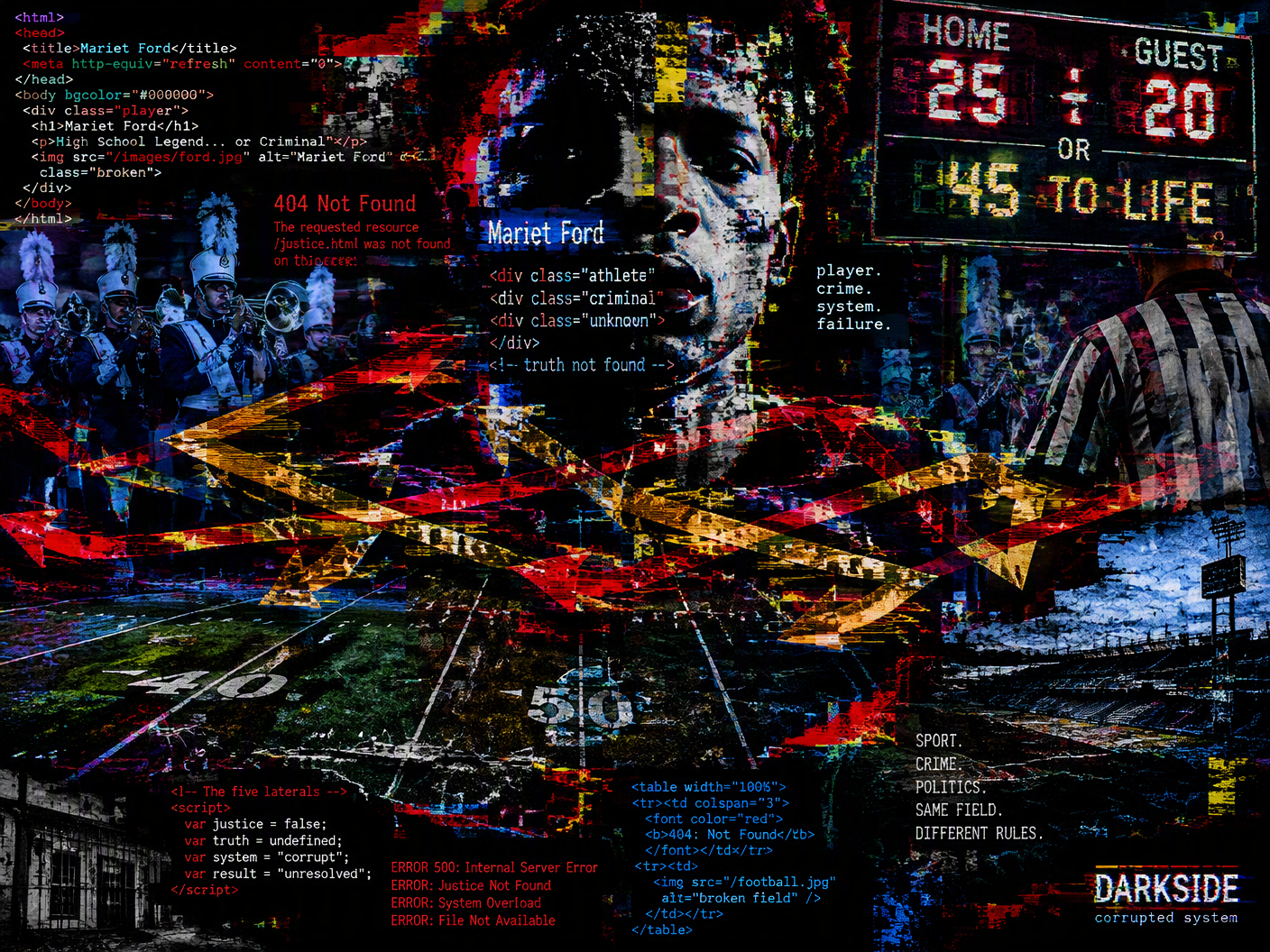
Mark Harmon’s kick rose with four seconds left, and Stanford took a 20–19 lead. The field goal appeared to settle the afternoon at California Memorial Stadium in Berkeley. John Elway had led Stanford down the field. Harmon had supplied the last three points. California had one kickoff left, and Kevin Moen stood back to receive it. What followed was not a clean final play. It was a return stretched across the field by five laterals, bodies arriving from every direction, and a Stanford band that entered before the ball was dead.
Moen fielded the kickoff for California and began the run that would decide the Big Game. The ball moved from player to player as the return crossed the field. Five laterals kept the play alive. Each exchange changed the angle, the open space, and the number of defenders closing in. Mariet Ford, a California player who had already caught a touchdown pass that afternoon, took part in the lateral sequence. Moen eventually received the ball again and carried it across the goal line.
The Stanford band had already come onto the field while the return was still live. Its presence turned the last stretch into a crowded passage of uniforms, players, and moving bodies. The return continued through that obstruction. Moen reached the end zone, but the points were not immediately automatic. The officials had to decide whether the ball had remained in play and whether the laterals had been executed legally. The players waited while the men in stripes gathered to settle the ending.
Charles Moffett, the head referee, officiated the game. After the officials conferred, they signaled a California touchdown. The decision changed the score from a Stanford lead to a California victory. The final result was 25–20 for California. The signal was the official ending of the play, even though the argument did not end with it. In the immediate aftermath, the disputed laterals and the band’s premature entrance became inseparable from the touchdown itself.
The sequence had begun with Stanford apparently in control. Elway had directed the late drive, and Harmon’s 35-yard field goal had put Stanford ahead with four seconds remaining. California’s final chance was a kickoff, not a conventional offensive snap. Moen’s return converted that thin opening into a scoring play. Ford was part of the chain that carried the ball forward. The final handoff went to Moen, who supplied the last run and the touchdown that gave California the game.
The laterals remained the hard point in the argument. The play was treated as continuous action until the officials met and ruled. Later commentary disputed whether every exchange was legal and whether the return should have been stopped before Moen reached the end zone. That disagreement belongs to the play’s aftermath. The ruling itself stood. California was awarded the game, and no later adjudication in the documented account overturned the 25–20 result.
The question of instant replay came later, carried by people trying to slow the scene down and inspect each body position, each handoff, each step. But the game had been decided in real time, before that technology could offer a second view. On the field, the officials conferred and signaled touchdown. The band had entered. The ball had moved through five laterals. Moen had crossed the goal line. Those were the fixed points left after the confusion cleared.
Ford’s place in the story changed years later, away from the stadium and separate from the football ruling. In 1997, he was convicted of murdering his pregnant wife and his 3-year-old son. The conviction was a criminal judgment, not an extension of the disputed touchdown and not a finding made by football officials. He received a sentence of 45 years to life. The player who had caught a California touchdown pass and handled the final return was now identified by a case involving two deaths.
The two events sit beside each other because Ford was present in both, not because one explains the other. In Berkeley, his documented role was athletic: a touchdown reception and participation in the lateral sequence that ended with Moen. In 1997, a court convicted him of murder and imposed a prison sentence. The football game ended with a referee’s signal. The criminal case ended with a judgment carrying decades of confinement. Their connection is the man who moved from one public record into another.
California’s victory remained 25–20. Stanford’s lead had lasted four seconds, from Harmon’s field goal to the kickoff. Then the ball passed through five laterals, the Stanford band entered a live play, and Moen finished the return. Moffett and the other officials conferred before awarding the touchdown. The argument over legality survived the afternoon, but the ruling did not change. Fifteen years later, Ford’s sentence placed him in prison for a separate act, leaving the old game frozen at its final score.
Investigative Dossier & Evidence
Read the companion investigation notes, verified source claims, and primary documents.
Read the Companion Notes & Evidence Record →