
Violence & Brawls ·
The Killing of Gabriele Sandri and the Conviction That Changed
A police officer shot the Lazio supporter on his way to a match in 2007. A negligent-homicide verdict was later replaced by a final conviction for voluntary homicide based on conditional intent.
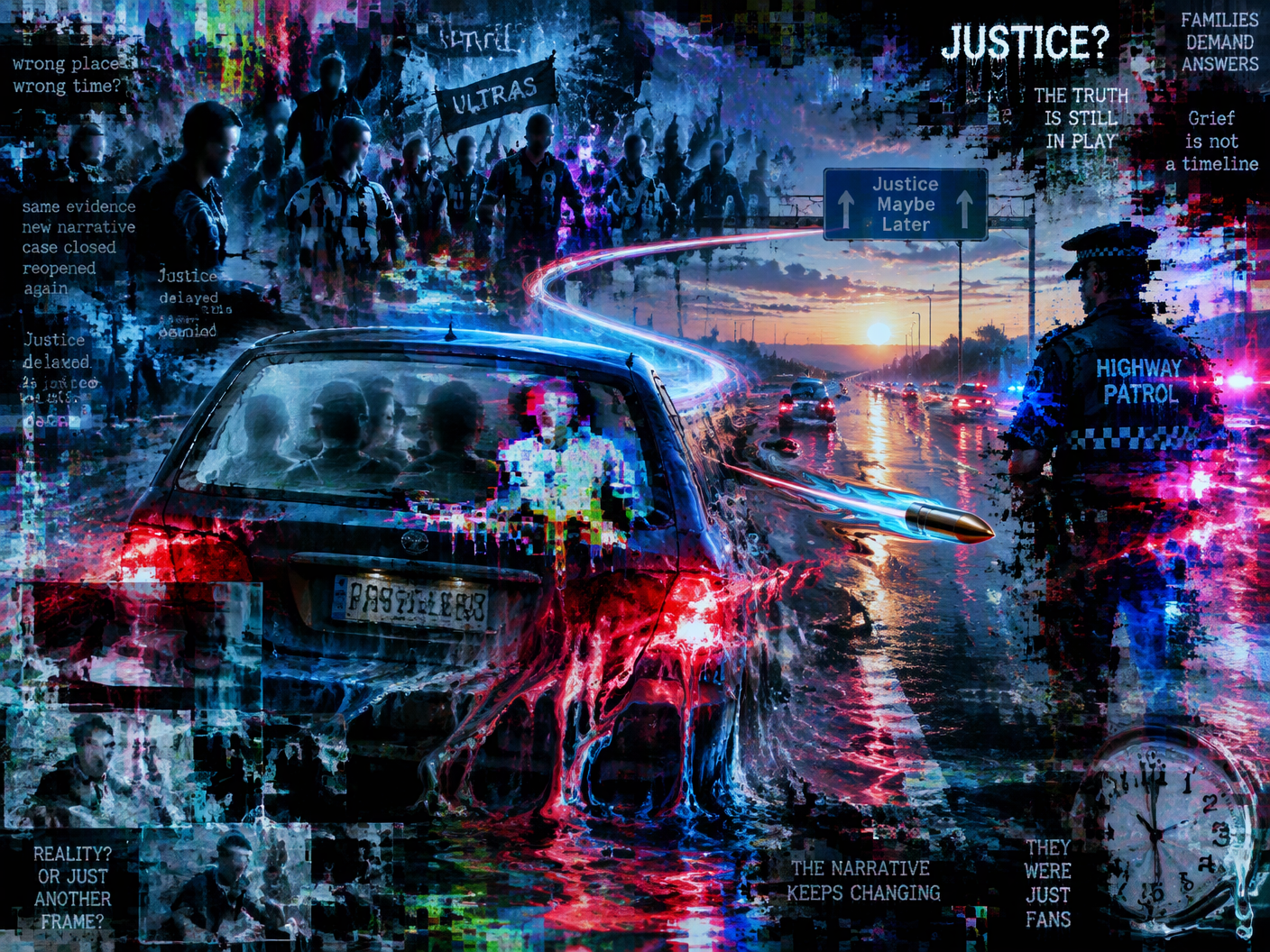
Gabriele Sandri was traveling to Milan with four friends to watch Inter play Lazio when police officer Luigi Spaccarotella shot and killed him at the Badia al Pino service area on the A1 motorway, near Arezzo. It was the morning of November 11, 2007. Sandri, a 26-year-old Lazio supporter, was in the car that was to take him to the match. The legal proceedings would turn on how to classify the officer’s act.
A later Rai account described a fight with Juventus supporters at the service area, observed by a highway-police patrol on the opposite side of the motorway. According to that account, Spaccarotella believed a robbery was taking place and fired twice. Sandri was asleep in the middle of the rear seat when a bullet struck his neck; he was dead by the time an ambulance arrived.
That evening, ultras staged violent protests against the police in Rome and other Italian cities. The question before the courts, however, was the responsibility of the officer who fired.
On July 14, 2009, the trial court in Arezzo sentenced Spaccarotella to six years for negligent homicide. The prosecutor had sought 14 years for voluntary homicide. The judges found conscious negligence: Spaccarotella had foreseen the possible outcome without intending it. Shouts against the judges followed the verdict. Sandri’s mother, Daniela, said through tears, “Now they have killed him a second time. How can you believe in justice?” Outside, some of his friends railed against Spaccarotella and the judges. His brother Cristiano urged them to stop, saying that this was killing Gabriele “for the third time.”
Spaccarotella responded differently. “I cried with joy. I was right to believe in justice,” he told his lawyer by telephone. His lawyer, Federico Bagattini, said the judgment had recognized what the officer had always maintained: that he had not wanted to kill anyone. The defense nevertheless planned to appeal what it considered an excessive sentence.
In 2010, the Florence appeals court reclassified the crime as voluntary homicide based on dolo eventuale, or conditional intent, and increased the sentence to nine years and four months. Sandri’s parents cried when the decision was read. Inside the courtroom, the audience—mostly Lazio supporters and Sandri’s friends—remained silent; applause greeted his parents when they emerged. His father called the decision “justice that was owed,” reversing the despair he had expressed after the first verdict.
In February 2012, the Court of Cassation rejected Spaccarotella’s appeal, making the conviction final. His lawyers had argued that the shot was accidental. Cristiano Sandri, himself a lawyer, said the ruling reflected both the law and the facts while noting that it rested on dolo eventuale. “It isn’t a question of one year more or less in prison,” he said. “What matters is that the principle of equality of citizens before the law has been respected.”