
Tragedy ·
What Cookie Gilchrist’s Donated Brain Revealed
Boston University researchers diagnosed the former CFL and AFL player with Stage IV CTE after his death in 2011. His family made the finding public and encouraged further research.
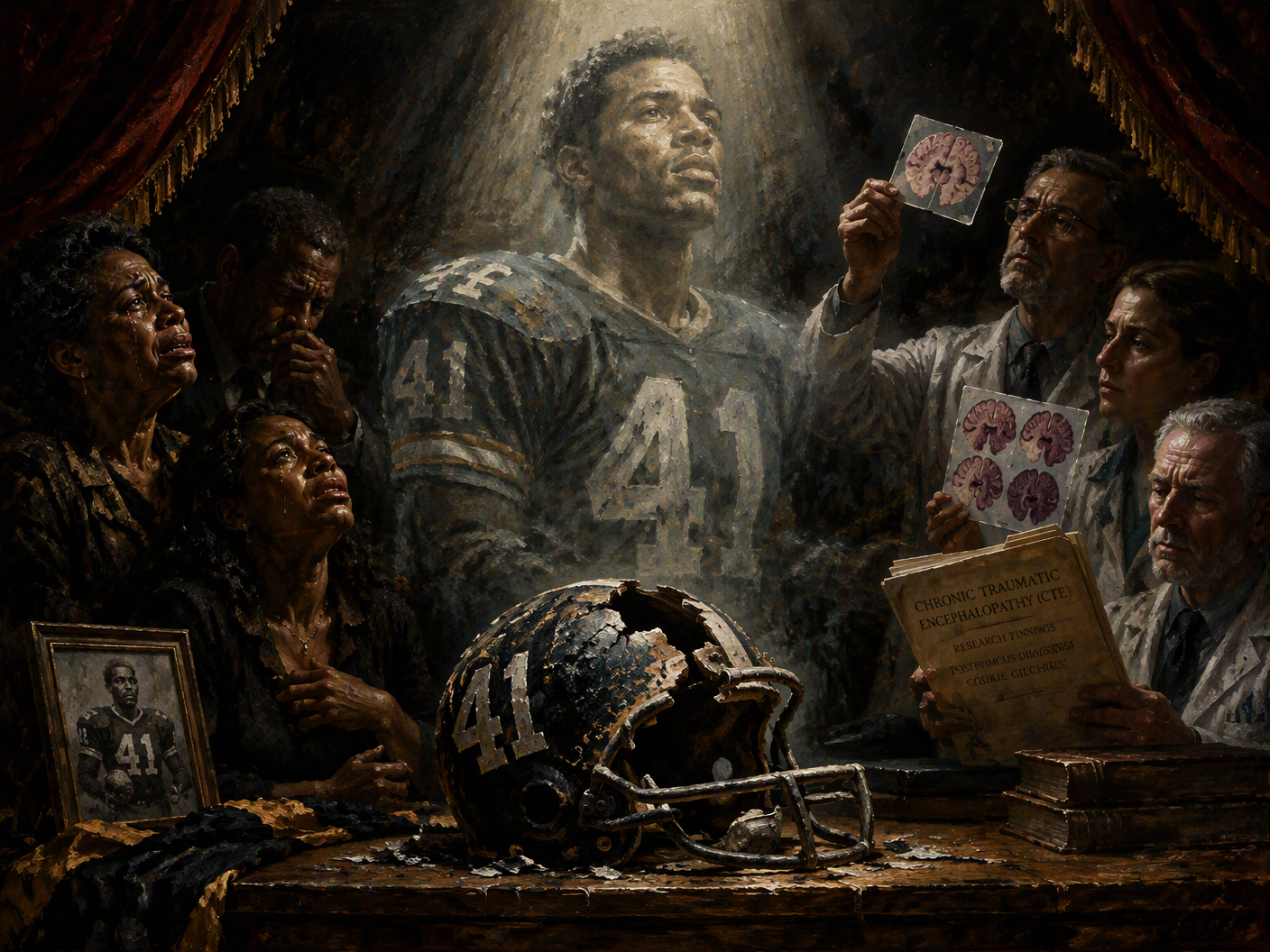
Cookie Gilchrist had asked that his brain be donated for research. After the former Canadian Football League and American Football League player died of cancer in January 2011, his family carried out that request. That November, Boston University researchers reported that Gilchrist had Stage IV chronic traumatic encephalopathy, or CTE, the disease’s most advanced category. His family wanted the results made public.
The examination offered a different way to understand his difficult later years, though not a simple resolution for those who had lived through them. Researchers described paranoia and behavioral and cognitive difficulties compatible with advanced CTE. Dr. Robert Stern, the center’s co-director and a clinical researcher, said Gilchrist’s symptoms had apparently worsened in his final decade, with more substantial problems involving memory, judgment and problem-solving near the end.
The work brought two kinds of evidence together. Stern interviewed family members and reviewed medical records to understand Gilchrist’s symptoms; his colleague Dr. Ann McKee examined brain tissue. Gilchrist died of cancer; CTE was diagnosed after his death. The examination did not settle every question about his behavior or explain why some people exposed to repeated brain trauma develop CTE while others do not.
Gilchrist had been an all-star in the CFL and won a Grey Cup with the Hamilton Tiger-Cats in 1957 before joining the Buffalo Bills. In 1962, he won the AFL rushing title and was named Player of the Year. Now his family was asking that attention to his name serve another purpose: helping former athletes and their families recognize difficulties they might otherwise struggle to understand.
“Many former athletes and their families have suffered in silence from the effects of CTE,” the family said in a statement released through the Boston University center. They described the emotional burden of watching a loved one change, with symptoms ranging from forgetfulness to violent outbursts, and urged other families to consider brain donation. The statement described the disease’s toll broadly; it did not attribute every listed symptom to Gilchrist.
Chris Garbarino, Gilchrist’s biographer and family spokesperson, said the finding provided understanding rather than comfort. “I think now you can view a lot of things through the prism of knowing that he was suffering from this condition,” he said. Making the diagnosis public, he hoped, would help other families seek information and encourage donations that could give researchers more cases to study.
Stern was careful about what remained unknown. “We’re only at the very beginning of understanding this disease,” he said, calling each donated brain a critical addition to the science. He wanted researchers to investigate possible differences in genetics and exposure—including the type, severity and number of hits—rather than assume that everyone with a history of repeated brain trauma would develop CTE.
For Gilchrist’s son Jeff, the difficult last years were only part of the memory. In a family contribution published by the Concussion & CTE Foundation, he recalled laughter, tickling, protection and affection. “And yet, he was just my dad to me.”