
Point Shaving & Fixes ·
ICC Tribunal Banned Three Pakistan Players Over Spot-Fixing
Salman Butt, Mohammad Asif and Mohammad Amir were found guilty in February 2011 over the Lord’s Test. They had denied wrongdoing; British prosecutors were pursuing separate criminal charges.
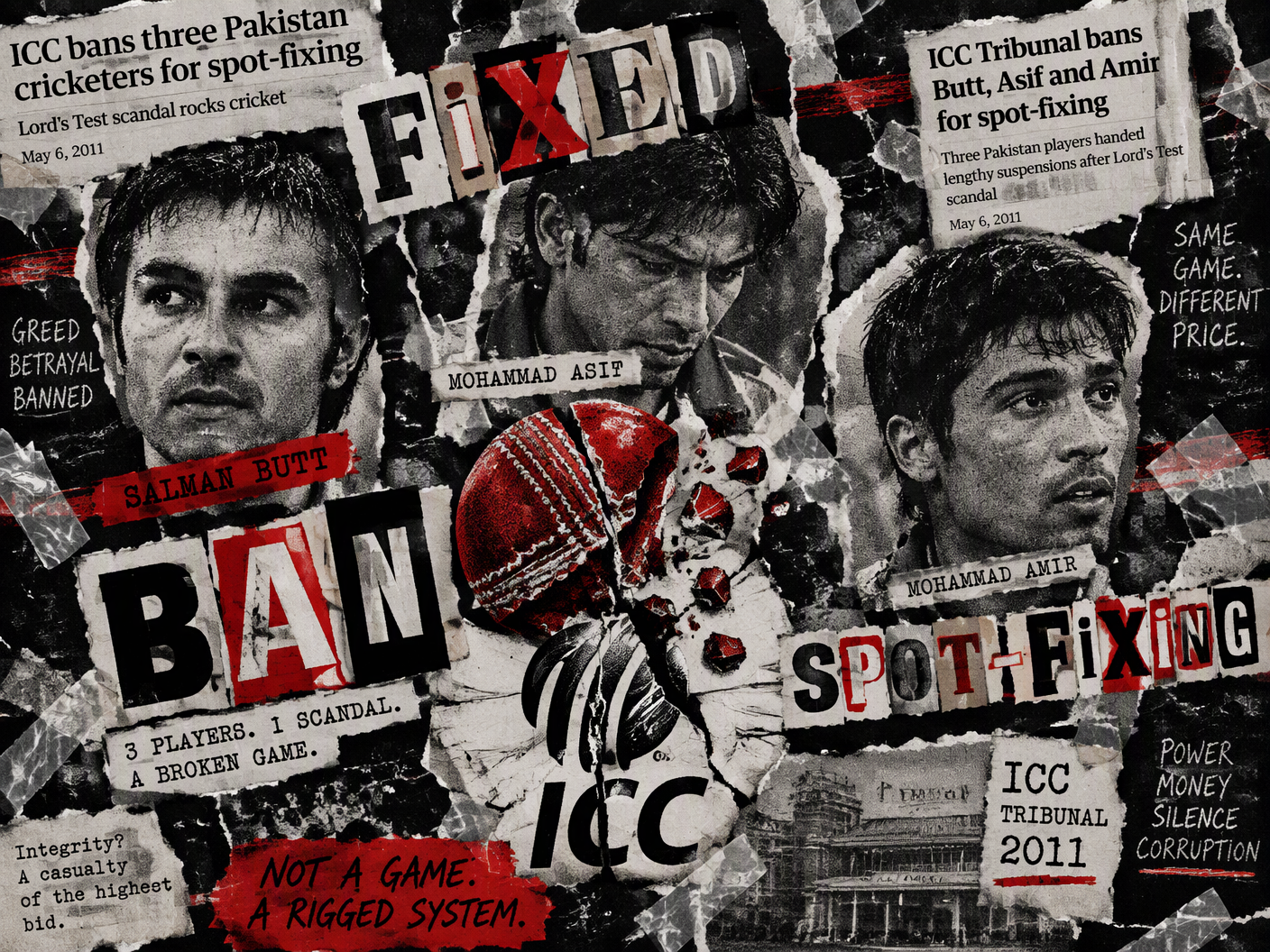
On 5 February 2011, an International Cricket Council tribunal in Doha found Salman Butt, Mohammad Asif and Mohammad Amir guilty of spot-fixing and imposed bans on all three Pakistan players. The charges concerned alleged corruption during the previous August’s Test against England at Lord’s, including deliberate no-balls. Butt, who had captained Pakistan in the match, received 10 years of ineligibility, five of them suspended under conditions.
The Lord’s Test ran from 26 to 29 August 2010, little more than a month after Butt became Pakistan’s Test captain. A British tabloid had alleged that no-balls were bowled deliberately at prearranged times. A no-ball penalises the fielding side, adding a run to the batting team’s score and requiring an extra delivery.
The statement read at the tribunal distinguished Butt’s role from Amir’s. Amir had agreed to bowl no-balls and had bowled them; Butt, it said, “was party to the bowling of those deliberate balls”. Asif was also found guilty of spot-fixing.
Asif received seven years of ineligibility, with two suspended, while Amir received a five-year ban. The suspended portions of Butt’s and Asif’s sanctions depended on avoiding further breaches of the code and participating in anti-corruption education. All three players had repeatedly denied wrongdoing and said they hoped to be cleared.
The decision followed six days of hearings in January and a further nine-hour hearing on 5 February. The players’ lawyers had sought an adjournment because of the possible effect on the British criminal case. The tribunal announced its findings and sanctions; the criminal charges were being pursued separately.
Five days later, the ICC published a redacted, restricted version of the tribunal’s written determination. The tribunal had urged wide publication so that readers could understand its reasoning, and the ICC endorsed that aim. But with British prosecutors pursuing criminal charges, the document was made available only outside England and Wales, in a read-only, non-printable form, until 16 February.