
Point Shaving & Fixes · 2013
The IPL Spot-Fixing Arrests and the Sanctions That Later Unraveled
The 2013 scandal moved from police arrests to immediate BCCI suspensions, life bans, and a separate Mumbai betting case involving a senior team official. Later court discharges and revised sporting penalties left the public history divided between disciplinary action, criminal procedure, and what was ultimately adjudicated.
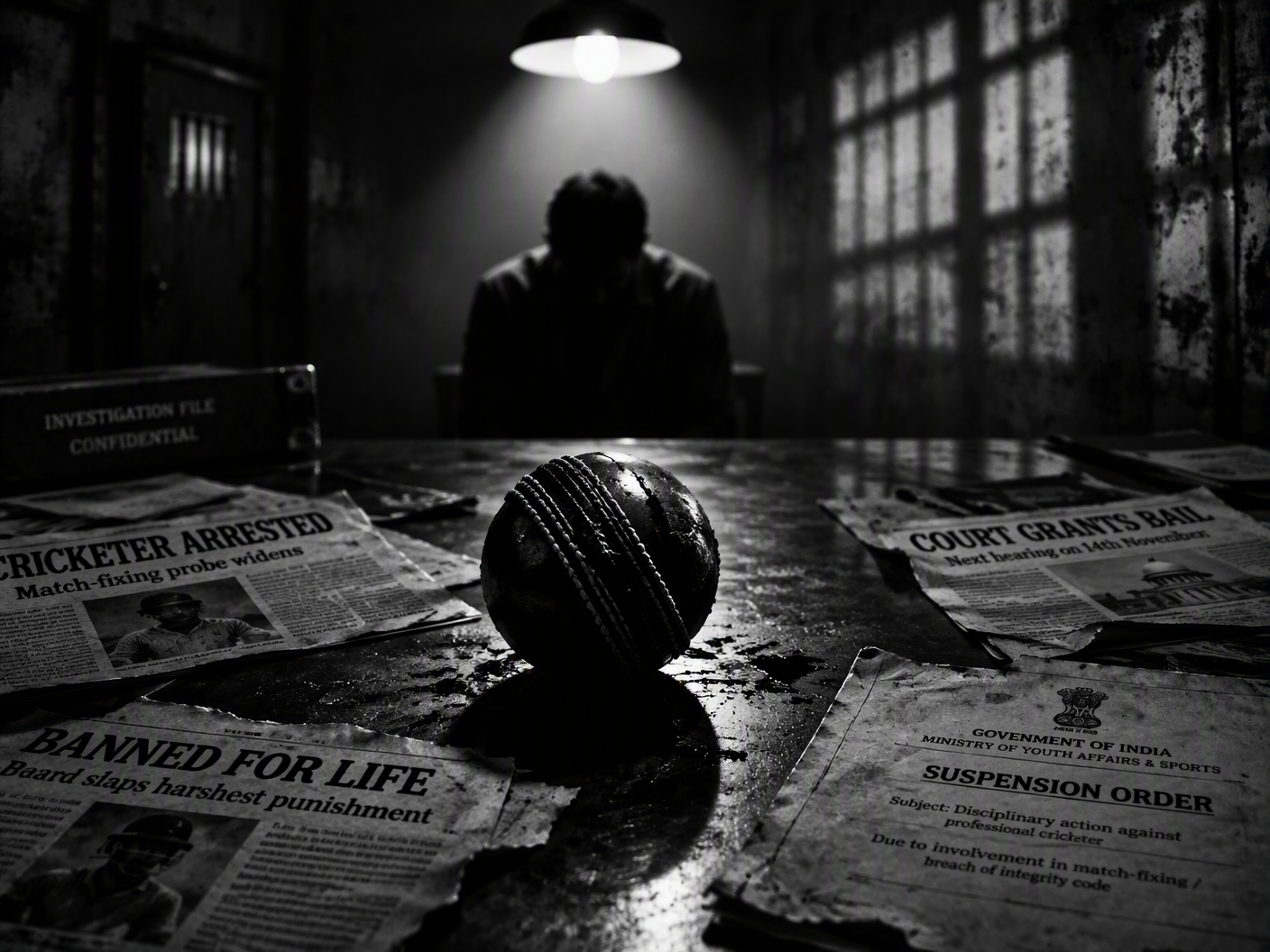
Delhi Police arrested Rajasthan Royals players S. Sreesanth, Ajit Chandila, and Ankeet Chavan on 16 May 2013 in connection with an alleged Indian Premier League spot-fixing investigation. The arrests transferred the scandal from whispered suspicion into police custody and placed three professional cricketers inside a criminal process whose consequences would outlast the season. The BCCI acted the same day, suspending all three while its own inquiry proceeded. The board did not wait for a criminal trial to determine whether the players could continue representing the league.
That immediate suspension established the first division in the case. Delhi Police pursued alleged crimes under state authority; the BCCI pursued conduct it treated as a breach of cricket’s governing rules. The two processes could draw on overlapping events while reaching different conclusions under different standards. Sanjay Jagdale, the BCCI secretary, said the board had zero tolerance for corruption and would cooperate with investigators. The statement placed institutional credibility beside the arrests. The board now had to demonstrate that its anti-corruption position applied to recognizable players as well as to the anonymous intermediaries who usually occupied the edges of betting cases.
The Rajasthan Royals arrests were only one strand. On 24 May 2013, Mumbai Police arrested Gurunath Meiyappan, the Chennai Super Kings team principal and the son-in-law of the BCCI president, on charges of betting, conspiracy, and cheating. His position made the case more difficult for the organization that governed the tournament. The allegations no longer centered solely on players accused of manipulating portions of matches. They reached into team management and toward a figure connected by family to the board’s highest office.
The distinction between the two proceedings became consequential. A police arrest identified a person whom investigators believed should face allegations; it did not itself establish criminal guilt. A BCCI suspension removed a player from cricket while the board examined the conduct. Later disciplinary action could therefore arrive before any criminal court had tested the prosecution’s case. In practical terms, the players’ careers were exposed to two separate authorities: one with the power to prosecute, the other with the power to exclude them from the sport.
Four months after the arrests, the BCCI imposed its harshest punishment on Sreesanth and Chavan. On 13 September 2013, the board banned both players for life for spot-fixing. Amit Singh received a five-year ban in the same disciplinary matter, while Siddharth Trivedi received a one-year ban. The different lengths suggested that the board was assigning different levels of responsibility or cooperation within the same corruption inquiry. For Sreesanth and Chavan, the sanction converted a police investigation into an indefinite professional sentence.
A life ban carried consequences beyond the loss of a contract or a tournament place. It removed the players from organized cricket and severed the professional identity built through domestic competition, international selection, and public recognition. The BCCI’s decision was administrative rather than a criminal conviction, but its effect on employment was immediate and durable. The board had acted on its own disciplinary authority, while the criminal case remained in the hands of prosecutors and the courts.
The criminal proceedings did not produce the broad judicial ending implied by the severity of the bans. In July 2015, the Patiala House Court in Delhi discharged 36 accused persons, apart from six people who had absconded. A discharge ended the case against those accused at that stage without creating a criminal conviction. The order changed the legal shape of the scandal. The arrests remained established events, and the BCCI sanctions remained institutional decisions, but the criminal process did not deliver convictions against the Rajasthan Royals players.
That divergence created the central contradiction of the case. Sreesanth and Chavan had been banned for life by cricket authorities, yet the Delhi criminal proceedings ended with their discharge rather than a conviction. Chandila was also among the players whose criminal case did not culminate in a conviction. The result did not erase the arrests or the board’s findings, but it prevented the public record from being reduced to a single verdict. Discipline, prosecution, and proof had moved on separate tracks.
The sanctions themselves later changed. The BCCI lifted the life bans imposed on Sreesanth and Chavan, narrowing the punishment that had once been presented as permanent. Chandila’s life ban was also lifted by February 2023. Those decisions did not convert the original arrests into fabrications, nor did the later relief establish criminal guilt. They showed instead that an administrative penalty could be revised after further review, even after it had defined a player’s public identity for years.
The case therefore left several kinds of authority in conflict. Delhi Police initiated the criminal process against three Rajasthan Royals players; the BCCI suspended them before that process concluded; the board later imposed life bans and shorter exclusions; and the Delhi court discharged most of the accused in 2015. Mumbai Police separately arrested Meiyappan on betting, conspiracy, and cheating charges. Each action carried a different legal meaning. None could simply be substituted for the others.
By February 2023, the public consequences had moved again. Sreesanth and Chavan no longer carried the life bans originally imposed by the BCCI, and Chandila’s life ban had also been lifted. The criminal case had already narrowed through the Delhi court’s discharge order. What remained was not a clean exoneration of every allegation or a completed chain of convictions, but a documented sequence of arrests, suspensions, severe sporting penalties, judicial discharge, and later administrative retreat.
Investigative Dossier & Evidence
Read the companion investigation notes, verified source claims, and primary documents.
Read the Companion Notes & Evidence Record →