
Scandals & Feuds · 1970s
The Lufthansa Hijacking That Freed the Three Munich Suspects
On October 29, 1972, two Black September members seized a Lufthansa jet and demanded the release of three Palestinians jailed in West Germany after the Munich massacre. Within hours, the prisoners—including Jamal Al-Gashey—were released, creating a direct political link between an aircraft hijacking and the aftermath of the Olympic attack.
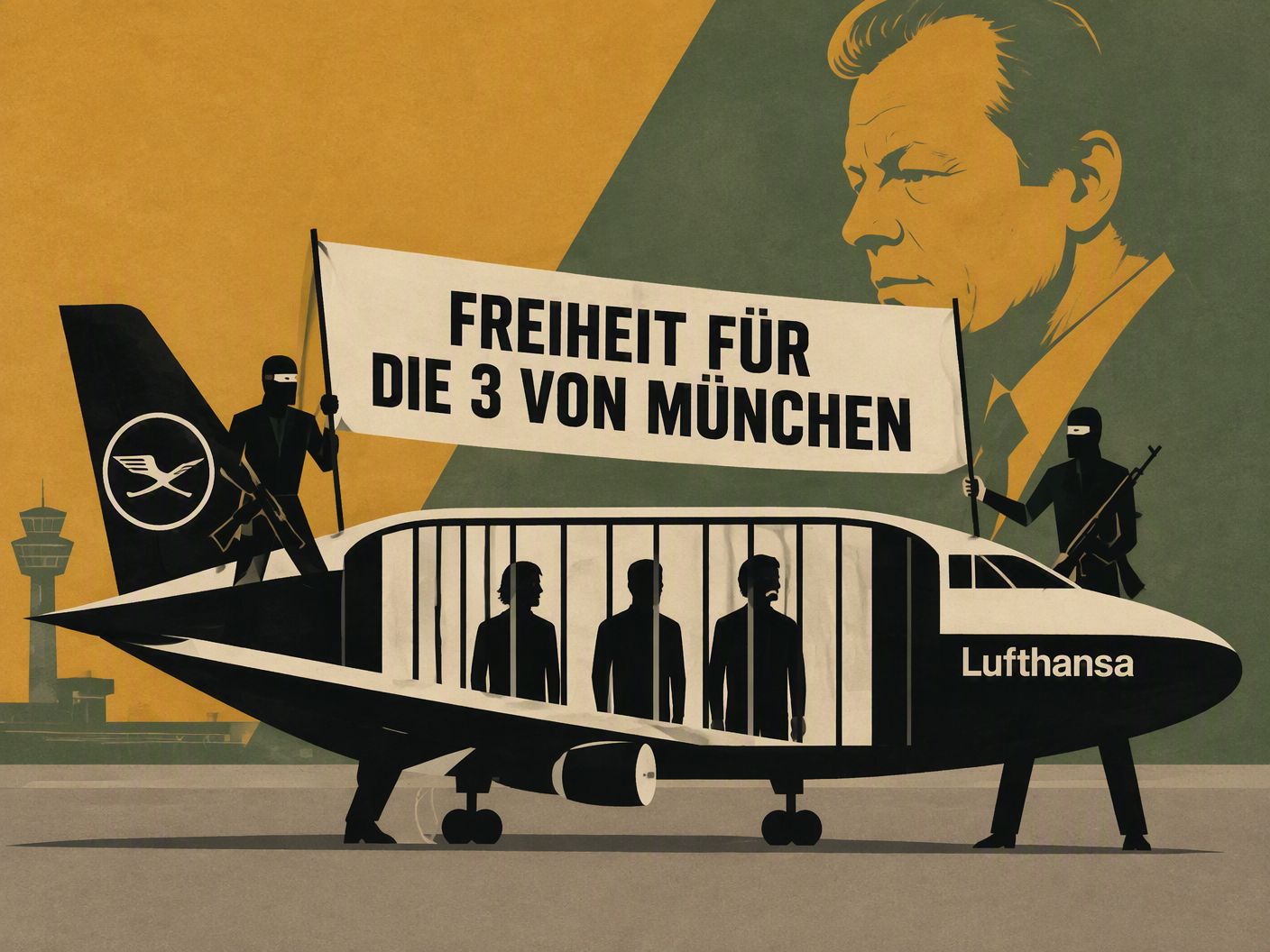
On October 29, 1972, two Black September members hijacked a Lufthansa jet and turned an airliner into a demand delivered to the West German government. They wanted three Palestinians released from a German jail. The men were being held after the September attack at the Munich Olympic Village, in which Israeli athletes and trainers were seized and killed. The hijacking did not begin the Munich crisis; it reopened it, less than two months after the Olympic violence, by placing the fate of the jailed suspects inside another hostage negotiation.
The earlier event had taken place on September 5, when Black September militants entered the Olympic Village and seized members of the Israeli team. The assault became known as the Munich massacre. Jamal Al-Gashey was identified among the surviving Munich suspects. The three Palestinians held in West Germany therefore occupied an unusual and dangerous position: they were prisoners in a case born from an international sporting event, while the organization associated with that attack now used a civilian aircraft to press for their release.
In the weeks after Munich, the West German government held the three men in custody. The available political choices were shaped by the recent hostage crisis and by the government’s responsibility for the prisoners, the aircraft, and the people aboard it. On October 29, the hijackers presented their demand plainly: release the three Black September members in the German jail. The flight became leverage. The imprisoned men, who had been confined as suspects in the Olympic attack, were now the condition attached to the safety and movement of a Lufthansa aircraft.
The demand reached Chancellor Willy Brandt. He stood at the point where criminal custody, foreign policy, and an immediate hostage crisis met. The decision that followed was made quickly. The exchange deal was signed only a few hours after the demands were placed before him. The short interval is central to the episode: whatever negotiations or pressure operated behind the decision, the public sequence moved from hijacking, to demand, to agreement within the same day.
After the agreement, the West German government released the three imprisoned Palestinians. Jamal Al-Gashey was among them. The release established the practical result sought by the hijackers: the men held in German custody were no longer in the jail. Their transfer connected the October aviation seizure to the September Olympic attack in a way that no later argument could erase. The hijacking had been presented as a means to obtain their freedom, and their freedom followed the hijacking.
For Brandt, the decision carried an immediate political cost. Israeli accusations said that he had surrendered to terrorism. Brandt rejected that charge. His response placed the release within the language of state responsibility rather than personal concession: the chancellor denied that the government’s action amounted to capitulation. The argument did not change the sequence of events, but it revealed the conflict at its center. West Germany had to answer for a release demanded under threat, while insisting that the act did not define its policy or authority.
The three prisoners did not become ordinary defendants moving through an ordinary legal process. Their custody had begun in the aftermath of an attack that had crossed borders, involved an Olympic delegation, and left West Germany responsible for the consequences of a failed rescue. The Lufthansa hijacking altered the terms again. It made the prisoners objects of exchange, and it placed their fate alongside the government’s effort to end the seizure. The decision was therefore both immediate and institutional: a state custody arrangement was resolved through the pressure created by an aircraft hostage-taking.
Jamal Al-Gashey’s later life gave the episode a continuing human face. He had been named as one of the Munich suspects and was released with the other two Palestinians after the Lufthansa hijacking. Later accounts placed him in refuge in Libya. His release did not transform the September attack into a settled legal chapter; it carried one of its surviving suspects out of West German custody. The distance between those two facts—suspect and released man—was created by the October seizure of the Lufthansa aircraft.
The chronology is compact enough to fit on a single line: on September 5, Black September militants attacked the Israeli Olympic team in Munich; on October 29, two members of the same organization hijacked a Lufthansa jet; after their demand, three jailed Palestinians were released. That sequence is the durable connection between the events. It does not require a reconstructed conversation or an imagined command structure. The known actions are sufficient: an earlier massacre produced the prisoners, a later hijacking demanded them, and the West German government released them.
What endured was not a single agreed explanation of the decision, but an arrangement remembered through its consequences. The Munich suspects were freed after the Lufthansa hijacking, including Jamal Al-Gashey, while Brandt continued to deny that West Germany had surrendered to terrorism. The episode entered the history of the 1972 attacks as a linked chain of hostage-taking and release. Its permanent record is therefore procedural rather than ceremonial: prisoners held after Munich were exchanged after a Lufthansa aircraft was seized, and the government’s refusal to accept the language of capitulation remained part of the aftermath.
Investigative Dossier & Evidence
Read the companion investigation notes, verified source claims, and primary documents.
Read the Companion Notes & Evidence Record →