
Doping & Drugs · 2010s
A Blood Profile, a Ban, and the Olympics
The ISU treated reported blood values as an anti-doping violation. Claudia Pechstein’s two-year ban survived arbitration and a Swiss court challenge before the Winter Olympics.
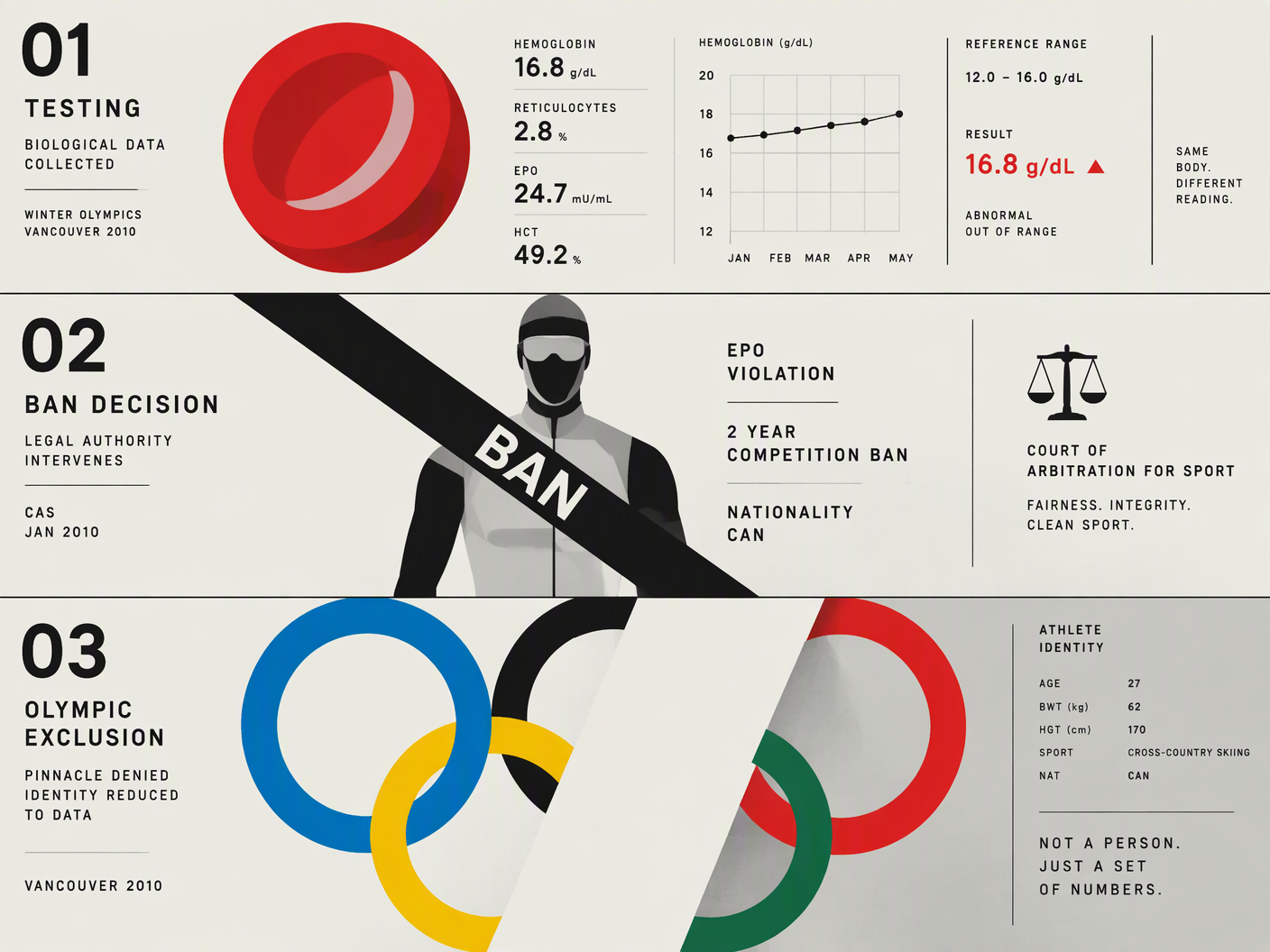
On July 1, 2009, the International Skating Union’s Disciplinary Commission decided that Claudia Pechstein was responsible for an anti-doping violation under the ISU Anti-Doping Regulations and imposed a two-year ban. She was allowed to continue training but not to compete. The decision turned a blood-monitoring result into a direct limit on her participation as an athlete.
The blood samples at issue were taken in February 2009 at the ISU World Speedskating Championships in Hamar, Norway, and, according to the Kluwer analysis, showed elevated reticulocyte values. The ISU said its blood-screening program was developed to create longitudinal profiles of skaters’ blood parameters, an approach now known as an athlete’s biological passport. The mechanism was meant to track blood parameters over time rather than treat each test as an isolated record.
The ISU described that program as extensive: more than 11,500 tests had been conducted on more than 1,650 skaters. In Pechstein’s case, the disciplinary decision followed the reported values within that monitoring system. The scale of the program supplied institutional context, but it did not resolve the dispute over what the reported indication meant in her case.
Pechstein and the German Speedskating Association appealed the disciplinary decision to the Court of Arbitration for Sport in Lausanne. CAS upheld the ban on November 25, 2009. BBC quoted Pechstein saying, “It’s incredibly hard for me to accept it,” and reporting her statement that it remained “unimaginable” to be banned for “one single indication” that was “very contested scientifically.”
On February 10, 2010, the Swiss Federal Tribunal rejected Pechstein’s petition to set aside the CAS award. BBC reported that she missed the Winter Olympics after losing her appeal against the doping ban. The legal path had closed without changing the competition consequence: she could still train, but the ban kept her out of the event at which the dispute mattered most.
Investigative Dossier & Evidence
Read the companion investigation notes, verified source claims, and primary documents.
Read the Companion Notes & Evidence Record →