
Scandals & Feuds · 1960s
The Oil Leak That Followed Parnelli Jones to Victory
USAC officials considered black-flagging Jones's leaking car in the 1963 Indianapolis 500, but allowed him to continue as the controversy moved from the track to the pits.
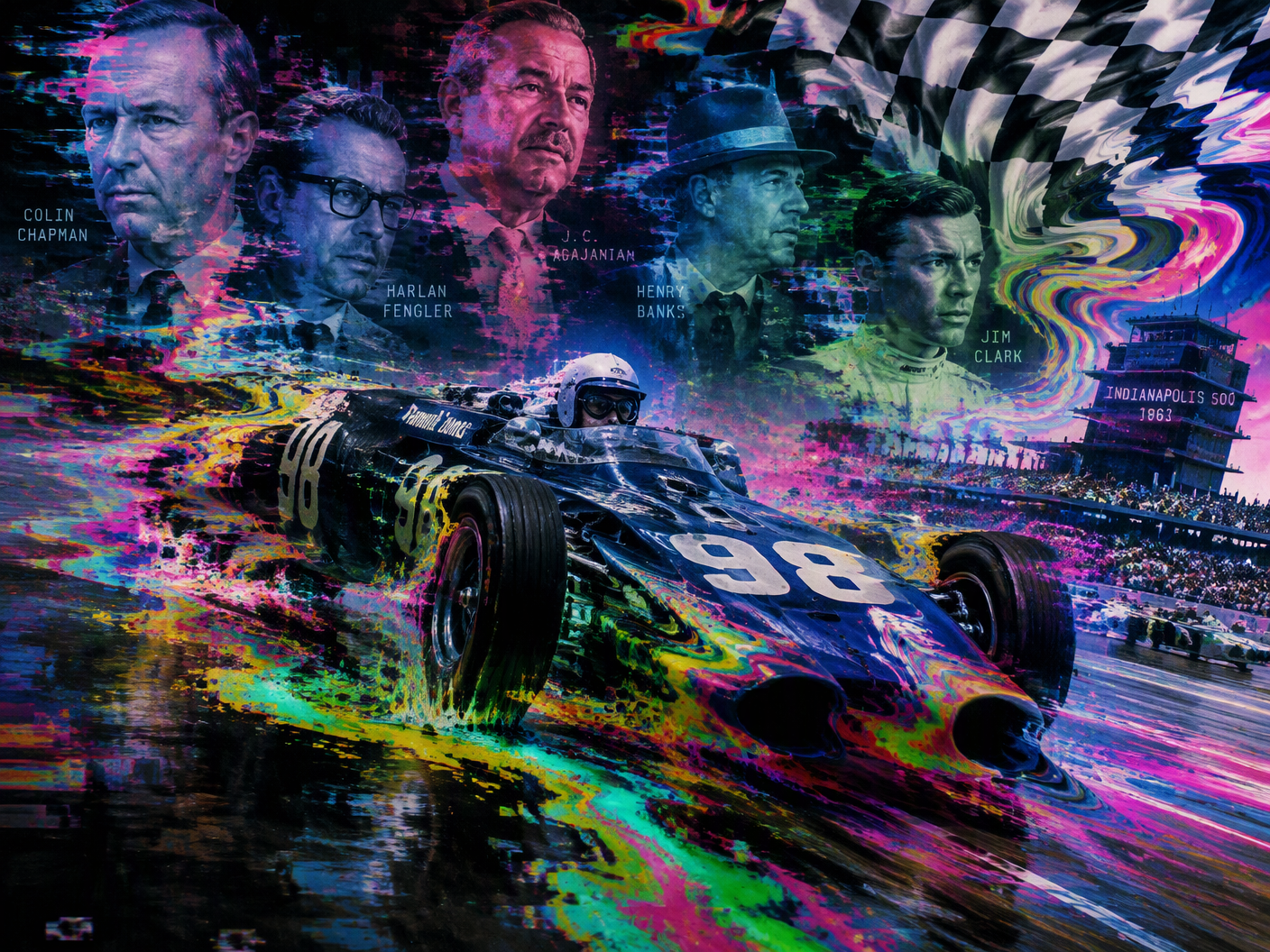
USAC did not black-flag Parnelli Jones after his No. 98 developed an oil leak late in the 1963 Indianapolis 500. Officials allowed him to continue, and Jones went on to win the race, with Jim Clark finishing second in a Lotus-Ford.
The decision mattered because Jones had controlled much of the race. He took the pole with a track-record qualifying speed of 151.153 mph and led 167 of the 200 laps. Late in the race, however, the car began trailing oil smoke. Motorsport.com reported that Clark drew to within six seconds, while the Indianapolis Star said the smoking car prompted a dispute over whether Jones should be removed.
The controversy centered on what the leaking oil might have done to the track. Some drivers and commentators believed or reported that oil from Jones's car had made the surface slick. The Indianapolis Star reported that Colin Chapman wanted chief steward Harlan Fengler to black-flag Jones, and accounts of the race say Fengler considered doing so. The sources do not establish that the oil was formally adjudicated as the cause of any track condition.
J. C. Agajanian argued against the penalty. According to the Indianapolis Star, Agajanian and chief mechanic Johnny Pouelsen maintained that the crack was at the oil-tank hanger and that the oil had already fallen below it, meaning the leak would not continue. That was their defense of the car's condition, not an independent mechanical finding. USAC ultimately chose not to enforce the black flag.
The dispute did not end with the checkered flag. Eddie Sachs and Jones exchanged fists the day after the race over the oil-leak controversy.
Investigative Dossier & Evidence
Read the companion investigation notes, verified source claims, and primary documents.
Read the Companion Notes & Evidence Record →