
Bizarre & Myths · 2020s
The Swatting Evacuation That Interrupted Misfits Boxing 13
A reported bomb threat emptied Worldwide Stages during Misfits Boxing 13 in Nashville, bringing Spring Hill Police and the Tennessee Highway Patrol Bomb Squad to the venue. Officials later characterized the incident as swatting; after a 78-minute delay, the card resumed, but one bout became a no contest.
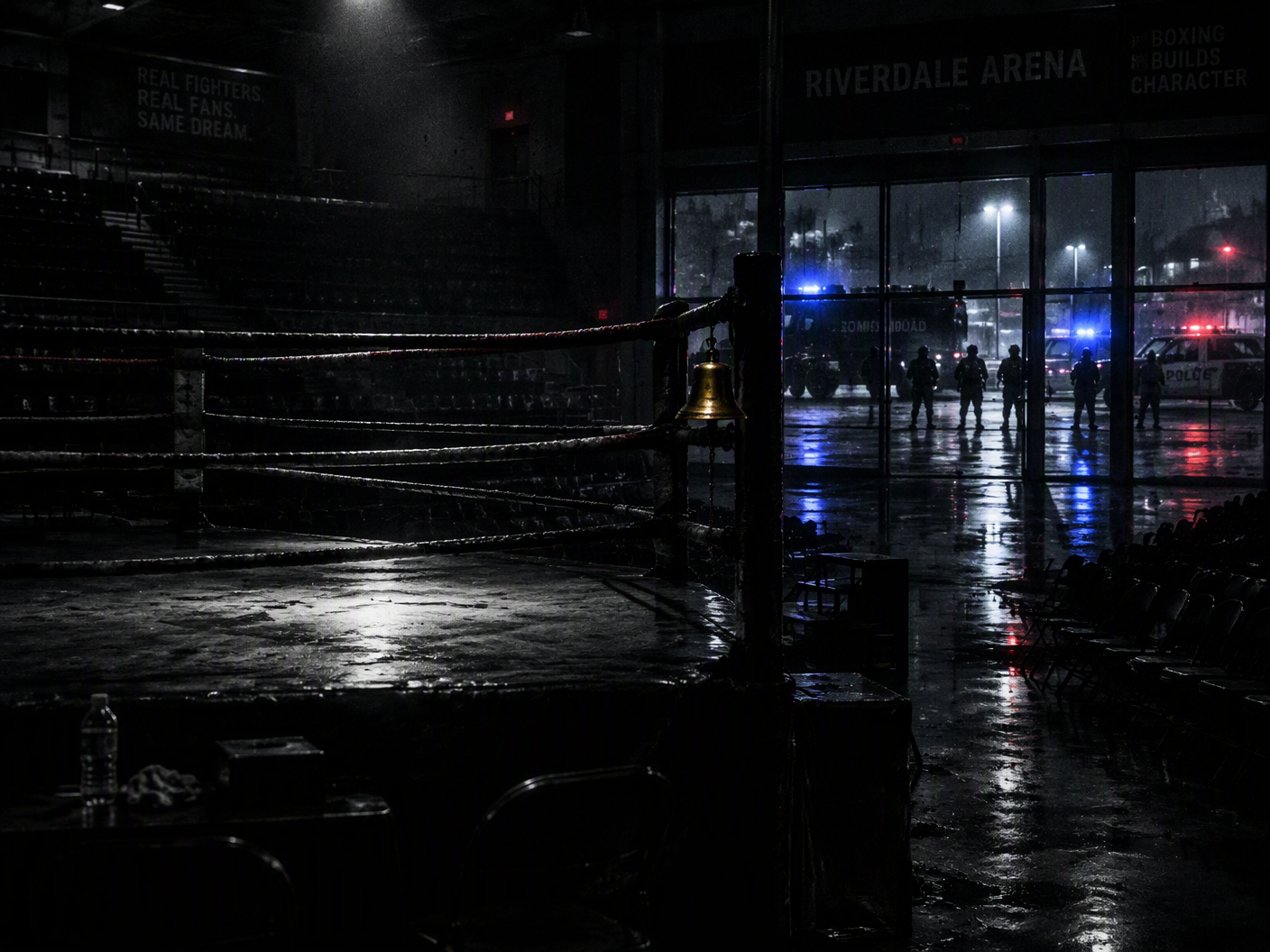
The fight card was moving under the hard white lights at Worldwide Stages when the building turned into an evacuation scene. A possible bomb threat had been reported. The crowd was ordered out of the Nashville venue, leaving the ring behind with its ropes, canvas, and cold brass bell. Outside, the machinery of panic took over: police, traffic, bodies pressed toward open ground. Misfits Boxing 13 had been built around spectacle, but the night now belonged to the threat report. The fighters could wait. The building had to be searched.
Spring Hill Police became involved in the response. So did the Tennessee Highway Patrol Bomb Squad. Their arrival changed the character of the evening. This was no longer a bout delayed by a torn glove, a medical check, or the ordinary friction of a crowded fight card. The venue sat under a security emergency. Officials had to treat the report as a possible explosive threat, and the people inside had to leave before the next bell could sound. In boxing, time is measured between rounds. That night, it was measured by the evacuation.
The interruption came in the middle of a card already altered before the first punch. Most Wanted had withdrawn from the originally scheduled main event, taking his name out of the slot beside FoxTheG. Evil Hero stepped in instead. The replacement changed the headliner but not the business of the night: the cameras, the gloves, the ring, the audience, the promise of a finished show. Then the threat report arrived and struck at the machinery beneath the entertainment. A substitute fighter had been found. A substitute ending had not.
Outside the building, the fight world lost its usual shape. There was no clean division between performer and spectator, no corner stool, no referee separating men at close quarters. The crowd had become a problem of movement and control. The people who normally managed the card—promoters, officials, fighters, production staff—were now waiting for law enforcement to determine whether the room could be used again. The ring remained where it was. The authority had moved elsewhere, into the hands of investigators and the bomb squad.
The show stayed suspended for 78 minutes. That figure carries the blunt weight of the evening. Long enough for the crowd to lose the rhythm of the card. Long enough for the fighters to sit with taped hands and nowhere to put the adrenaline. Long enough for a threat report to become the central event, replacing the advertised contests with a question no promoter could answer from the ring: whether the building could reopen. The delay was not a pause between rounds. It was a break in the entire night.
Officials later characterized the incident as swatting. The word belongs to a particular kind of intrusion: a false or misleading emergency report used to summon an armed or specialized police response to a target. It turns public authority into a weapon of disruption. At Misfits Boxing 13, the characterization supplied the eventual shape of the event. What had first been treated as a possible bomb threat was later described by police as a swatting incident. The immediate facts remained physical and costly: evacuation, police response, delay, and a card forced out of its schedule.
When the venue reopened, the event did not simply resume where it had stopped. Competition carries its own fragile order. Fighters warm up, cool down, retape, wait, and try to rebuild the narrow concentration required to enter a ring. Lil Cracra and Yuddy Gang did not receive a normal continuation of the night. Their bout was ruled a no contest after the interruption. The result erased a winner from the ledger, but it did not erase the disruption. The security emergency had crossed into the sporting record.
That was the clearest competitive consequence of the evacuation. The bout did not resolve into victory or defeat. Its line ended without a winner. The card had been interrupted, and the interruption stayed attached to the fighters who had been expected to settle matters under the lights. A no contest is a small phrase beside a police operation, but it is how the night’s disorder entered the official results. The machinery of boxing resumed with the machinery of judgment altered.
The headliner still went forward. FoxTheG entered the main-event slot against Evil Hero, the replacement for Most Wanted, and the contest ended in the first round. FoxTheG won by technical knockout. The finish restored a winner to the night and supplied the clean ending that live events demand. But the bout carried the memory of the empty building and the long delay behind it. The headliner had survived the evacuation. The card had not come through untouched.
Misfits Boxing 13 therefore finished in two different registers. In one, FoxTheG stopped Evil Hero in the first round, and the main event received its official conclusion. In the other, Lil Cracra and Yuddy Gang left with a no contest after the threat report broke the card apart. Between those results sat 78 minutes of evacuation and investigation at Worldwide Stages. A fight promotion depends on controlled danger. The swatting characterization exposed the opposite: danger manufactured outside the ropes, then carried into the room by the institutions built to answer it.
Investigative Dossier & Evidence
Read the companion investigation notes, verified source claims, and primary documents.
Read the Companion Notes & Evidence Record →