
Tragedy · 1910s
The Bear Pool at Washington Park Zoo
Under director Edmund Heller, Washington Park Zoo placed black, grizzly, and polar bears with wolves in one enclosure. After black bears were repeatedly driven into the pool in 1932 and 1933, the park board censured Heller and removed them from the shared den.
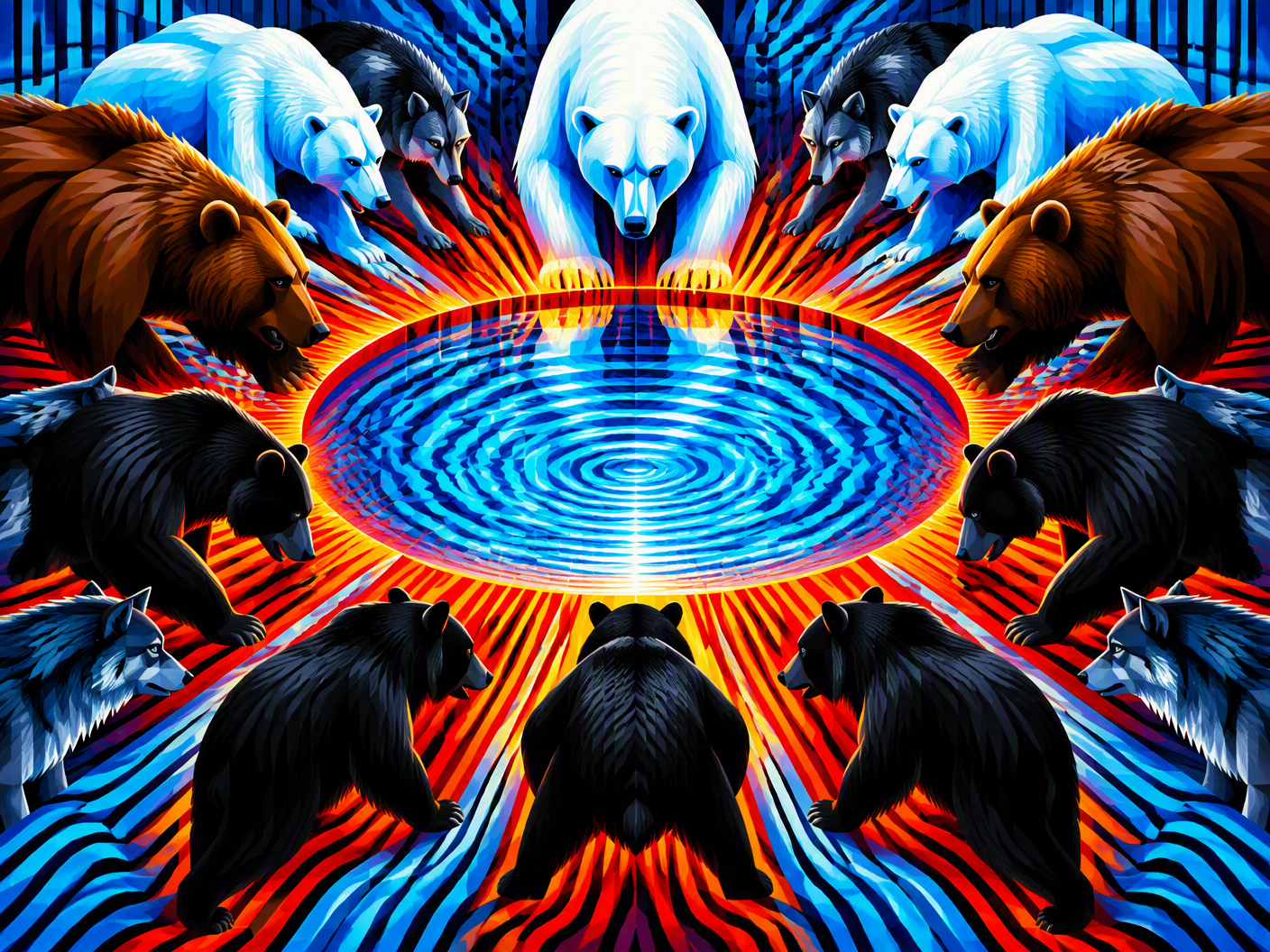
On October 22, 1932, at Washington Park Zoo in Milwaukee, a polar bear cub pushed a black bear into the pool inside the shared enclosure. The black bear died. The event was not an isolated encounter between animals in neighboring cages. It occurred in the exhibit Edmund Heller had designed to hold several bear species and wolves together, a public display whose central premise depended on keeping incompatible animals within the same boundaries. The pool, intended as part of the enclosure, became the place where that arrangement failed.
Heller had arrived as Washington Park’s director in 1928. The zoo operated under the authority of Milwaukee’s public park system, where the director’s judgment shaped the exhibits visitors were allowed to see and the risks animals were made to bear. In 1929, Heller placed black bears, grizzly bears, polar bears, and wolves in a shared enclosure. The design joined animals distinguished not only by appearance but by size, temperament, habitat, and strength. Its novelty was also its exposure: the animals’ contact was part of the exhibit rather than an accident beyond the institution’s control.
For several years, the enclosure remained an arrangement rather than a public crisis. The animals occupied the same broad space, and the zoo’s decision stood as long as the exhibit continued to function. But the first recorded death altered the meaning of what visitors were seeing. A black bear had been placed in a setting where a polar bear cub could reach it, drive it toward water, and push it into the pool. Heller later characterized the death as a playful accident. That explanation assigned the event to animal behavior, while the exhibit itself remained a decision made by the director.
The second pool incident came on July 21, 1933. A polar bear cub knocked a black bear named Jerry into the water. Jerry’s name survived in the account, giving the episode a particular human scale: this was not simply an inventory entry in a zoological collection but a named animal held in an enclosure organized by people. The incident repeated the essential danger of the previous October. A black bear could again be forced into the pool by a polar bear, within the same shared den that had already produced a death.
One month later, on August 23, the confrontation became more direct. Polar bears shoved another black bear into the pool and prevented it from escaping. They began eating the bear before zookeepers intervened. The sequence made the enclosure’s risk visible in a way the earlier drowning had not: the black bear was not merely near a larger animal or caught in a moment of play. It was driven into water, held from safety, and attacked until keepers entered the scene. The exhibit had produced a repeated vulnerability, not a single unfortunate contact.
The response followed the pattern of an institution correcting an exhibit without removing the person who had authorized it. After the 1933 incidents, Washington Park’s black bears were moved out of the shared den. The Milwaukee County Park Board censured Heller but did not dismiss him. That distinction fixed the official consequence: the animals were separated, while the director remained in office. The board acknowledged a failure serious enough to warrant formal discipline, yet stopped short of treating it as grounds for termination.
The separation did not erase the earlier design. The polar bears, grizzly bears, wolves, and black bears had been assembled in one enclosure because the arrangement was considered suitable for public exhibition. Once the black bears were removed, the institution had changed the exhibit in response to harm, but it had not undone the years during which the animals had been exposed to one another. Heller’s account of the first death as playful could explain what he believed about the animals’ conduct; it could not change who had placed them together or why the black bears were eventually taken out.
The danger was not confined to the pool incidents. On April 27, 1935, a black bear cub was injured by a polar bear in a separate cage area. The attack occurred after the black bears had been removed from the shared den, showing that separation within the zoo did not mean every risk had disappeared. The named polar bear, Greely the Killer Polar Bear, belonged to a later phase of the enclosure’s history, when animal contact still required management even outside the original mixed-species setting.
The bear-pit tradition surrounding Washington Park also gathered stories that exceeded what could be established. One later rumor held that a boy had fallen into the Sheffield Botanical Gardens bear pit and been killed. That story lacked proof. Its presence in the wider history of bear exhibits matters because it shows how easily documented animal incidents could be joined to dramatic tales from elsewhere. Washington Park had its own recorded sequence: a black bear died after being pushed into the pool in 1932, Jerry was knocked into it in 1933, and another black bear was attacked there weeks later.
Washington Park’s bears eventually acquired a different institutional home. In 1960, they were moved to the 200-acre Milwaukee County Zoo, a relocation that belonged to the later history of Milwaukee’s zoological system rather than to the specific pool incidents. By then, the shared den had ceased to be the final word on how the animals would be housed. The surviving arrangement was not Heller’s original experiment but the administrative habit that followed its failures: separate the black bears, censure the director, and carry the animals into a new zoo.
What endured at Washington Park was therefore not a legend of animal mischief but an institutional sequence. Heller assumed the directorship in 1928, built the mixed-species enclosure in 1929, and presided over repeated encounters that sent black bears into the pool. One died; another was Jerry; a third was attacked until keepers intervened. The black bears were removed, Heller was censured rather than dismissed, and the zoo’s bears later moved to a larger county facility. The official record left the exhibit changed, but it preserved the decision that had made the danger possible.
Investigative Dossier & Evidence
Read the companion investigation notes, verified source claims, and primary documents.
Read the Companion Notes & Evidence Record →