
Violence & Brawls · 1978
The Punch That Ended Woody Hayes’ Ohio State Career
On December 29, 1978, Ohio State coach Woody Hayes punched Clemson player Charlie Bauman during the Gator Bowl, triggering a bench-clearing brawl before a live television audience. Clemson won 17–15; the next day, Ohio State fired Hayes, ending a 28-year coaching relationship that had survived earlier confrontations.
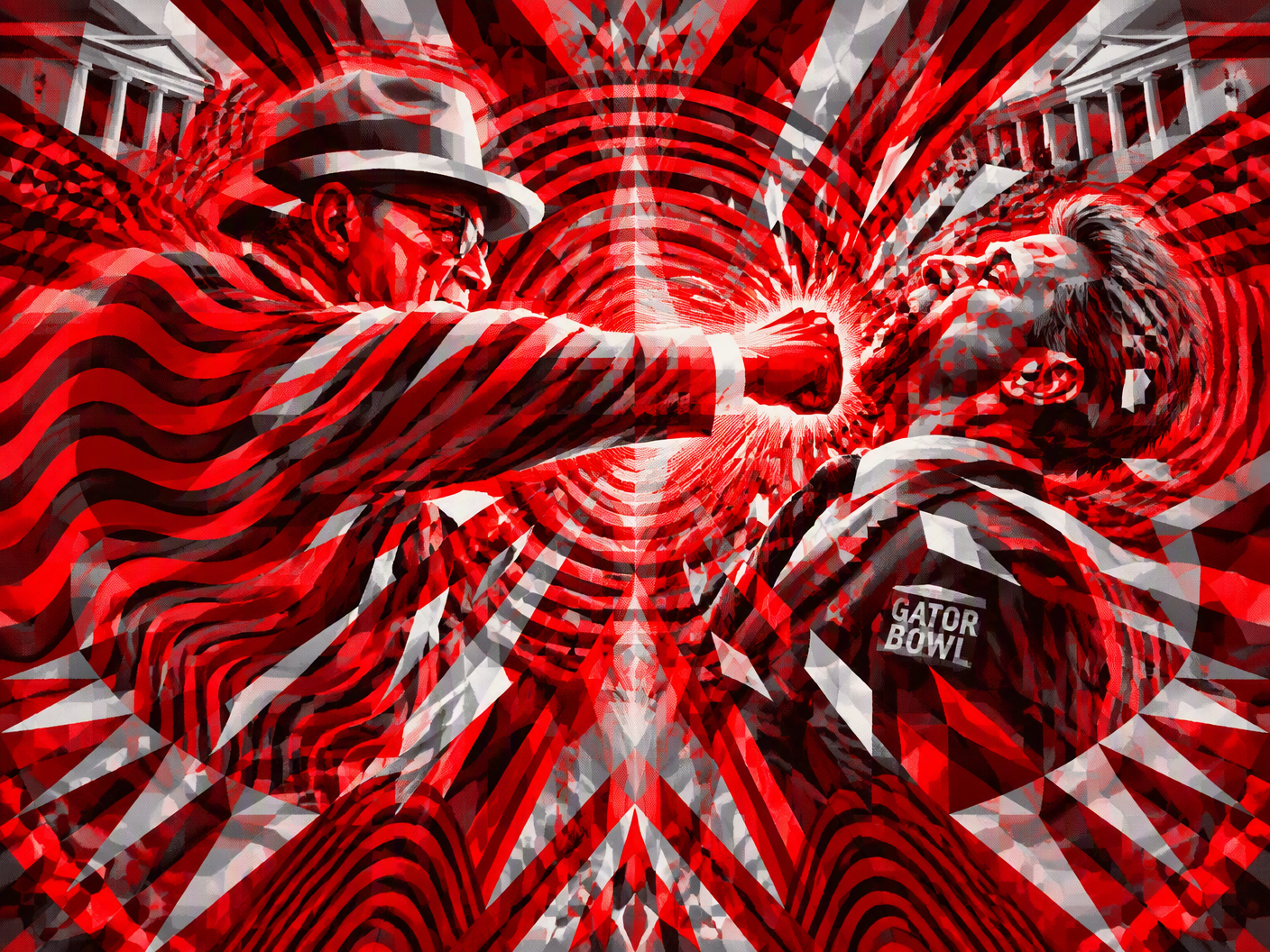
On December 29, 1978, the Gator Bowl reached its final sequence under Jacksonville’s stadium lights. Clemson player Charlie Bauman intercepted a pass and moved toward the Ohio State sideline. Woody Hayes, Ohio State’s head coach, stepped toward him and punched him. The blow lasted an instant. The live broadcast preserved it in full view: a coach, an opposing player, and the physical act that ended Hayes’ Ohio State career.
The punch broke the ordinary chain of authority that governed the game. Hayes could argue with officials, direct players, and control his sideline; Bauman wore Clemson’s uniform and had just made a play against him. When Hayes struck him, the contest’s rules could no longer contain the confrontation. The incident placed a coach’s anger directly against a player who had no coaching or disciplinary relationship with him.
Clemson players and Ohio State players then left their benches. The confrontation widened into a bench-clearing brawl, drawing both rosters into a disorder that officials and staff had to contain. Players who had not initiated the contact became part of its consequences. The physical risk moved outward from one decision on the sideline and attached itself to teammates, opponents, and personnel trying to restore order.
Millions watched the sequence live. Television carried Hayes’ punch and the rushing bodies beyond the stadium, stripping the incident of privacy and leaving no need for a later reconstruction to make its central act visible. Viewers saw a coach lose control in the same public space where he was supposed to enforce it. For Bauman, the event attached his name to a moment he had not created; for Hayes, the broadcast turned a pattern of sideline volatility into an image that the institution could not manage away.
Hayes had spent 28 seasons as Ohio State’s head coach. His authority rested on discipline, command, and a program built to treat the coach’s judgment as the organizing force on the field. That authority had also given him room to survive behavior that would have ended an ordinary employee’s tenure. Earlier altercations had already produced disciplinary actions, including confrontations involving journalists and officials.
Those earlier incidents mattered because they established a warning before Jacksonville. Hayes’ temper was not an unfamiliar feature of his public conduct; it had repeatedly carried him toward the boundary between forceful leadership and physical confrontation. Each episode could be explained as a dispute over officiating, competition, or pressure. Taken together, they made the Gator Bowl less a new language of behavior than the point at which the institution stopped absorbing it.
Bauman’s interception supplied the immediate trigger, but it did not supply a legitimate football response. Hayes’ position magnified the harm. A player could be penalized, removed, or disciplined for conduct on the field; a head coach possessed the power to define standards for everyone else. By using physical force against an opposing player, Hayes transferred the consequences of his anger to people with less authority to control what followed.
Clemson won the game, 17–15. The score fixed the athletic result, but it could not absorb the institutional question created on the sideline. Clemson left with the bowl victory. Ohio State left with a defeated team, a public brawl, and a coach whose conduct had become inseparable from the program he commanded. The narrow margin made the game competitive; it did not make the punch incidental.
The institution acted the next day. On December 30, Ohio State fired Hayes as head coach. The dismissal came after the punch, the brawl, and the national exposure created by the live broadcast. It converted a moment of sideline violence into an administrative decision with a permanent effect: Hayes would no longer direct Ohio State football.
Hayes later expressed regret over the incident, but he did not apologize directly to Bauman at the time. That distinction mattered. Regret addressed the coach’s later understanding of his conduct; an apology would have addressed the player who received the punch. The public aftermath moved faster than that personal repair. Ohio State made its decision within a day, while the person at the center of the blow received no direct apology from Hayes in the immediate moment.
Hayes’ final Ohio State image therefore contains two histories at once. It shows a single physical act during a 17–15 loss, but it also shows an institution confronting a behavior it had previously disciplined without ending the relationship. The live cameras made the act impossible to separate from the coach’s public identity. The firing ended his tenure; it did not erase the warning signs that preceded the Gator Bowl or the human consequences that followed it.
Investigative Dossier & Evidence
Read the companion investigation notes, verified source claims, and primary documents.
Read the Companion Notes & Evidence Record →